
Drum Friction Surface
The inner wall the shoes press against.
- Replace drum when: Deep scoring, cracks, or oversize remain
- Hardware role: Cannot resurface metal
- Limit: Machining has service limits
Use brake drums instead of brake hardware kits when the rotating drum shell itself is worn, scored, cracked, oversized, or otherwise unable to provide a proper friction surface. A hardware kit can renew springs, clips, retainers, and adjusters, but it cannot restore a bad drum surface.
The distinction prevents under-repair. If the shoes cannot contact the drum correctly, or if the drum is beyond service limits, fresh springs alone will not fix pedal travel, vibration, noise, or poor braking consistency.
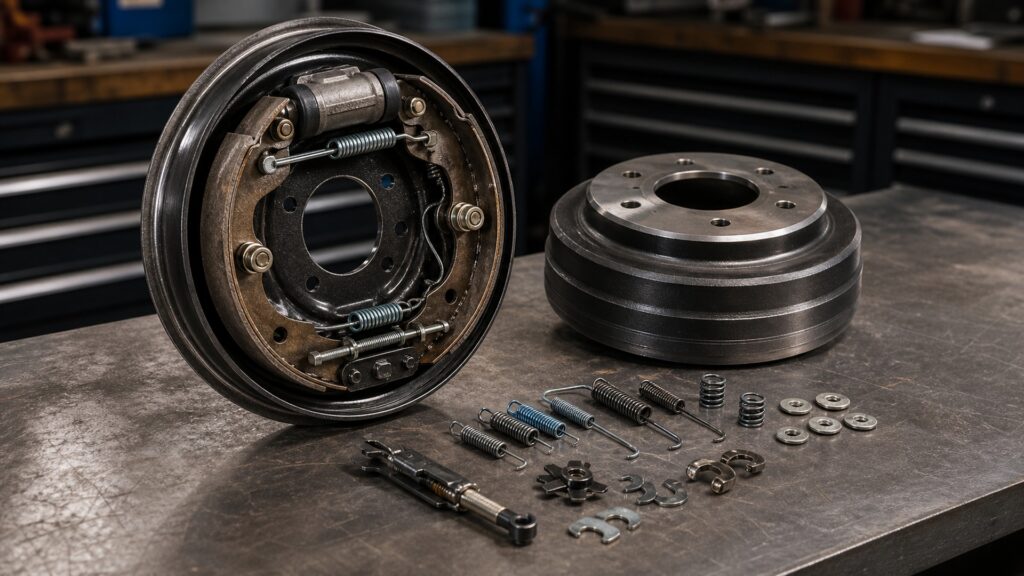
A clear explanation of brake drums instead of brake hardware kits, focused on role, mechanism, fit, service limits, and repair decisions.
Tip: Read the concept as part of a system, then connect it back to the use case.
These definitions connect the main idea to the variables, limits, and practical signals readers need to compare options.
The inner wall the shoes press against.
Small parts such as springs, retainers, clips, and adjusters.
The maximum allowable drum diameter after wear or machining.
Fine cracks or hard spots from thermal stress.
The distance the adjuster can take up as parts wear.
The way lining touches the drum surface.
Tip: Keep the definitions connected; the strongest answer usually comes from the whole system, not one term.
The repair choice starts with deciding whether the friction shell or the small support parts have failed.
Hardware helps the shoes move; the drum provides the surface they need.
The drum should be replaced when its metal surface or dimensions are no longer suitable.
A damaged shell is not repaired by new springs.
A hardware kit makes sense when the drum surface is serviceable but the small parts no longer hold or return the shoes properly.
Hardware kits solve guidance and return problems.
Drum damage and hardware wear can create similar symptoms, so the assembly has to be opened and measured.
Symptoms guide inspection; measurements guide the choice.
The safest practical path is to treat the drum and hardware as partners. Replace the part that failed, and do not ask small hardware to compensate for damaged metal.
A complete repair respects both the shell and the hardware.
The choice is about whether the rotating friction shell or the small support parts have failed.
It prevents asking springs and retainers to fix damaged metal.
It helps separate worn friction surfaces from weak return hardware.
Shoes, wheel cylinders, parking-brake cables, and adjusters can change the repair scope.
A new drum still needs correct hardware and adjustment.
Common shortcuts and misunderstandings can make the topic seem simpler than it is.
Hardware cannot restore cracked, oversize, deeply scored, or out-of-round drum metal.
Weak hardware can still cause drag, noise, or poor shoe return.
Diameter and roundness still need to be checked.
They often solve different failures and may be needed together.
Tip: Treat strong claims as starting points for comparison, not final answers.
Concise answers to common questions readers may have after the main explanation.
Replace it when it is beyond service diameter, cracked, deeply scored, heat damaged, or out of round.
It renews small parts such as springs, retainers, clips, and adjuster hardware.
Yes. Excess diameter can increase shoe travel before contact.
Often it should be inspected closely, because old springs or retainers can undermine the new drum service.
Only if enough material remains within the service limit after machining.
Use brake drums when the shell is the failed friction surface; use hardware kits when the support and return parts are the problem.
The practical takeaway is to measure the drum and inspect the hardware before choosing one repair path.
Use these Review Streets paths to connect the explainer to related categories, comparisons, and next decisions.
Use the Automotive Replacement Parts path for related brake component explainers and comparisons.
Use the Brake Components path for related brake component explainers and comparisons.
Use the Brake Drums path for related brake component explainers and comparisons.
Review brake hardware kit parts and service context.
Choose a retailer
Prices checked regularly. We may earn a commission at no cost to you.