
Brake Pad
The replaceable friction block that clamps against the rotor to slow the wheel.
- Role: Converts motion into heat
- Check: Thickness, cracks, contamination, and shape
- Limit: Cannot generate hydraulic clamp force
Knowing when to use brake pads instead of brake calipers keeps a routine friction-service job from turning into unnecessary hydraulic replacement. Pads wear by design, while calipers should be replaced only when the clamp assembly has failed.
This explainer shows how to separate worn friction material from caliper problems such as piston seizure, leaks, damaged boots, or slide failure. The point is to choose the repair scope that matches the evidence.
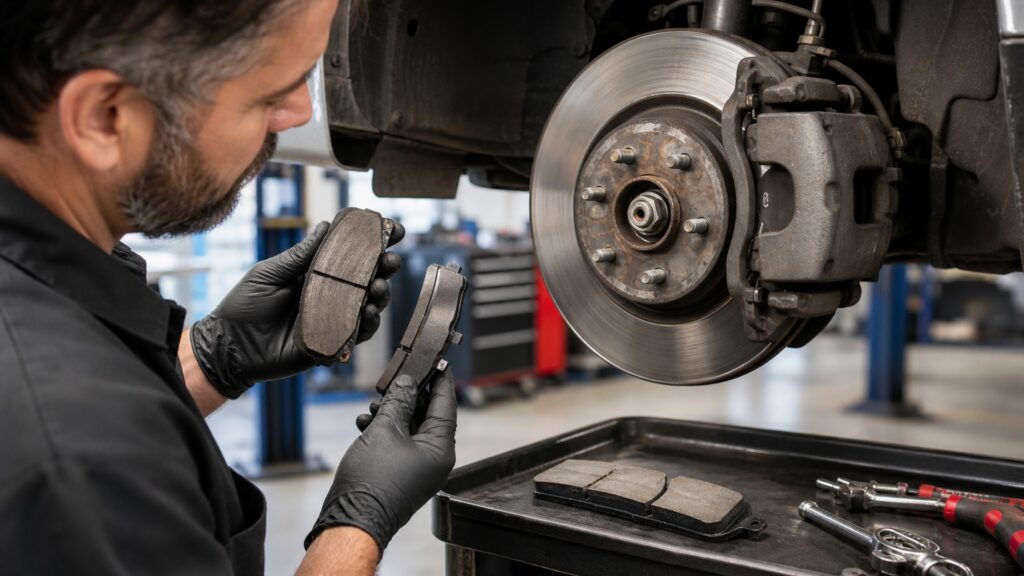
A buyer-first explanation of when pad replacement is enough and when caliper condition changes the decision.
Tip: Read the concept as part of a system, then connect it back to the use case.
These definitions connect the main idea to the variables, limits, and practical signals readers need to compare options.
The replaceable friction block that clamps against the rotor to slow the wheel.
The hydraulic clamp assembly that presses pads against the rotor.
The expected loss of pad material during normal braking.
A caliper fault where the piston cannot extend or retract correctly.
Brake fluid escaping from the caliper, hose, or related hydraulic connection.
Pins, boots, and contact points that let the caliper and pads move evenly.
Tip: Keep the definitions connected; the strongest answer usually comes from the whole system, not one term.
Pads and calipers work together but fail differently. Pads are designed to wear, while calipers are hydraulic and mechanical assemblies that should move, seal, clamp, and release.
The repair should follow the failed role rather than the most expensive part name.
Brake pads are the likely repair when the caliper body is dry, the piston and slides move correctly, and the main evidence is normal lining wear or pad-surface damage.
Pad-only service is strongest when the clamp assembly still behaves normally.
A caliper becomes part of the repair when it cannot apply or release force correctly. Leaks, stuck pistons, torn boots, seized slides, or heat damage make pad replacement alone incomplete.
New pads cannot compensate for a clamp that will not move or seal.
Replacing calipers without evidence adds cost and may miss simpler causes. Corroded clips, dry pins, mismatched pads, or damaged rotors can create symptoms that look more serious than the caliper itself.
A careful inspection protects the buyer from both under-repair and over-repair.
The practical decision starts with confirming the vehicle brake package, then reading pad condition, caliper movement, fluid evidence, and rotor surface together.
Use pads when friction material failed; include calipers when the clamp assembly failed.
A practical comparison of what pads can solve and what still requires caliper-level attention.
Pads are appropriate for normal friction wear, damaged lining, worn edges, or contamination when the caliper still clamps and releases correctly.
Pad replacement can restore contact quality when hardware, rotor condition, and fitment are handled at the same time.
Pads cannot repair fluid leaks, seized pistons, torn caliper boots, broken brackets, or calipers that drag after pressure is released.
Ignoring caliper faults can overheat rotors, ruin new pads, and leave the original brake complaint unresolved.
Common shortcuts and misunderstandings can make the topic seem simpler than it is.
Worn pads are normal because friction material is designed to be consumed. A caliper only becomes suspect when inspection shows leaks, poor release, seized slides, piston problems, damaged boots, or abnormal heat patterns.
Replacing extra parts is not automatically safer. The safest repair matches the failed function, uses correct components, verifies movement and sealing, and confirms the brake corner releases evenly after the work is complete.
Uneven wear deserves caliper inspection, but it can also come from rusty brackets, stuck slide pins, bad clips, rotor problems, or pad fitment errors. The wear pattern points to investigation, not automatic caliper replacement.
New pads may temporarily mask symptoms, but they cannot make a sticking piston or seized slide release correctly. A dragging caliper can overheat the new pads and quickly recreate noise, odor, or vibration.
Tip: Treat strong claims as starting points for comparison, not final answers.
Concise answers to common questions readers may have after the main explanation.
Brake pads are usually enough when wear is normal, the caliper is dry, the piston retracts, slide pins move freely, and rotor condition is acceptable. The final decision still depends on vehicle-specific inspection.
Warning signs include fluid leaks, a stuck piston, seized slide pins, torn boots, strong pulling, persistent drag, extreme heat on one wheel, or inner and outer pads wearing very differently on the same caliper.
Yes. A caliper that drags, leaks, clamps unevenly, or fails to release can overheat and wear new pads quickly. That is why movement and hydraulic checks matter before treating pad replacement as complete.
Many technicians consider axle-pair replacement when one caliper fails from age, corrosion, or hydraulic wear, but it depends on the vehicle and failure type. The key is balanced braking and verified operation on both sides.
Check pad wear pattern, caliper leaks, piston movement, slide-pin travel, boot condition, bracket corrosion, rotor surfaces, and exact pad fitment. Pads-only service makes sense only when the clamp system still works correctly.
Use brake pads instead of calipers when the evidence points to worn friction material and the caliper still moves, seals, clamps, and releases correctly.
The practical takeaway is to separate consumable pad wear from hydraulic or mechanical caliper failure before ordering parts.
Use these Review Streets paths to connect the explainer to related categories, comparisons, and next decisions.
Explore related Review Streets coverage in Automotive Replacement Parts.
Explore related Review Streets coverage in Brake Components.
Explore related Review Streets coverage in Brake Pads.
Compare related Brake Calipers brake component context.
Choose a retailer
Prices checked regularly. We may earn a commission at no cost to you.