
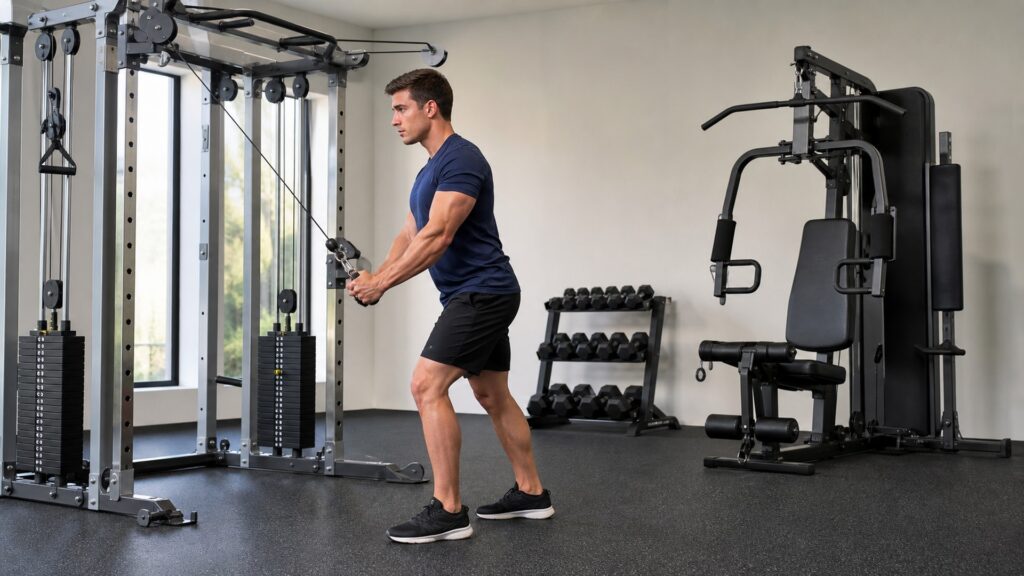
When to Use Cable Machines Instead of Home Gym Systems

Use cable machines instead of home gym systems when adjustable cable resistance is the main training need. Cable machines are better when the routine depends on rows, pulldowns, flyes, curls, pressdowns, rotations, and accessory movements from different angles.

A home gym system may be better when the user wants a broader all-in-one station with built-in presses, leg stations, benches, or guided paths. The decision comes down to cable-focused flexibility versus wider station coverage.

By: Review Streets Research Lab
Updated: September 25, 2026
Explainer · 8-12 min read
cable machines explainer hero image for Review Streets
What You'll Learn

When A Cable Machine Is The Better Fit

A practical decision path for choosing cable-focused equipment over a broader home gym system.

  • When adjustable pulley angles matter most
  • Why cable machines often fit accessory-heavy routines
  • Where home gym systems offer broader station coverage
  • How space and setup affect the choice
  • What to check before choosing cable-focused equipment

Tip: Choose the smaller, more focused option only when its focus matches the training plan.

Definitions

Key Concepts Behind Cable Machines Instead of Home Gym Systems

These concepts clarify the practical equipment differences and buying checks.

Cable-Focused Training

Cable-focused training uses pulleys and attachments as the main source of resistance variety.

  • Example: building sessions around rows, pulldowns, pressdowns, curls, and core work
  • Check: confirm the user's routine depends on cable angles
  • Limit: it may not cover every lift or station

Home Gym System

A home gym system combines several exercise stations or functions in one larger setup.

  • Example: a multi-gym with press arms, pulldown station, and leg developer
  • Check: review which stations will be used weekly
  • Limit: some stations may be less adjustable than dedicated equipment

Pulley Flexibility

Pulley flexibility is the ability to change cable height, angle, and attachment for different exercises.

  • Example: moving from high cable pressdowns to low cable curls
  • Check: test common setup changes
  • Limit: flexibility can require more user knowledge

Station Coverage

Station coverage is the range of built-in training areas a machine provides.

  • Example: separate areas for chest press, pulldown, row, and leg extension
  • Check: separate useful stations from unused extras
  • Limit: more stations can increase footprint and cost

Accessory Priority

Accessory priority means the user's plan relies on targeted supporting movements.

  • Example: cable face pulls and triceps work after larger lifts
  • Check: count how often these movements appear
  • Limit: accessories should support a larger plan

Space Efficiency

Space efficiency is how much useful training the equipment provides for the room it takes up.

  • Example: choosing a compact cable tower for a narrow workout room
  • Check: measure both footprint and movement clearance
  • Limit: compact equipment still needs exercise space

Tip: The right choice is the equipment that supports the user's repeated workouts with the least wasted space, cost, and setup friction.

Best Fit

Choose Cables When Angles Matter

Cable machines are strongest when the workout needs resistance from different heights and directions. That makes them useful for accessory work, core training, and controlled pulling or pressing.

  • Check high, low, and mid pulley positions.
  • Review the attachments needed for weekly exercises.
  • Make sure the cable path stays clear.

Cable-focused training works best when adjustable angles are the point.

Routine Match

Use Cables For Targeted Supporting Work

Many users choose cable machines because they already have a bench, dumbbells, rack, or cardio equipment and need a station for targeted strength movements.

  • Use cables to fill gaps in the current setup.
  • Prioritize the movements that happen every week.
  • Avoid paying for stations that duplicate existing equipment.

A cable machine is often the better add-on for an already developing home gym.

System Advantage

Choose A Home Gym System For Broader Coverage

Home gym systems make sense when the user wants several built-in stations in one purchase. They can simplify setup for people who prefer fixed exercise areas.

  • Look for stations that match the routine.
  • Check comfort at each station.
  • Measure the full machine and working area.

A broader system is useful when the included stations solve real needs.

Space

Compare Footprint With Movement Clearance

A cable machine may have a smaller frame, but cable exercises still need room to step back, kneel, rotate, or place a bench. A home gym system may need more fixed space but fewer setup changes.

  • Measure the equipment and the exercise path.
  • Plan storage for handles and bars.
  • Leave enough clearance for safe reps.

The better fit is the one that works in the room, not only on a spec sheet.

Decision

Start With What The Bigger System Adds

If the home gym system adds stations the user will use often, it may be worth the larger commitment. If those stations are extras, a cable machine may be the cleaner choice.

  • List must-have exercises first.
  • Identify which machine handles them better.
  • Choose the simpler setup when it covers the need.

The cable machine wins when cable resistance is the real reason to buy.

Quick Reality Check

Where Cable Machines Beat Home Gym Systems And Where They Do Not

The decision depends on cable flexibility versus multi-station coverage.

Cable Machines Win When

The routine needs adjustable lines of pull and targeted accessory work.

The user already has other equipment and wants cable capability.

Home Gym Systems Win When

The user wants several built-in stations in one machine.

Fixed stations and guided setup matter more than cable flexibility.

Common Myths

Misconceptions About Cable Machines Versus Home Gym Systems

A smaller machine is not always less useful, and a larger system is not always more complete.

Home gym systems always cover more useful exercises

They cover more only when their stations match the user's plan.

Cable machines are only add-ons

They can be central for routines built around cable resistance.

A compact cable machine solves every space issue

Cable work still needs clearance around the frame.

More stations mean better value

Unused stations add size and cost without improving training.

Tip: Treat broad feature claims as a starting point. The useful test is the workout the machine makes easier to repeat.

FAQ

Frequently Asked Questions About Cable Machines Instead Of Home Gym Systems

Short answers for comparing home strength equipment.

When should I choose a cable machine first?

Choose a cable machine first when adjustable cable work is central to the weekly routine.

When is a home gym system better?

Choose a home gym system when several built-in stations will be used often.

Can a cable machine replace a home gym system?

Sometimes, if the user's main needs are cable rows, pulldowns, pressing, arms, shoulders, and core work.

Which is better for small rooms?

A cable tower may fit better, but the full exercise path still has to be measured.

What is the practical takeaway?

Use cable machines when cable flexibility is the need and home gym systems when broader station coverage is the need.

Bottom Line

Cable machines make more sense than home gym systems when adjustable cable resistance is the main training need.

Home gym systems are stronger when the user wants broader built-in stations and a more all-in-one layout.

Next Steps

Go Deeper or Compare Your Options

Use these Review Streets paths to compare related categories and practical next decisions.

Cable Machines

Explore cable machine options and category-level tradeoffs.

Home Gym Systems

Compare broader home gym systems before choosing an all-in-one setup.