
Cable Resistance
Cable resistance uses a pulley and cable to create load from a chosen direction.
- Example: standing rows from a mid-height pulley
- Check: match the cable angle to the movement
- Limit: it may not replace the feel of a loaded barbell
Use cable machines instead of power racks and squat racks when the workout depends more on adjustable cable resistance than heavy barbell lifts. Cable machines are strong for rows, pulldowns, presses, curls, rotations, and controlled accessory work. Racks are stronger for squats, bench presses, overhead presses, pull-ups, and other barbell-centered training.
The choice is not about which equipment is more serious. It is about the training job. Cable machines offer smooth angles and quick exercise changes. Power racks and squat racks offer a safer structure for loading a barbell heavily.
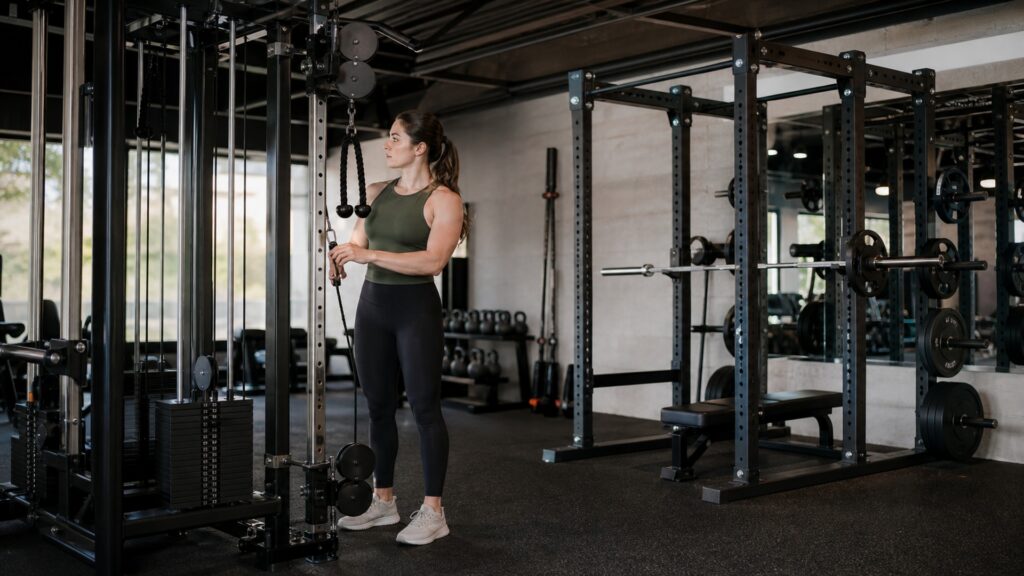
A practical decision path for choosing cable resistance instead of rack-based barbell training.
Tip: Judge the machine by the exercises it makes easier to perform consistently, not by how many movements it claims to support.
These concepts clarify how cable machines fit into practical home strength training.
Cable resistance uses a pulley and cable to create load from a chosen direction.
Rack-based training uses a power rack or squat rack to hold, start, and catch a loaded barbell.
Accessory work supports the main training goal through smaller or more targeted exercises.
A heavy compound lift uses multiple joints and often benefits from stable barbell setup and safeties.
Setup safety is how well the equipment supports starts, finishes, missed reps, and clear movement space.
Training priority is the main type of exercise the user wants the home gym to support.
Tip: A cable machine is most useful when its movement path, resistance, and setup match the exercises a person will repeat.
Cable machines make sense when the workout needs resistance from high, low, forward, sideways, or diagonal positions. That makes them useful for rows, pulldowns, flyes, curls, triceps work, and anti-rotation drills.
Cable machines shine when direction of resistance matters.
Many lifters use cable machines to fill gaps around larger lifts. They can add controlled volume for back, shoulders, arms, chest, hips, and core without loading a barbell for every exercise.
A cable machine can make supporting exercises easier to repeat.
Power racks and squat racks are built around the barbell. They are the better tool when the main plan includes heavy squats, bench presses, rack pulls, overhead presses, or pull-up work.
The rack's value is safe structure for loaded barbell training.
A cable machine and a rack both need more room than their footprint suggests. Cable work may need side and front clearance, while rack training needs space for the bar, plates, bench, and spotter access.
The best choice is the one that fits the room and the routine together.
A home gym should support the exercises that define the program. If those are cable rows, pulldowns, face pulls, and controlled accessories, cables may come first. If they are squats and presses, a rack may come first.
The right first purchase follows the training priority.
The better option depends on cable angles versus loaded barbell support.
The workout needs adjustable resistance angles and quick accessory changes.
The user wants controlled pulling, isolation, core, and rehabilitation-style movements.
Heavy barbell squats, presses, and bench work are the core of the program.
Safeties and bar support are essential to the training plan.
Both can belong in a serious home gym, but they solve different problems.
Cable machines can support demanding strength work, but they train it through a different resistance path.
A rack supports a barbell well, but it does not create adjustable cable angles on its own.
They can supplement those lifts, but they usually do not match the same loading pattern.
Movement clearance, plate storage, and attachment space all matter.
Tip: The strongest claims are worth checking against the actual exercises, space, and resistance range.
Short answers for choosing, using, and comparing cable machines.
Buy the one that supports your weekly must-have exercises. Choose cables for adjustable accessory work and a rack for barbell lifts.
Yes. They can build strength, especially in pulling, pressing, arm, shoulder, and core movements, but the feel differs from barbell loading.
They are safer for loaded barbell work when used with proper safeties. Cable machines have different safety considerations, such as cable path, attachments, and stable stance.
Yes. Many strong setups use a rack for main barbell lifts and a cable machine for accessories.
Use cable machines when adjustable resistance is the need and racks when barbell support is the need.
Cable machines make more sense than racks when adjustable resistance angles and accessory work drive the routine.
Power racks and squat racks remain the better choice when heavy barbell lifts are the center of training.
Use these Review Streets paths to compare related categories and practical next decisions.
Explore the cable machine category before comparing setups.
Compare broader home gym systems with cable-focused equipment.
Review the rack-based path for barbell strength training.
Choose a retailer
Prices checked regularly. We may earn a commission at no cost to you.