When to Use Compact SUVs Instead of Electric SUVs

Choose a compact SUV when a manageable body size meets your passenger and cargo needs. That does not require rejecting electric propulsion: a compact SUV can also be electric. Compact describes dimensions and packaging, while electric describes how the vehicle is powered. The useful question is whether a compact gasoline or conventional-hybrid model suits your routine better than a battery-electric candidate.

A non-plug-in compact may make sense when charging access is uncertain, recurring routes are difficult to support, or the complete ownership calculation favors it. Those are practical reasons to choose a powertrain. If a compact electric SUV fits the same space requirements and has dependable charging, the size label gives no reason to exclude it.

By: Review Streets Research Lab
Updated: September 30, 2026
Explainer · 8-12 min read
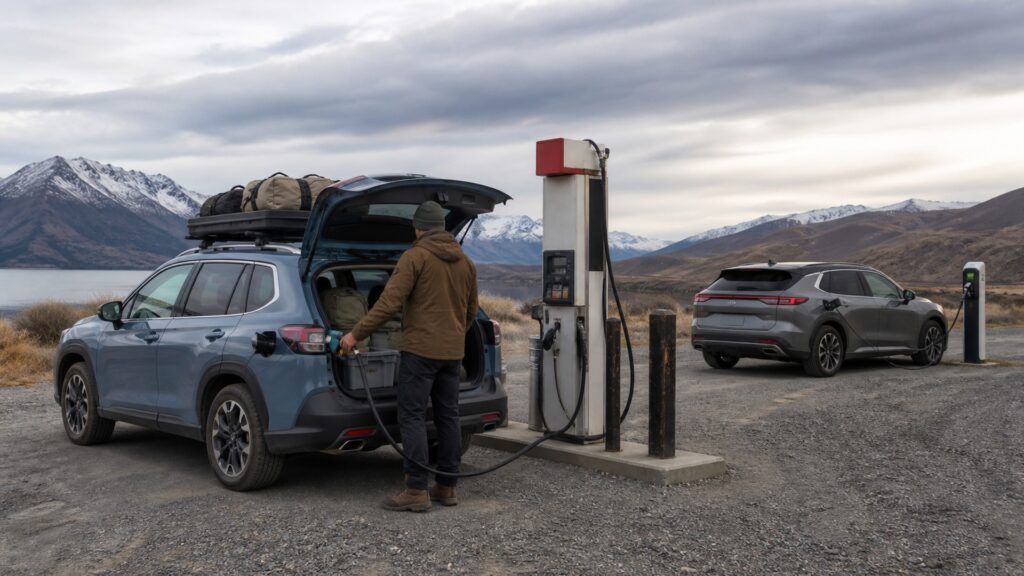
compact suvs explainer hero image for Review Streets
What You'll Learn

Choose a Manageable Size and a Workable Energy Routine

Evaluate the body and powertrain as related but separate decisions.

  • Establish the smallest practical vehicle that meets recurring needs.
  • Keep compact electric models eligible when they fit.
  • Verify charging access before assuming an EV will be convenient.
  • Test difficult routes as well as ordinary commuting.
  • Compare complete costs using current, relevant quotes.

Tip: A larger electric candidate may be unsuitable because of its dimensions; that does not make every electric SUV unsuitable.

Definitions

The Distinctions Behind a Compact-First Choice

These concepts help identify the real reason one candidate fits better.

Compact footprint

The relatively small exterior space occupied by a compact SUV.

  • Example: A candidate clears a narrow parking approach more comfortably.
  • Check: Check actual dimensions, mirrors, and opening clearances.
  • Limit: The class name does not guarantee a particular measurement.

Usable carrying space

Room for the required people and items in their intended arrangement.

  • Example: A stroller fits while all needed passenger seats remain available.
  • Check: Try the actual combination rather than only reading maximum cargo volume.
  • Limit: Folded-seat space cannot serve an occupant at the same time.

Non-plug-in powertrain

A propulsion arrangement replenished through fuel without routine external charging.

  • Example: A conventional hybrid uses fuel stops while managing electrical assistance internally.
  • Check: Distinguish it from a plug-in hybrid and a BEV.
  • Limit: The absence of charging does not establish the lowest ownership cost.

Dependable charging access

A suitable charging opportunity reliably available during normal use.

  • Example: A permitted home installation supports overnight replenishment.
  • Check: Confirm permission, equipment, supply, and timing.
  • Limit: A nearby station may not be convenient or available when needed.

Recurring route constraint

A trip requirement that repeatedly limits otherwise suitable choices.

  • Example: A regular remote journey has few compatible charging options.
  • Check: Plan the actual route and credible alternatives.
  • Limit: An unusual one-off trip may deserve a different solution from a weekly obligation.

Whole-use comparison

An assessment of costs and convenience for the same household task.

  • Example: Candidates are compared over equal mileage and ownership periods.
  • Check: Include purchase, insurance, energy, service, and charging arrangements.
  • Limit: One favorable specification cannot settle every requirement.

Tip: Identify whether the limiting factor is space, energy access, trip capability, or money before changing the shortlist.

Start with the body

Use Compact Dimensions to Solve a Real Space Constraint

A compact SUV can be useful when parking, narrow approaches, and ordinary errands make exterior size important. Measure the actual space and test the maneuver into it. Then verify that the cabin accommodates the regular occupants and luggage without depending on a seat that must be occupied.

  • Measure mirrors and doors as well as body width.
  • Check the turning approach to routine parking.
  • Retain necessary seats during the cargo trial.

If a larger electric SUV will not fit the garage comfortably, compare compact electric alternatives before treating propulsion as the problem. The immediate constraint is the vehicle’s geometry.

Everyday energy

Prefer Fuel-Based Replenishment When Charging Is Unresolved

A gasoline or conventional-hybrid compact can suit a driver whose parking situation does not support dependable charging. Assess the realistic alternatives first, including workplace and public access. Count the travel and waiting involved instead of assuming that any charger nearby provides the same convenience as charging where the vehicle normally parks.

  • Confirm whether charging access is permitted and repeatable.
  • Check compatibility, pricing, and normal availability.
  • Consider changes in housing or workplace access.

A renter without assigned parking may reasonably favor a non-plug-in compact today. The conclusion could change after reliable charging becomes available, without any change in the household’s preferred vehicle size.

The difficult trip

Test the Journey That Could Break the Routine

Long journeys, cold weather, remote destinations, and permitted towing can increase planning demands for a BEV. Map suitable charging locations and alternatives for recurring trips. Evaluate the fuel-powered candidate against its own limits as well, including cargo, payload, and any trailer equipment.

  • Use the actual route rather than a general range claim.
  • Allow for weather, load, speed, and detours.
  • Check whether planned stops are acceptable to the driver.

A weekly journey with uncertain charging can favor a suitable non-plug-in compact. A single annual trip may be easier to address through planning or another transport arrangement; frequency changes the importance of the constraint.

Budget and upkeep

Compare the Complete Cost of the Same Job

A compact gasoline SUV may have a lower purchase price than a particular electric candidate, but prices and equipment vary. Compare current purchase terms, insurance, energy, scheduled service, tires, and charging costs where applicable. Use realistic public and home electricity prices rather than assuming every mile is charged at the cheapest rate.

  • Keep annual mileage and ownership duration consistent.
  • Include any installation or access costs.
  • Check current incentives only if they actually apply.

A low-mileage driver may see a different result from a long-distance commuter. The answer depends on the particular vehicles and use, not merely on whether one accepts gasoline and the other electricity.

Make the selection

Keep Suitable Electric Compacts in the Final Comparison

Once space, energy access, and budget are resolved, compare comfort, visibility, response, and controls. A compact BEV that meets the requirements remains a compact-SUV solution. A non-plug-in model is a defensible choice when its fueling arrangement or overall ownership case better serves the driver’s actual constraints.

  • Test both candidates with the normal passenger arrangement.
  • Assess routine convenience over a representative week.
  • Choose from vehicles that pass every essential requirement.

Do not accept cramped seating in a gasoline compact solely to avoid charging, or an oversized BEV solely to obtain electric propulsion. Broaden the candidate list when either compromise defeats the reason for buying the vehicle.

Quick Reality Check

When a Non-Plug-In Compact Can Be the Better Fit

The choice depends on constraints rather than opposing category labels.

Consider it when…

A compact body meets the carrying task and charging remains unreliable or inconvenient.

Recurring routes and the complete ownership calculation favor fuel-based replenishment.

Keep a compact BEV in contention when…

Its seating, cargo space, parking fit, and ratings meet the same requirements.

Dependable charging and practical trip plans are already available.

Common Myths

Misconceptions About Compact Versus Electric Choices

Separate the size decision from the energy decision.

Are compact and electric mutually exclusive?

No. A compact electric SUV belongs to both categories.

Does unavailable home charging automatically rule out a BEV?

Not always. A dependable workplace or public arrangement can work, but its cost and timing need verification.

Is a gasoline compact always cheaper to own?

No. Purchase terms, mileage, insurance, energy prices, and upkeep determine the result.

Does a compact body guarantee easy family use?

No. Test the required seats, restraints, luggage, and access in the actual vehicle.

Tip: Make each exclusion traceable to a real requirement rather than a broad impression about a vehicle type.

FAQ

Questions Before Choosing a Fuel-Powered Compact

These checks help establish whether it solves the actual problem.

What should I compare first?

Confirm passenger, cargo, and parking fit. Then evaluate energy access and costs for candidates that pass those requirements.

What if the electric SUV I like is too large?

Look for a compact electric candidate before concluding that electric propulsion itself is unsuitable.

How should I evaluate public charging?

Check compatibility, availability, access hours, prices, and the time required in your normal routine, with a backup plan.

When should I revisit the decision?

Reassess if charging access, mileage, household capacity needs, or ownership costs materially change.

Bottom Line

Use a compact SUV when its size solves the carrying and parking job, then choose a suitable powertrain.

A non-plug-in compact can be sensible when charging or trip constraints favor it, while compact electric options remain valid when those constraints are resolved.

Next Steps

Go Deeper or Compare Your Options

Use these Review Streets paths to compare related categories and practical next decisions.

Vehicles

Compare related vehicle choices against the same carrying needs and driving routine.

SUVs

Compare related vehicle choices against the same carrying needs and driving routine.

Compact SUVs

Explore Compact SUVs with your passenger, cargo, and ownership requirements in mind.

Further reading: DOE EV ownership considerations; Charging options for consumers; Hybrid basics; Cold-weather electric driving. Use the owner’s manual for the exact vehicle’s instructions and limits.