When to Use Compact SUVs Instead of Full Size SUVs

Use a compact SUV instead of a full-size SUV when it comfortably carries the people and equipment you regularly need while making everyday parking, access, and ownership easier to manage. The larger vehicle earns its place when its additional usable capacity solves a recurring requirement. Extra room that is seldom needed should be weighed against the size you must accommodate on every trip.

Make the decision with actual vehicles and loads. A compact may suit a household of a few people with ordinary luggage, yet be unsuitable when all required seats and bulky equipment must travel together. Neither a large cargo figure nor the full-size label can settle that question without checking seating, access, payload, and any towing requirement.

By: Review Streets Research Lab
Updated: October 1, 2026
Explainer · 8-12 min read
compact suvs explainer hero image for Review Streets
What You'll Learn

Choose the Smallest Vehicle That Reliably Does the Job

Balance the frequent routine with the demanding tasks that cannot be compromised.

  • Keep required passenger positions occupied during cargo checks.
  • Measure ordinary parking and access constraints.
  • Separate recurring capacity needs from rare exceptions.
  • Verify loading and towing on the exact configuration.
  • Compare complete ownership costs for the same use.

Tip: A compact is a good substitute only if it meets the essential task without a recurring workaround.

Definitions

The Checks Behind a Sensible Size Choice

These concepts distinguish useful capacity from merely available space.

Recurring capacity

The people and items that need to travel together repeatedly.

  • Example: Weekly outings require four occupants and sports equipment.
  • Check: List the complete normal load before shopping.
  • Limit: An average solo trip can hide an essential family requirement.

Occupied-seat luggage space

Storage available with every necessary passenger position retained.

  • Example: Travel bags must fit without folding a seat someone needs.
  • Check: Test representative items in that layout.
  • Limit: Maximum folded-seat volume may describe an unusable arrangement for the trip.

Parking envelope

Space needed for the vehicle, approach, and ordinary opening movements.

  • Example: A garage must allow doors and the tailgate to open.
  • Check: Measure mirrors, turns, and loading space.
  • Limit: The final parked rectangle is only part of the requirement.

Payload allowance

The permitted carried weight for occupants and cargo under the vehicle’s specifications.

  • Example: Passengers, bags, and added equipment are accounted for together.
  • Check: Use the relevant vehicle label and instructions.
  • Limit: An empty-looking cargo area does not establish spare weight capacity.

Verified towing task

A trailer use checked against vehicle configuration, equipment, and applicable limits.

  • Example: A small trailer is assessed alongside the family’s carried load.
  • Check: Confirm every relevant rating and required component.
  • Limit: A larger vehicle is not automatically suitable for every trailer.

Occasional-use alternative

Another practical way to meet an infrequent requirement.

  • Example: A household rents an appropriate vehicle for one unusually large annual trip.
  • Check: Compare availability, cost, and inconvenience honestly.
  • Limit: An alternative is useful only if it is actually workable when needed.

Tip: Decide which requirements are essential before comparing preferences and convenience features.

The everyday load

Confirm That the Compact Carries Everyone Together

Start with the regular occupants, their seat positions, any child restraints, and the luggage they bring. Check the complete arrangement rather than testing each item separately. Compact SUVs vary in rear-seat shape, cargo opening, and usable floor area, so a candidate can succeed where another of similar size fails.

  • Set the front seats for their normal occupants.
  • Try required restraints and check belt access.
  • Load bulky items with necessary seats still available.

A stroller that fits only with one rear seat folded may be acceptable for one household and impossible for another. The passenger arrangement decides whether that space is genuinely usable.

Daily surroundings

Let Parking and Access Count in the Decision

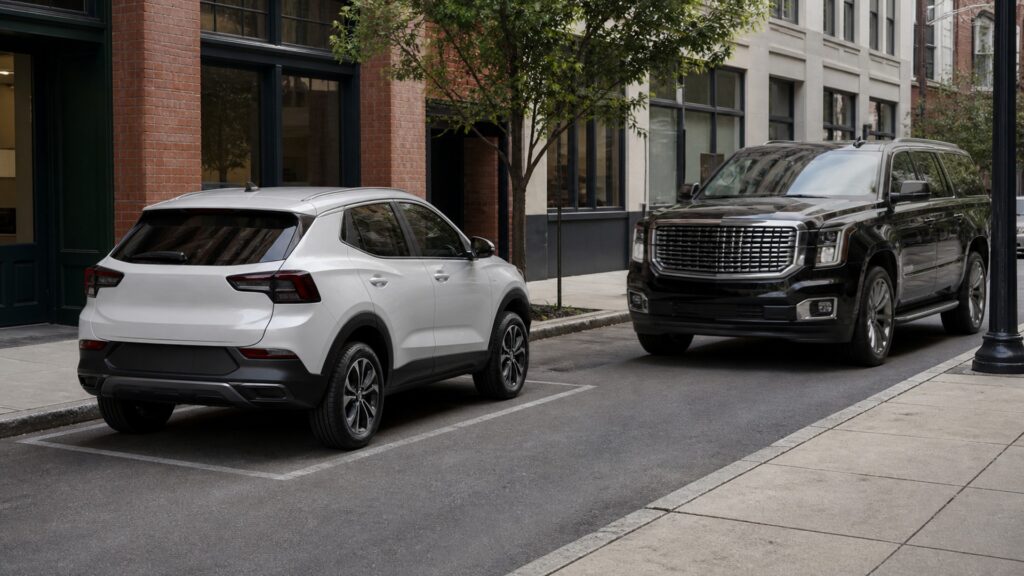
A smaller footprint can be valuable on narrow streets, in crowded parking areas, and at home. Compare the actual dimensions and the path into the space. Include room for passengers to get out and for luggage to pass through the tailgate, because those movements repeat even on short errands.

  • Measure mirror width and usable garage length.
  • Test the turning approach to normal parking.
  • Check doors and hatch clearance in the intended position.

A full-size SUV may fit inside a garage but leave little room to secure a child in a rear seat. If a compact solves that daily difficulty while carrying the same household, the smaller body has a concrete advantage.

The infrequent maximum

Do Not Let a Rare Trip Decide Without Examination

Some households need maximum passenger or luggage capacity only a few times each year. Compare the year-round consequences of a larger vehicle with credible alternatives for those trips. Include the time and availability involved; do not assume renting or borrowing will always be easy.

  • Record how often the largest load occurs.
  • Identify which trips cannot reasonably use an alternative.
  • Compare actual costs and arrangements rather than hypothetical options.

If a large group travels together every weekend, full-size capacity may be well justified. If the same need occurs once a year, a compact plus a planned alternative may better fit the remaining months.

Weight and work

Verify Capability Independently of Cabin Size

Passenger volume, payload, and towing are different measures. A compact that fits the luggage still needs enough permitted carrying weight, and a trailer task needs a suitable vehicle configuration and equipment. Apply the same checks to the full-size candidate rather than assuming its greater bulk resolves every limit.

  • Count people, cargo, accessories, and applicable hitch load.
  • Check the exact powertrain and required towing equipment.
  • Review the complete loaded arrangement against all relevant limits.

A roof box can create storage volume while adding weight and height. It may be a useful accessory, but it cannot turn an overloaded compact into a suitable replacement for a vehicle with the needed allowance.

Ownership and comfort

Compare the Cost of Capacity You Will Use

Purchase price, energy use, insurance, tires, and maintenance depend on the actual candidates. A compact may reduce some expenses, but size alone cannot establish the total. After capacity passes, compare ride, controls, visibility, and the effort of using each vehicle in the ordinary week.

  • Use matching mileage and ownership periods.
  • Obtain relevant insurance and replacement-tire quotes.
  • Compare powertrain and equipment differences alongside size.

Choose the compact when it meets the job and its smaller footprint or ownership case provides a worthwhile benefit. Choose the larger vehicle when the additional usable capacity repeatedly prevents a real compromise.

Quick Reality Check

When Each Size Earns Its Place

These circumstances help organize the decision without replacing vehicle-specific checks.

Compact is a strong fit when…

The regular household and luggage fit comfortably within ratings.

Parking and lightly loaded everyday use make a smaller body valuable.

Full-size can be justified when…

A large group and substantial luggage travel together frequently.

A verified carrying or towing task requires capability the compact candidates do not provide.

Common Myths

Misconceptions About Downsizing an SUV

Avoid treating either size as an automatic answer.

Is a compact only suitable for short trips?

No. A compact that meets the people, luggage, comfort, and route requirements can serve long journeys.

Does full-size always mean every passenger fits comfortably?

No. Check actual seats, access, restraints, and luggage space.

Can a roof box replace any missing capacity?

It may add volume, but weight, height, mounting, and operating limits still apply.

Will a compact always cost less?

No. Compare the specific vehicles, equipment, energy use, insurance, and purchase terms.

Tip: A successful smaller choice meets the essential load before claiming convenience or cost benefits.

FAQ

Questions Before Choosing the Compact

Use the actual household arrangement to answer these.

What is the most important loading test?

Try the normal occupants and bulky luggage together, keeping every needed seat usable.

Should I plan for occasional extra passengers?

Consider how often the need occurs, how important it is, and whether a dependable alternative exists.

How should I compare towing?

Check the exact configuration, equipment, payload accounting, and applicable limits for the real trailer.

What if neither size seems right?

Broaden the shortlist to other layouts or intermediate sizes rather than accepting a vehicle that misses a firm requirement.

Bottom Line

Use a compact SUV when it meets the real carrying job and makes ordinary ownership easier.

Keep full-size capacity when it solves a frequent, verified need that the smaller vehicle cannot meet.

Next Steps

Go Deeper or Compare Your Options

Use these Review Streets paths to compare related categories and practical next decisions.

Vehicles

Compare related vehicle choices against the same carrying needs and driving routine.

SUVs

Compare related vehicle choices against the same carrying needs and driving routine.

Compact SUVs

Explore Compact SUVs with your passenger, cargo, and ownership requirements in mind.

Further reading: Child-restraint fit guidance; Vehicle-specific towing information; Vehicle efficiency comparisons. Use the owner’s manual for the exact vehicle’s instructions and limits.