
Emollient Phase
Oil-related portion providing slip and a flexible feel.
- Use: spread pigment
- Variable: formula and temperature
- Tradeoff: Can migrate or feel tacky
Use cream blush instead of powder blush when you want color to spread as a thin, skin-like film over an unset or lightly set base. Cream formats are useful for sheer-to-medium placement, finger application, quick monochromatic looks, and controlled radiance without adding another dry powder layer.
The choice is situational, not a dry-skin rule. Cream can lift foundation, remain tacky, collect lint, or fade where oil and friction are high. Powder may layer more cleanly over a set base, offer precise gradual buildup, and store with less risk of emollient smearing. Formula, pigment strength, tool, packaging, climate, skin preparation, and desired correction all affect the better format.
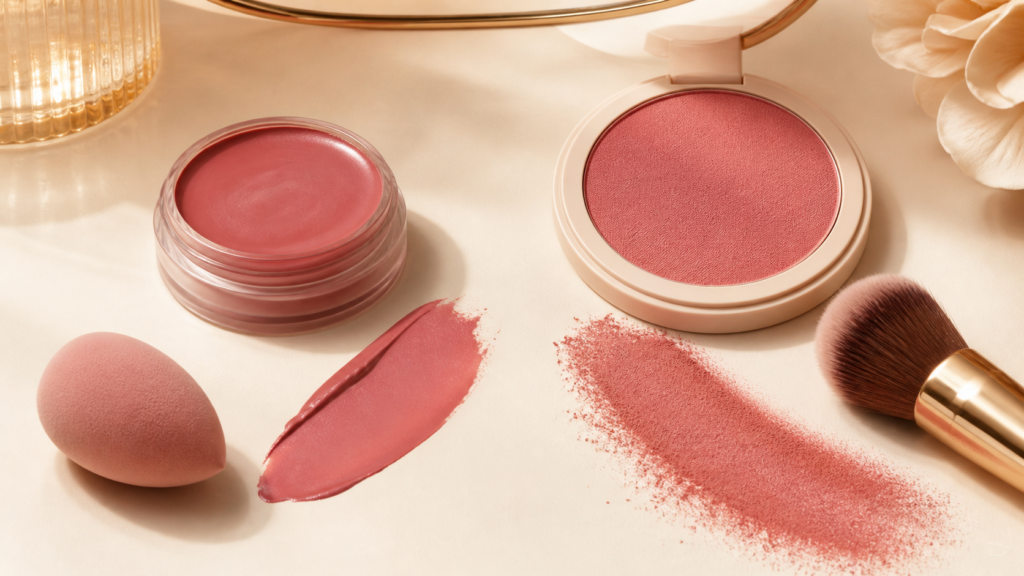
Recommend cream blush when a spreadable emollient or gel film improves sheer placement, fusion with an unpowdered base, portability, and finger application, while naming powder-favoring cases such as oily surfaces, precise buildup, long storage, and set bases.
Tip: Cream succeeds when the base stays intact.
These when to choose cream blush concepts separate mechanism, application, limits, and purchasing consequences.
Oil-related portion providing slip and a flexible feel.
Useful interval for blending before a cream sets.
Removal or displacement of underlying foundation during blending.
Increase in visible color as a cream is spread or warmed.
Contamination control for a product repeatedly touched by tools or fingers.
Soft transition from blush color into surrounding base.
Tip: Use these terms to test when to choose cream blush instead of relying on a front-label promise.
Cream often merges well with liquid or cream foundation before heavy setting powder. Apply with light tapping so the color joins rather than excavates the layer below.
Cream succeeds when the base stays intact.
Emollient or gel residues can preserve reflection and soften the border without a visibly powdery layer. Matte cream formulas also exist, so read the actual finish.
Cream is a format, not a guaranteed glow.
Sticks and small pots can simplify tools, but direct stick contact may move base and fingers must be clean. A palette or sanitized tool improves hygiene for shared work.
Convenience should not weaken hygiene.
Powder can grip a set base and build gradually with less rewetting. It may be better when cream stays tacky, transfers, or disappears quickly in the user's climate.
Powder wins when dry deposition is easier to control.
Cream can dry out, melt, or change texture; powder can shatter or hard-pan. Test removal, shade, packaging, applicator cleaning, and use before expiry cues.
The best format remains stable from first application to last safe use.
Cream blush is preferable when its spreadable film improves the actual routine; it is not universally more natural, hydrating, or forgiving.
The cream blends with the base without lifting or patching.
Its color and finish remain acceptable through normal movement and oil.
Fast-setting creams can become harder to correct than powder.
Open pots and repeated finger contact require careful hygiene.
These claims flatten the variables that determine how when to choose cream blush performs in a real routine.
It can reduce a powdery look, but fragrance, film, pigment, or rubbing may still feel uncomfortable or catch on flakes. Skin preparation and formula matter.
Finely dispersed powder applied thinly with a suitable brush can look seamless. Heavy pickup and poor shade match create the obvious powder effect.
Sponges, brushes, and palette transfer can offer control and hygiene. Use clean tools and avoid sharing direct-contact products.
Sheer creams can be forgiving, while very pigmented or fast-setting ones are difficult to correct. Pickup rate and open time define the learning curve.
Some combinations work with gentle pressing, but cream can disturb a dry set layer. Test the exact products and use the smallest possible dose.
Tip: Test the exact when to choose cream blush tool, setting, and routine before generalizing from its category.
The remaining decisions about when to choose cream blush concern technique, compatibility, safety, upkeep, and value.
Often yes, because it can merge with an unset base, but follow product directions and the full routine. Apply powder selectively afterward if needed.
Yes when intended for facial use and compatible with the user's skin. Sunscreen should still be applied in its adequate directed layer and allowed to set.
Use the remaining foundation on a sponge to soften edges, or lift carefully with a clean tool. Adding more base repeatedly may create thickness.
It limits open exposure but direct contact transfers skin material to the surface. Keep it personal, cap promptly, and follow cleaning or replacement guidance.
Low pigment, thin application, base mixing, sebum, sweat, friction, and an incomplete film can reduce color. Test a compatible setting method before overapplying.
Choose powder when the base is already set, gradual buildup is easier, oil or tack is a problem, or cream repeatedly lifts and migrates.
Use cream blush when a spreadable film improves fusion with an unpowdered base, soft edge control, portable application, or a chosen reflective finish. Its advantage is contextual rather than tied to one skin type.
Choose powder when dry deposition over a set surface gives better buildup, correction, or wear. Compare base pickup, play time, hygiene, climate, storage, and the full-day result.
These Review Streets paths narrow the next when to choose cream blush decision by format, goal, and routine fit.
Browse face, eye, lip, brow, primer, and setting categories.
Compare liquid foundation coverage, finish, shade, and wear.
Choose a retailer
Prices checked regularly. We may earn a commission at no cost to you.