When to Use Electric SUVs Instead of Full Size SUVs

An electric SUV can replace a fuel-powered full-size SUV when it meets the same essential carrying requirements and has a dependable charging plan. It may also be a full-size vehicle itself: electric describes propulsion, while full-size describes dimensions and packaging. The choice is not automatically between a smaller electric vehicle and a larger fuel-powered one.

Start by identifying why the full-size SUV is needed. Frequent use of several passenger rows, bulky luggage, or a specific trailer can make capacity a firm requirement. If that capacity is rarely used, a smaller electric SUV may be worth considering—but downsizing and changing powertrain should be evaluated as two separate decisions.

By: Review Streets Research Lab
Updated: September 30, 2026
Explainer · 8-12 min read
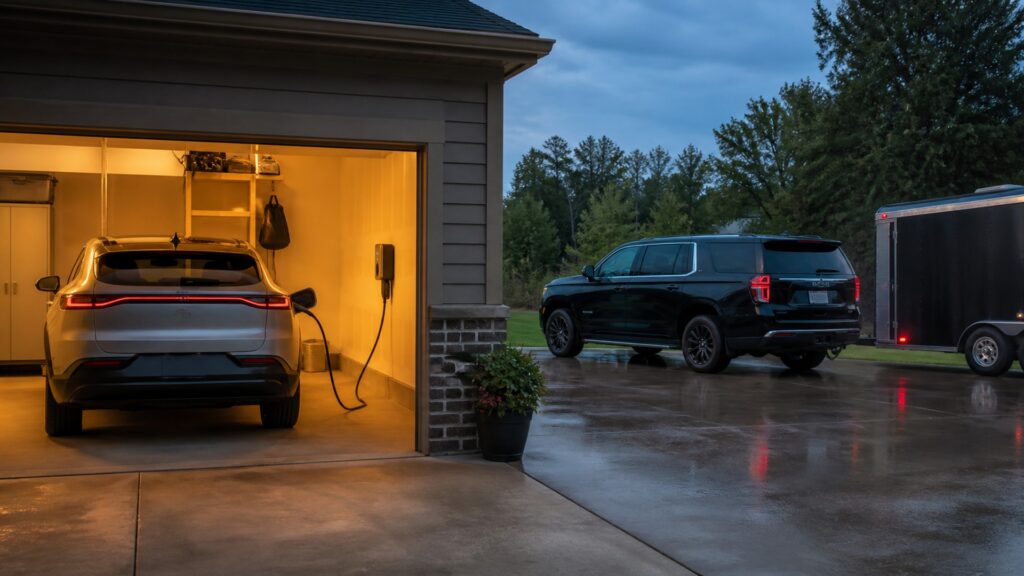
electric suvs explainer hero image for Review Streets
What You'll Learn

Replace the Actual Job, Not Just the Fuel Stop

A successful switch preserves essential capability while making the energy routine workable.

  • List the tasks that genuinely require the present size.
  • Test the electric candidate with the same people and luggage.
  • Verify payload and any trailer requirement independently.
  • Confirm ordinary charging and difficult-route support.
  • Compare the cost and time of the complete arrangement.

Tip: Do not trade away an essential passenger position to make a cargo comparison appear favorable.

Definitions

The Checks Behind a Full-Size SUV Replacement

These concepts help distinguish a workable change from an attractive but unsuitable vehicle.

Required capacity

The people and equipment that must travel together on a recurring task.

  • Example: A family needs every rear seat and room for travel bags.
  • Check: Document the full occupied-seat arrangement.
  • Limit: Maximum volume with folded seats may not describe the requirement.

Size retention

Keeping the body scale or usable capacity needed for the task.

  • Example: A full-size electric candidate replaces a similarly sized fuel-powered SUV.
  • Check: Compare usable space and access directly.
  • Limit: Electric propulsion does not require downsizing.

Downsizing

Choosing a smaller vehicle after deciding that its capacity is sufficient.

  • Example: A smaller electric SUV meets normal use after a household’s needs change.
  • Check: Separate the size decision from the propulsion decision.
  • Limit: Reduced fuel use cannot compensate for missing essential capacity.

Loaded-trip suitability

Ability to complete the real trip with its occupants, cargo, and any permitted trailer.

  • Example: A long towing journey requires both valid ratings and workable energy stops.
  • Check: Check the complete configuration and route.
  • Limit: A solo range estimate does not establish loaded-trip capability.

Routine charging plan

A reliable way to replenish energy during normal life.

  • Example: An approved home installation covers ordinary driving.
  • Check: Confirm access, compatibility, timing, and cost.
  • Limit: An intended installation is not yet proven charging access.

Transition cost

The financial and practical cost of changing vehicles and energy arrangements.

  • Example: The calculation includes purchase terms and charging installation.
  • Check: Use current quotes and the same ownership period.
  • Limit: Energy savings alone do not describe the whole change.

Tip: Preserve the task first; compare comfort and preferences after the hard requirements are satisfied.

Why the larger vehicle exists

Identify the Capacity You Actually Use

Review the trips that led to choosing a full-size SUV. Some households regularly carry a large group with luggage; others mainly drive alone and need the extra room only occasionally. Establish which requirements are frequent, which are essential, and which could be handled another way.

  • List passenger positions needed at the same time.
  • Include bulky equipment and typical travel luggage.
  • Record how often the largest task occurs.

A household whose passenger needs have changed may be able to downsize comfortably. Another household with a full third row every week should keep that constraint intact while considering electric propulsion.

Capacity verification

Test Electric Candidates in the Occupied Configuration

Electric packaging can differ from a familiar fuel-powered SUV, but it does not guarantee that every dimension is better. Check seat comfort, access, cargo-floor shape, and luggage openings. Include loading limits and required equipment rather than treating a spacious interior as proof of sufficient payload.

  • Try the intended passengers and restraints.
  • Load representative items behind the occupied rows.
  • Read the exact vehicle’s weight and equipment limits.

A candidate may offer useful front storage yet still lack room for a particular bulky item behind the rear seats. Compare where the actual items fit, not just the sum of several storage figures.

Regular replenishment

Choose Electric When Charging Has a Firm Place in the Week

Reliable charging can let an owner replenish energy while the SUV is already parked. Establish that opportunity before committing: home permissions, electrical work, workplace access, or a dependable public arrangement may all matter. Consider a backup if the usual location becomes unavailable.

  • Confirm installation feasibility and equipment compatibility.
  • Check the time available against ordinary energy needs.
  • Use realistic prices for the locations you will use.

A driver with suitable overnight charging may find the change convenient. A driver who must make frequent special charging trips should include that burden rather than assuming the same experience.

The hardest recurring journey

Evaluate Towing and Remote Routes Separately

Towing and difficult routes require more than comparing headline range. Verify permitted weights and equipment, then plan energy stops for the actual conditions. A trailer can also affect charger access and maneuvering, so a station’s presence on a map is only the start of the route check.

  • Use exact vehicle and trailer specifications.
  • Allow for weather, speed, load, and terrain.
  • Check compatible stops, access, and alternatives.

If a regular remote trip cannot be supported comfortably, retaining a suitable fuel-powered vehicle may make sense. If it can, the existence of that trip alone is not a reason to exclude electric SUVs.

The final decision

Compare the Benefits After Capacity and Charging Pass

Once an electric candidate meets the job, assess its response, comfort, noise, controls, and ownership cost. Include financing or purchase terms, insurance, tires, scheduled service, energy, and any charging work. Keep benefits from a smaller body separate from benefits of electric propulsion.

  • Compare equivalent annual mileage and ownership periods.
  • Use current quotes rather than assumed savings.
  • Consider whether parking or charging access may change.

A smaller electric SUV might lower both energy use and parking effort, but those are two different changes. Naming them separately helps explain why the replacement works and which advantage would disappear if a larger vehicle became necessary again.

Quick Reality Check

When Switching to Electric Is a Strong Fit

Use circumstances rather than fixed rules about size classes.

A switch is well supported when…

The electric candidate meets required seating, cargo, payload, and towing tasks.

Dependable charging and acceptable trip stops fit the owner’s routine.

Keep evaluating alternatives when…

The candidate forces recurring capacity compromises or lacks needed equipment.

Charging access or demanding routes remain unresolved.

Common Myths

Misconceptions About Replacing a Full-Size SUV

Separate propulsion, size, and the actual use case.

Does going electric mean giving up full-size dimensions?

No. A vehicle can be both electric and full-size.

Can extra front storage replace a needed third row?

No. Different forms of capacity are not interchangeable; retain the required passenger positions.

Does a towing rating settle a long towing trip?

No. Proper equipment, payload accounting, energy use, and suitable stops also matter.

Should occasional use of maximum space always rule out a smaller EV?

Not automatically. Evaluate the frequency, importance, and practical alternatives for that task.

Tip: An honest comparison keeps every essential requirement visible until the final decision.

FAQ

Questions Before Making the Replacement

Answer these with the actual vehicle and routes.

What is the first dealership test?

Try the regular passenger arrangement and representative luggage together, with all needed seats retained.

Should I keep the same size class?

Keep the capacity you need. If a smaller vehicle meets it, evaluate downsizing separately from the powertrain change.

What if home charging is not available?

Test a dependable alternative, including access, cost, and time. If it remains uncertain, the switch is not fully planned.

How can I compare trip convenience fairly?

Map the recurring route for each candidate and include actual stop locations, energy needs, access, and acceptable time.

Bottom Line

Use an electric SUV instead of a fuel-powered full-size SUV when it replaces the whole job successfully.

Keep necessary capacity, verify loaded trips, and secure charging before treating lower energy expense or a pleasant test drive as decisive.

Next Steps

Go Deeper or Compare Your Options

Use these Review Streets paths to compare related categories and practical next decisions.

Vehicles

Compare related vehicle choices against the same carrying needs and driving routine.

SUVs

Compare related vehicle choices against the same carrying needs and driving routine.

Electric SUVs

Explore Electric SUVs with your passenger, cargo, and ownership requirements in mind.

Further reading: DOE EV ownership considerations; Charging station locator; Vehicle-specific towing guidance; Cold-weather EV planning. Use the owner’s manual for the exact vehicle’s instructions and limits.