
When to Use Full Size SUVs Instead of Compact SUVs

Use a full-size SUV instead of a compact when a recurring passenger, luggage, or towing requirement cannot be met by the smaller vehicle and the exact full-size configuration solves it. The strongest case is a trip that needs several occupied rows and useful luggage space together, or a verified towing setup beyond the compact’s limits.

The larger vehicle must also fit daily life. Garage access, parking, passenger entry, purchase cost, and running expenses remain important when the extra seats are empty. If a compact already handles your normal load, full-size capacity may add more burden than benefit.

By: Review Streets Research Lab
Updated: September 30, 2026
Explainer · 8-12 min read
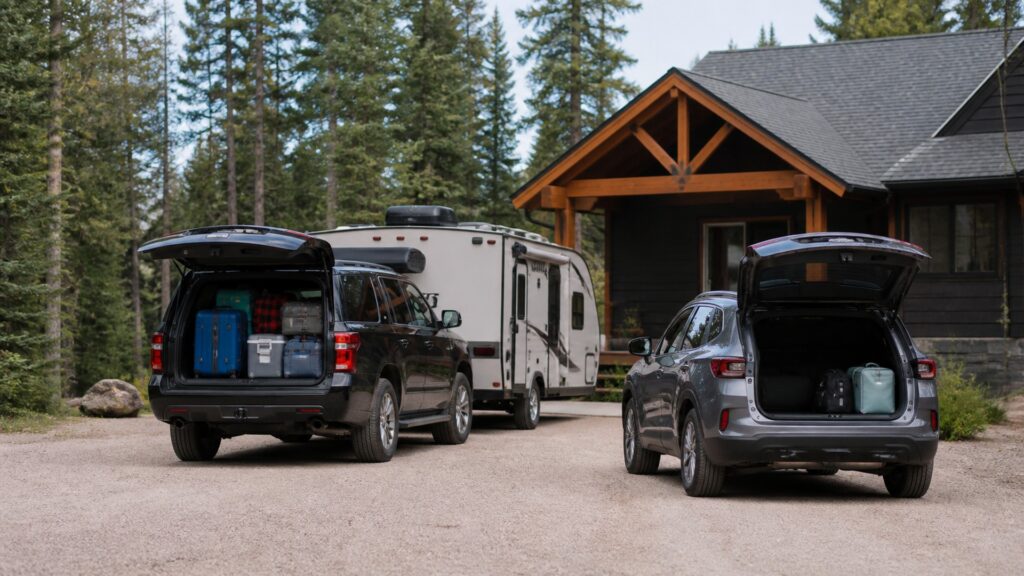
full size suvs explainer hero image for Review Streets
What You'll Learn

When Full-Size Capacity Solves a Real Problem

Start with the demanding trip, then make the larger vehicle pass the ordinary week.

  • Identify repeated seating and luggage constraints.
  • Check the third row with its intended occupants.
  • Separate trailer capability from the weight carried inside the SUV.
  • Measure parking and access before choosing a larger body.
  • Consider a different layout when maximum seating still leaves too little cargo room.

Tip: Test people and luggage together; separate showroom demonstrations can hide the actual conflict.

Definitions

Capacity Terms for a Size Upgrade

These distinctions explain why simply choosing the biggest-looking vehicle can miss the requirement.

Regular passenger requirement

The number and needs of the people the vehicle must carry on recurring trips.

  • Example: Adults use the third row every week rather than once a year.
  • Check: Try their normal positions and access route.
  • Limit: Advertised seat count does not establish comfort or restraint compatibility.

Occupied-row cargo space

The luggage area remaining after all required seats are left upright.

  • Example: Bags fit behind the third row while the passengers remain seated.
  • Check: Use the exact seating arrangement of the intended trip.
  • Limit: Maximum cargo volume often describes folded seats.

Extended-length body

A longer version of a vehicle that may provide additional cargo packaging.

  • Example: A long-body SUV retains a deeper luggage floor behind its rear row.
  • Check: Check the dimensions and actual storage of that version.
  • Limit: The extra length must still fit parking and access needs.

Payload allowance

The weight permitted for occupants and carried items under the vehicle’s loading instructions.

  • Example: People and suitcases consume capacity before a trailer is connected.
  • Check: Read the vehicle’s label and account for equipment and other applicable loads.
  • Limit: Interior space and permitted weight are different constraints.

Loaded towing requirement

The real trailer-and-vehicle task, including carried gear and the relevant equipment limits.

  • Example: A trailer is assessed in its travel condition with the family aboard the tow vehicle.
  • Check: Use all applicable manufacturer ratings for the exact setup.
  • Limit: An empty-trailer figure or hitch rating alone is insufficient.

Access burden

The effort and clearance required to enter, park, and unload the vehicle.

  • Example: A tall passenger step or narrow parking bay complicates everyday use.
  • Check: Try the repeated tasks with the intended users.
  • Limit: A vehicle that fits physically can still be impractical to use.

Tip: Choose a vehicle that meets every constraint at once rather than excelling at only one.

Passenger frequency

Move Up When Extra Seating Is a Regular Need

A compact’s smaller package can be convenient until the passenger requirement exceeds its usable arrangement. A full-size SUV deserves consideration when its additional seating is genuinely needed and the intended occupants can use it comfortably.

  • Have the regular passenger group sit in the vehicle together.
  • Check third-row entry, foot space, and belt positioning.
  • Verify any child-restraint arrangement with the applicable instructions.

Carrying extra adults every weekend is a stronger reason to evaluate full-size space than an uncertain possibility of carrying them someday. Match the commitment to the frequency of the job.

Luggage with people

Choose the Body Length That Fits the Complete Trip

A full-size SUV can still run short of luggage space when all rows are occupied. Compare the actual cargo depth and opening with the bags or equipment you carry. An extended-length version may help, but introduces more exterior length to manage.

  • Leave every needed seat upright during loading checks.
  • Try the largest awkward item rather than only small bags.
  • Check how cargo will be secured within the instructions.

If a full family and their luggage cannot fit together, folding a passenger seat is not a solution. Compare another body length or a different vehicle layout before buying.

Towing task

Use Verified Ratings as the Reason to Upgrade

Some full-size configurations support towing tasks a compact cannot. That does not make every full-size SUV suitable for the same trailer. Identify the powertrain, required package, and limits for the actual vehicle, then account for the full travel load.

  • Use the trailer’s loaded condition in the comparison.
  • Include passengers, luggage, and applicable hitch load in the vehicle assessment.
  • Check axle, combined-weight, vehicle, and equipment limits where relevant.

The upgrade is justified when the specific larger vehicle meets the complete requirement. More power or a larger body is not proof that it does.

Everyday fit

Make the Full-Size SUV Work When It Is Nearly Empty

Most owners also use the vehicle for ordinary errands or commuting. Measure garage length, width, ceiling clearance, and the space needed to open doors and the liftgate. Check whether passengers can enter comfortably without assistance they will not normally have.

  • Test permitted parking maneuvers on a representative route.
  • Compare sight lines and ease of judging the vehicle’s edges.
  • Obtain model-specific fuel, tire, and insurance estimates.

A vehicle that solves a holiday trip but makes every daily pickup difficult may be the wrong compromise. Capacity is useful only when the ownership routine remains workable.

Decision threshold

Consider Alternatives When the Capacity Is Rarely Needed

A compact may remain the better everyday choice if it meets normal needs and the larger load occurs infrequently. An occasional rental or another suitable vehicle arrangement may cost less and avoid carrying unused capacity year-round. If frequent multi-row travel is central, compare minivan layouts as well as SUVs.

  • Separate weekly requirements from annual exceptions.
  • Compare suitable alternatives without assuming one body type must win.
  • Choose the smallest practical option that reliably meets the full task.

The point is not to minimize size at any cost. It is to avoid paying for extra vehicle that fails to deliver a meaningful improvement in the trips you actually make.

Quick Reality Check

When the Full-Size Case Is Strong

Use observed limitations rather than an abstract preference for more capacity.

Full-size deserves consideration when…

Frequent passengers and luggage cannot travel together in the compact.

A verified larger configuration meets the loaded towing task and the daily access requirements.

Compact may remain preferable when…

It already carries the normal passengers and belongings comfortably.

The extra capacity is rare while smaller dimensions help every day.

Common Myths

Misconceptions About Moving Directly to Full-Size

A major size increase should solve a specific problem.

The biggest SUV always has enough room

Seat layout, cargo shape, and occupied-row luggage space still need checking.

More seats mean more allowable load

Weight limits depend on the actual vehicle. A seat count is not a payload calculation.

Any full-size SUV can tow the same trailer

Powertrain, equipment, and manufacturer limits vary.

Parking cameras remove the downside of size

They assist observation but cannot create clearance or reduce the vehicle’s dimensions.

Tip: Confirm the benefit on the difficult trip and the cost during ordinary use.

FAQ

Questions About Choosing Full-Size Over Compact

Practical answers for a substantial size change.

Do I need full-size for a family of four?

Not automatically. Passenger size, restraints, luggage, and towing needs matter more than household count alone.

When should I compare extended-length versions?

When the occupied rows leave too little luggage room. Then check the added length against your parking and access constraints.

Should towing alone determine the purchase?

It can be a decisive requirement, but the exact configuration must meet the complete load and the vehicle must remain suitable for daily use.

What should I do before signing?

Trial the passenger-and-luggage arrangement, verify ratings, measure parking fit, and compare actual ownership quotes.

Bottom Line

Choose a full-size SUV when it repeatedly solves a seating, luggage, or verified towing problem that a compact cannot.

The larger vehicle should pass both the demanding trip and the ordinary week. If the extra capability is seldom used, compare less burdensome alternatives.

Next Steps

Go Deeper or Compare Your Options

Use these Review Streets paths to compare related categories and practical next decisions.

Vehicles

Compare related vehicle choices against the same carrying needs and driving routine.

SUVs

Compare related vehicle choices against the same carrying needs and driving routine.

Full Size SUVs

Explore Full Size SUVs with your passenger, cargo, and ownership requirements in mind.

Further reading: Ford: towing ratings and equipment; NHTSA: loading information; NHTSA: child-restraint selection; EPA: fuel-economy comparison. Use the owner’s manual for the exact vehicle’s instructions and limits.