
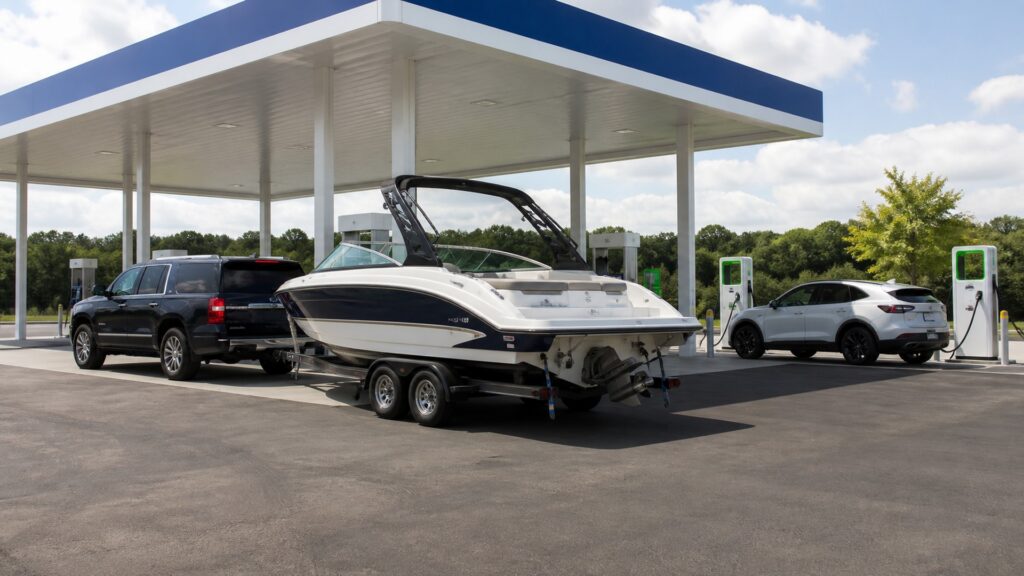
When to Use Full Size SUVs Instead of Electric SUVs

A full-size SUV and an electric SUV are not mutually exclusive choices. Full-size describes a size class; electric describes the powertrain. A full-size electric SUV can belong to both groups. The useful decision is whether you need full-size space and capability, then which powertrain best supports your trips.

If the intended comparison is a combustion-powered full-size SUV against a battery-electric alternative, start with the same passenger, cargo, and towing requirements. A fuel-powered option may be more practical when dependable charging is unavailable or demanding trips would be difficult to support. An electric option may suit the same household when capacity and charging arrangements both work.

By: Review Streets Research Lab
Updated: September 30, 2026
Explainer · 8-12 min read
full size suvs explainer hero image for Review Streets
What You'll Learn

Choose Capacity First, Then Plan the Energy Supply

Compare actual configurations instead of treating size and propulsion as competing labels.

  • Establish the occupied-seat and luggage requirement.
  • Verify payload and any towing task on both candidates.
  • Check dependable charging where the vehicle normally stays.
  • Map demanding trips with realistic stops and alternatives.
  • Compare costs for the same driving routine.

Tip: Do not accept a vehicle that misses a required carrying task just because its fueling or charging arrangement is convenient.

Definitions

The Distinctions Behind This Choice

Separate the vehicle’s physical job from the way it receives energy.

Size class

A broad description of vehicle dimensions and packaging.

  • Example: A full-size SUV may offer more cabin length than a compact alternative.
  • Check: Measure usable space with required seats occupied.
  • Limit: The label does not specify powertrain or guarantee a particular layout.

Battery-electric powertrain

Propulsion using electric motors supplied by an onboard battery charged from electricity.

  • Example: The vehicle is charged at home or a compatible public station.
  • Check: Check vehicle charging capability and suitable charging access.
  • Limit: Electric SUVs come in different sizes and configurations.

Routine charging access

A dependable place and opportunity to replenish energy during normal use.

  • Example: An owner can charge overnight at an approved home installation.
  • Check: Confirm permission, equipment, electrical suitability, and cost.
  • Limit: A charger on a map is not the same as dependable daily access.

Trip charging plan

A route-specific plan for compatible stops and alternatives.

  • Example: A long journey includes usable stations before and after a remote stretch.
  • Check: Check locations, access, compatibility, and expected stop needs.
  • Limit: A favorable average trip does not resolve a difficult recurring route.

Task-specific range

The usable driving distance under the trip’s actual conditions.

  • Example: Cold weather or towing changes energy demand from a mild solo drive.
  • Check: Use relevant vehicle guidance and allow a practical margin.
  • Limit: A label estimate is not a promise for every load and route.

Equivalent-use cost

Ownership expense compared for vehicles doing the same job over the same period.

  • Example: Annual fuel or electricity cost is calculated for the same mileage.
  • Check: Include purchase, insurance, energy, service, and charging expenses.
  • Limit: One low running-cost item does not establish total affordability.

Tip: A strong comparison uses the same people, luggage, route, and ownership period on both sides.

Set the carrying requirement

Keep Full-Size Capacity Separate from Fuel Choice

Decide what must travel together before narrowing the powertrain. Required passenger positions, cargo behind the occupied rows, payload, and trailer requirements are distinct checks. An electric SUV that meets them remains a valid candidate, including an electric model in the full-size class.

  • Try the real passenger and luggage arrangement.
  • Use the exact configuration’s loading and towing limits.
  • Check access and cargo shape alongside published volume.

A family that needs every rear seat cannot use folded-seat cargo volume to justify either purchase. If one candidate only carries the luggage by removing a needed passenger position, it fails the same test regardless of propulsion.

Ordinary days

Establish Whether Charging Fits Where You Live

Reliable charging during normal parking can make electric ownership convenient. Without it, the driver may depend on public charging trips that require extra time and planning. Confirm the actual arrangement before assuming that home, work, or a nearby station will meet the need.

  • Verify parking permission and electrical-installation requirements.
  • Check station compatibility, access hours, and payment arrangements.
  • Compare charging opportunities with typical daily mileage.

For an apartment resident without a dependable charging location, a combustion-powered full-size SUV may be easier to support if that size is needed. Another household with suitable overnight charging can reach a different conclusion from the same vehicle shortlist.

The demanding route

Plan the Trip That Is Hardest to Support

Long distances, cold conditions, remote destinations, and towing can make the energy plan more demanding. Assess these trips explicitly instead of extending a mild-weather range estimate to every circumstance. Public charging also needs to work physically for the vehicle and any trailer arrangement.

  • Check compatible stops and credible alternatives along the route.
  • Allow for conditions and the intended load when planning range.
  • Examine site access and trailer-related maneuvering where relevant.

A regular remote towing trip may favor a suitably rated fuel-powered vehicle when charging options are sparse or awkward. That is a conclusion about a specific journey, not proof that electric SUVs cannot tow or travel long distances.

Ownership costs

Compare the Complete Cost of Doing the Same Job

Electricity, fuel, maintenance, and purchase costs do not move together in a simple universal ranking. Calculate energy expense using relevant efficiency and local prices, then add insurance, service, financing where applicable, and any charging installation. Check current quotes rather than assuming incentives or tariffs apply.

  • Use the same annual distance and ownership period.
  • Distinguish home charging prices from public charging prices.
  • Include tires and ordinary upkeep for both vehicles.

A low overnight electricity rate may help one household, while frequent higher-priced public charging changes another household’s calculation. Neither result can be inferred solely from the word electric.

Make the choice

Prefer the Vehicle That Meets the Hard Constraints

Capacity, access, reliable energy supply, and affordability should be resolved before softer preferences. If both candidates meet those requirements, compare comfort, response, noise, features, and the time involved in routine stops. If neither works, broaden the shortlist rather than forcing a choice between unsuitable examples.

  • Identify requirements that cannot reasonably be compromised.
  • Test the ordinary week and the recurring difficult trip.
  • Revisit assumptions if parking or charging access may change.

Choosing a fuel-powered full-size SUV can be reasonable when it solves a verified carrying job with a workable fuel plan. Choosing an electric full-size SUV can be equally coherent when it solves that job and has dependable charging support.

Quick Reality Check

When Each Arrangement Can Make Sense

These are practical circumstances, not fixed rules for entire vehicle classes.

Consider a fuel-powered full-size SUV when…

The required capacity is verified and dependable charging is unavailable.

Recurring demanding routes are materially easier to support with the available fuel network.

Consider a suitable electric SUV when…

It meets the same seating, cargo, payload, and towing requirements.

Routine charging and demanding-trip stops are dependable and acceptable to the driver.

Common Myths

Misconceptions About Size and Electric Propulsion

Keep the categories and practical tradeoffs clear.

Are full-size and electric opposing SUV types?

No. One describes size and the other describes propulsion; a vehicle can be both.

Does electric propulsion mean less passenger space?

Not inherently. Evaluate the actual body, seating layout, and usable cargo area.

Will advertised range apply while towing?

Do not assume so. Trailer load and drag, speed, weather, and route affect energy use.

Is a public charger nearby enough to settle ownership?

Check whether it is compatible, accessible, reliable enough for your routine, and reasonably priced for the way you will use it.

Tip: Resolve the actual trip and charging arrangement before drawing a broad conclusion about propulsion.

FAQ

Questions for a Fair SUV Comparison

Use vehicle-specific information for the parts that vary.

Should I eliminate electric models if I need a large SUV?

No. First identify models with the required size and capacity, then evaluate energy supply and ownership.

What if I cannot charge at home?

Assess a dependable alternative in detail. If it requires inconvenient special trips, include that recurring burden in the decision.

How should I compare towing?

Use exact vehicle and trailer ratings, payload accounting, required equipment, and route support. A headline maximum is only a starting point.

Which option costs less?

It depends on the candidates, purchase terms, energy prices, mileage, insurance, upkeep, and charging expenses. Compare current numbers for your routine.

Bottom Line

Use a full-size SUV when its capacity solves a real requirement, then choose a workable powertrain.

A combustion-powered choice is justified by actual constraints; an electric vehicle remains eligible when it meets the same job and has dependable charging.

Next Steps

Go Deeper or Compare Your Options

Use these Review Streets paths to compare related categories and practical next decisions.

Vehicles

Compare related vehicle choices against the same carrying needs and driving routine.

SUVs

Compare related vehicle choices against the same carrying needs and driving routine.

Full Size SUVs

Explore Full Size SUVs with your passenger, cargo, and ownership requirements in mind.

Further reading: DOE electric-vehicle benefits and considerations; Alternative fueling station locator; Electric-vehicle maintenance; Towing configuration guidance; DOE cold-weather EV guidance. Use the owner’s manual for the exact vehicle’s instructions and limits.