
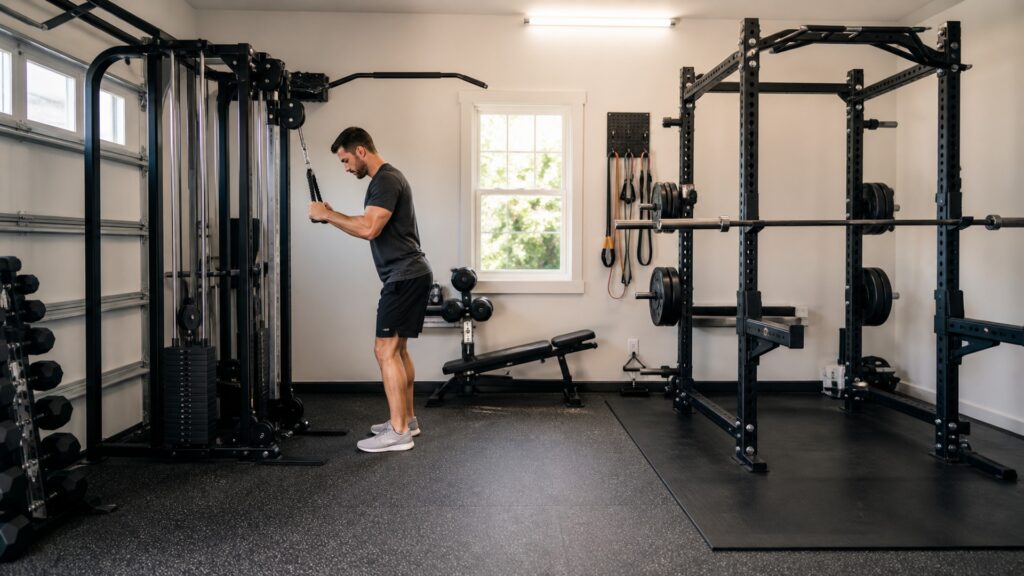
When to Use Home Gym Systems Instead of Power Racks & Squat Racks

Use home gym systems instead of power racks and squat racks when the workout needs several guided stations more than heavy barbell setup. A home gym system can combine pressing, pulling, cable work, leg stations, and other fixed exercise areas in one machine.

Choose a rack when barbell squats, bench presses, overhead presses, pull-ups, or heavy free-weight training are the center of the plan. Choose a home gym system when convenience, guided stations, and broader all-in-one coverage matter more than open barbell freedom.

By: Review Streets Research Lab
Updated: September 25, 2026
Explainer · 8-12 min read
home gym systems explainer hero image for Review Streets
What You'll Learn

When A Home Gym System Is The Better Fit

A practical decision path for choosing multi-station equipment over a rack-based setup.

  • When guided stations matter more than barbell freedom
  • Why all-in-one coverage can help some home routines
  • Where racks remain better for heavy compound lifting
  • How space, safeties, and setup change the decision
  • What to check before choosing the broader system

Tip: Start with the workouts the system must support every week. The right equipment choice follows the repeated movements, not the longest feature list.

Definitions

Key Concepts Behind Home Gym Systems Instead of Power Racks & Squat Racks

These concepts clarify how home gym systems fit real home strength training decisions.

Home Gym System

A home gym system combines several strength-training stations or functions in one setup.

  • Example: a machine with press arms, pulldown, row, and leg station
  • Check: review which stations will be used weekly
  • Limit: it may not match a rack for heavy barbell work

Power Rack

A power rack supports loaded barbell exercises with uprights and safeties.

  • Example: squatting inside a rack with safety straps
  • Check: confirm the rack supports the intended lifts
  • Limit: it does not provide built-in stations by itself

Guided Station

A guided station helps direct the movement path through arms, cables, pads, or a fixed setup.

  • Example: a seated press station on a multi-gym
  • Check: test whether the path feels natural
  • Limit: fixed paths may not fit every user

Barbell Priority

Barbell priority means the training plan depends on loaded free-weight lifts.

  • Example: weekly squats, bench presses, and overhead presses
  • Check: identify the main lifts before buying
  • Limit: a home gym system may only approximate these patterns

Setup Simplicity

Setup simplicity is how quickly the user can begin and move through a session.

  • Example: changing a selectorized stack instead of loading plates
  • Check: walk through a normal workout
  • Limit: simple setup can come with lower flexibility

Space Tradeoff

Space tradeoff is the balance between footprint, clearance, storage, and supported exercises.

  • Example: choosing one multi-station unit instead of a rack, bench, plates, and attachments
  • Check: measure the working area, not just the frame
  • Limit: all-in-one machines can still be bulky

Tip: A home gym system is strongest when its stations, resistance, and setup match the user's actual routine.

Best Fit

Choose A Home Gym System For Guided Coverage

A home gym system makes sense when the user wants several built-in stations without assembling a rack, bench, plates, and attachments separately.

  • Look for stations that match weekly exercises.
  • Check comfort at each station.
  • Avoid paying for areas that will go unused.

The system wins when its built-in stations simplify the routine.

Rack Advantage

Use A Rack For Barbell-Centered Training

Power racks and squat racks are better when the plan revolves around loaded barbell lifts. They provide the structure, safeties, and open movement space those lifts require.

  • Choose a rack for squats and presses.
  • Plan room for plates and a bench.
  • Use safeties that match the lift.

The rack's strength is support for heavy barbell work.

Convenience

Selectorized Stations Can Reduce Friction

Many home gym systems are easier to start because resistance changes and station choices are built in. That can help users who want simple full-body strength sessions.

  • Check how fast load changes happen.
  • Review the path from one station to the next.
  • Keep the common settings easy to repeat.

Convenience matters when it leads to more consistent training.

Movement Limits

Guided Paths Need A Fit Check

Fixed arms, pads, seats, and cables can make setup easier, but they also shape the user's movement. A station is useful only if it fits the user's body and goal.

  • Test start and finish positions.
  • Check seat and handle adjustment.
  • Watch for awkward range of motion.

Guided equipment should feel supportive, not forced.

Decision

Let The Main Lifts Decide

The cleanest decision is to list the exercises that define the program. If they are barbell lifts, start with the rack. If they are guided full-body stations, the home gym system has the stronger case.

  • Name the weekly must-have exercises.
  • Match those exercises to the equipment's strength.
  • Choose the setup that removes the biggest barrier.

The right purchase follows the training plan.

Quick Reality Check

Where Home Gym Systems Beat Racks And Where Racks Stay Better

The decision depends on guided station coverage versus barbell support.

Home Gym Systems Win When

The user wants several built-in stations in one setup.

Simple full-body workouts matter more than barbell freedom.

Racks Stay Better When

Heavy squats, presses, and bench work are the program's center.

Open barbell movement and safeties matter most.

Common Myths

Misconceptions About Home Gym Systems Versus Racks

Both can support serious training, but they solve different problems.

A home gym system is always easier

It is easier only when its stations fit the user's routine and body.

A rack is only for advanced lifters

A rack can be useful for any user whose plan depends on barbell lifts.

More stations beat open space

More stations help only when they get used.

Guided machines remove all safety concerns

Setup, load, body fit, and maintenance still matter.

Tip: A feature is useful only when it improves setup, progression, comfort, or consistency.

FAQ

Frequently Asked Questions About Home Gym Systems And Racks

Short answers for comparing home gym systems with other strength equipment.

Should I choose a home gym system or a rack first?

Choose the home gym system for guided multi-station training and the rack for barbell-centered lifting.

Can a home gym system replace a rack?

Sometimes, if the user does not need heavy barbell lifts.

Can a rack replace a home gym system?

It can cover barbell work well, but it does not provide built-in stations on its own.

Which is better for small spaces?

It depends on clearance, plate storage, and the exercises planned, not just footprint.

What is the practical takeaway?

Choose the equipment that supports the exercises you will repeat most.

Bottom Line

Home gym systems make more sense than racks when guided multi-station coverage is more important than heavy barbell setup.

Power racks and squat racks remain the better choice when barbell lifts define the training plan.

Next Steps

Go Deeper or Compare Your Options

Use these Review Streets paths to compare related categories and practical next decisions.

Cable Machines

Compare cable-focused equipment with broader home gym systems.