When to Use Hybrid SUVs Instead of Electric SUVs

A conventional-hybrid SUV can make more sense than a battery-electric SUV when your routine needs efficient gasoline travel without depending on charging access. The clearest cases are unreliable charging where you park, frequent routes with awkward charging stops, or a particular carrying requirement that the available electric candidates do not meet.

A battery-electric SUV can be the easier option when it charges during normal parked time and its real trip capability fits your use. A plug-in hybrid is a third choice: it can use external electricity while retaining an engine. Decide from those different routines rather than assuming a hybrid is always the cautious choice or an EV always the better one.

By: Review Streets Research Lab
Updated: September 30, 2026
Explainer · 8-12 min read
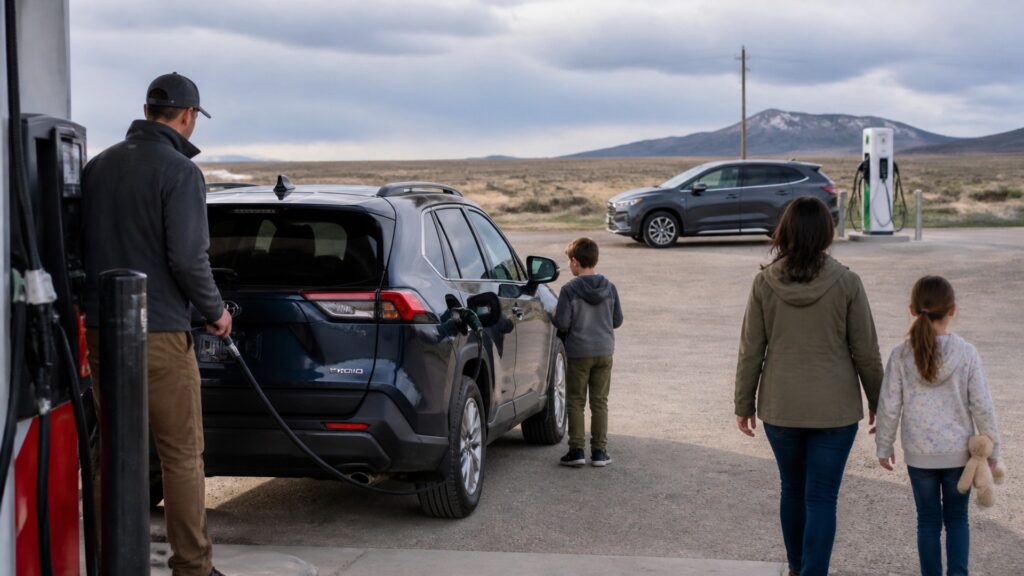
hybrid suvs explainer hero image for Review Streets
What You'll Learn

When a Hybrid’s Refueling Routine Is More Useful

Compare the energy supply you can reliably use with the trips you actually make.

  • Distinguish conventional hybrids, plug-in hybrids, and battery-electric SUVs.
  • Check charging access before relying on it.
  • Plan recurring long trips and loaded journeys.
  • Compare energy, maintenance, and purchase costs together.
  • Identify when the electric alternative removes more effort than it adds.

Tip: A reliable charging plan is more useful than a nearby charger you cannot count on using.

Definitions

Three Powertrains and the Decisions Around Them

These terms explain what each option needs from its owner.

Conventional hybrid SUV

An engine-and-electric-drive vehicle whose battery is managed without routine external charging.

  • Example: The owner refuels with gasoline and the vehicle coordinates electric assistance.
  • Check: Confirm the actual hybrid type.
  • Limit: It still uses fuel and requires engine-related service.

Battery-electric SUV

An SUV propelled by electric motors using energy stored in a battery charged from an external source.

  • Example: The vehicle charges overnight and drives the next day without a gasoline engine.
  • Check: Verify vehicle fit and a workable charging arrangement.
  • Limit: Practical trip capability depends on energy use and charging access.

Plug-in hybrid SUV

A vehicle that can accept external electricity for electric driving and also has an engine.

  • Example: Daily trips use charging where practical, with engine operation available for longer travel.
  • Check: Evaluate both charged operation and gasoline operation.
  • Limit: Its ownership case changes if it is rarely plugged in.

Charging access

The ability to use suitable equipment at useful times and a known cost.

  • Example: An assigned parking space has compatible charging while the vehicle is not needed.
  • Check: Confirm permission, connection, availability, and price.
  • Limit: A map location alone does not establish dependable access.

Route flexibility

The ability to adapt timing or stops to replenish energy during travel.

  • Example: A regular break coincides with a suitable charging location.
  • Check: Check the journeys that recur, including a backup stop.
  • Limit: A route that works once may be inconvenient as a weekly routine.

Total ownership comparison

Evaluation of purchase and recurring costs over the expected ownership period.

  • Example: Charging equipment, fuel, electricity, insurance, and service are considered together.
  • Check: Use current quotes and realistic mileage.
  • Limit: A low energy cost alone does not determine the complete result.

Tip: Keep the same passenger, luggage, and driving requirements on both sides of the comparison.

Everyday energy

Choose Conventional Hybrid When Charging Is an Unresolved Constraint

A driver without dependable charging at home or work may rely on dedicated public-charging visits. That can work, but the time, availability, and cost should be understood first. A conventional hybrid can reduce fuel use relative to a suitable gasoline alternative without adding that charging routine.

  • Check whether charging is practical where the vehicle normally sits.
  • Consider access at the times you would actually arrive.
  • Look for a backup when the preferred location is unavailable.

For example, a renter with unpredictable parking may value a familiar refueling routine more than someone with an assigned charging space. The difference is the daily arrangement, not simply distance from a charger.

Recurring journeys

Let Frequent Difficult Trips Carry More Weight

Occasional long travel and weekly long travel are different ownership demands. Compare the stops required by the electric candidate on your regular routes, including destination charging and the energy needed for the return leg. Account for conditions that affect consumption.

  • Use vehicle-specific trip planning rather than headline range alone.
  • Check compatible equipment and realistic stopping locations.
  • Allow for weather, detours, and the planned load.

A conventional hybrid may be preferable when recurring trips leave little flexibility and charging adds a meaningful burden. A well-served route can make an EV equally practical, especially when breaks already fit the stops.

Carrying and towing

Verify the Vehicle Before Evaluating Its Energy Stops

Seats, cargo, payload, and trailer requirements must fit the exact candidate. Both hybrid and electric SUVs vary in these areas. A capable powertrain does not establish that the cabin or towing configuration suits your trip.

  • Check occupied-seat luggage space and load allowances.
  • Use the manufacturer’s requirements for the loaded trailer combination.
  • For EV towing, assess energy needs and access at charging stops.

If one electric model falls short, that does not prove all electric SUVs do. Likewise, a hybrid label does not guarantee the required tow rating. Compare the actual configurations available to you.

Costs and upkeep

Compare What You Will Pay, Not a Universal Savings Claim

Electricity and fuel prices, annual mileage, purchase quotes, and charging location all influence the result. A conventional hybrid retains engine service requirements. A battery-electric vehicle removes those engine tasks but still needs care for tires, brakes, and other systems.

  • Estimate energy costs using your actual charging and refueling mix.
  • Include any charging installation and model-specific ownership quotes.
  • Review warranty terms and condition when buying used.

Do not assume public fast charging has the same price as home electricity. Do not assume fewer engine service items means the entire EV ownership budget is automatically lower either.

Choosing between three options

Use a Plug-In Only If Its Mixed Routine Fits

A plug-in hybrid can suit regular charging combined with journeys for which engine operation is useful. It is not the same as a conventional hybrid with an unused socket, nor should its electric-mode efficiency be applied to all miles without accounting for charging and gasoline use.

  • Establish how often you would charge.
  • Compare both electric and gasoline operation for the model.
  • Check whether the added capability justifies its cost and configuration.

If dependable charging already covers your regular travel and an electric SUV meets the carrying requirement, the EV deserves serious consideration. Choose the hybrid because it solves a real constraint, not because a difficult scenario might happen someday.

Quick Reality Check

Where Each Choice Has an Advantage

The right powertrain should simplify the routine it will actually serve.

Conventional hybrid can fit well when…

Dependable charging is unavailable or inconvenient.

Recurring travel favors quick refueling while the vehicle meets the full carrying need.

Battery electric can fit well when…

Charging happens during ordinary parked time.

Regular and demanding trips have a workable energy plan in a suitable vehicle.

Common Myths

Misconceptions About Hybrid Versus Electric SUVs

Avoid treating either option as universally easier.

Every hybrid needs an outlet

Conventional hybrids do not require external charging; plug-in hybrids are a distinct option.

An EV is unsuitable for anyone who takes long trips

The actual route, vehicle, charging access, and stopping preferences determine practicality.

A hybrid has no battery-related considerations

It still has an electrical propulsion system and model-specific care requirements.

The cheapest energy always means the cheapest ownership

Purchase, equipment, insurance, maintenance, and ownership duration also matter.

Tip: Resolve the daily energy arrangement before using a general claim to decide the purchase.

FAQ

Questions About Choosing Hybrid Over Electric

Practical answers for a household comparing suitable SUVs.

Is conventional hybrid the best choice without home charging?

It can be, but reliable workplace or public charging may also support an EV. Compare the actual inconvenience and cost.

Should a rare long trip determine the purchase?

Give it appropriate weight, but compare its frequency with daily use. An occasional alternative arrangement may be more sensible than compromising every normal week.

When does a plug-in hybrid make sense?

When you can charge regularly and its combination of electric travel and engine capability suits your routes and budget.

What should I verify before choosing?

Passenger and load fit, dependable energy access, recurring-route practicality, and costs for the exact candidates.

Bottom Line

Choose a conventional-hybrid SUV when it meets your carrying needs and avoids a real charging or recurring-route problem.

Choose among hybrid, plug-in hybrid, and battery electric by the routine each requires. Reliable charging and a suitable vehicle can make the electric choice simpler.

Next Steps

Go Deeper or Compare Your Options

Use these Review Streets paths to compare related categories and practical next decisions.

Vehicles

Compare related vehicle choices against the same carrying needs and driving routine.

SUVs

Compare related vehicle choices against the same carrying needs and driving routine.

Hybrid SUVs

Explore Hybrid SUVs with your passenger, cargo, and ownership requirements in mind.

Further reading: DOE: electric-vehicle ownership considerations; DOE: charging station locator; DOE: winter EV operation; DOE: hybrid and electric maintenance. Use the owner’s manual for the exact vehicle’s instructions and limits.