
Size class
A description of a vehicle's broad physical market category.
- Example: comparing a midsize candidate with a larger alternative
- Check: measure the actual truck and usable space
- Limit: size class does not specify the energy source
A midsize pickup and an electric pickup are not inherently opposite categories: midsize describes the vehicle's size, while electric describes its propulsion. The practical choice is between specific trucks. If the candidate is a fuel-powered midsize model and the alternative is battery electric, compare both their physical usefulness and how they obtain the energy needed for the job.
The fuel-powered midsize option can make sense when its footprint fits daily life and recurring long or remote work is poorly served by practical charging stops. An electric alternative can make sense when it meets the load requirements and dependable charging fits the routine. Neither conclusion follows from a fuel type or category label alone.
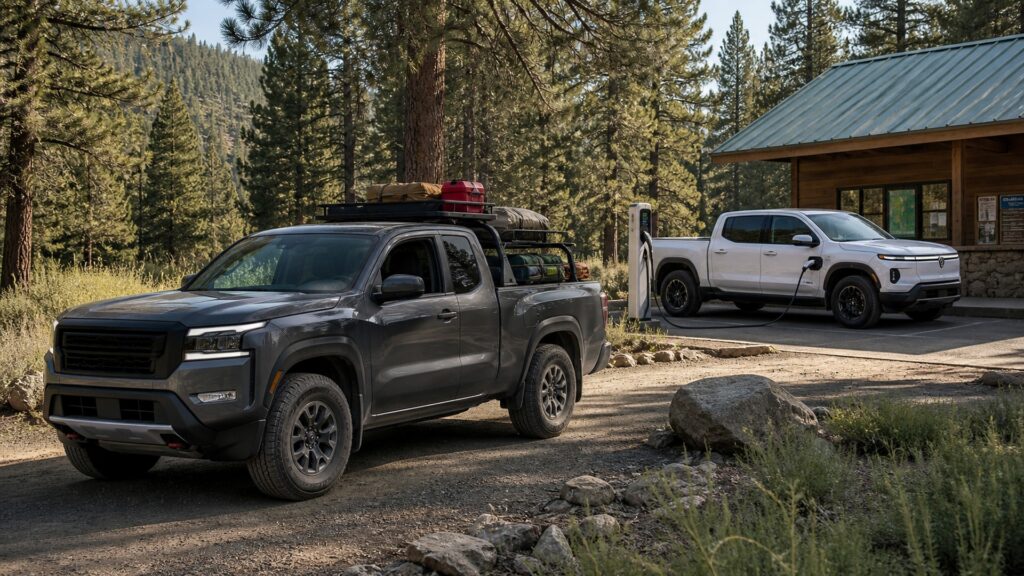
Compare the job, route, and charging routine for the actual candidates.
Tip: Use an ordinary week and the most demanding recurring trip as two separate tests of the proposed truck.
Energy convenience is only one part of pickup suitability.
A description of a vehicle's broad physical market category.
The system supplying the vehicle's driving power.
The distance usable for the planned task under its conditions.
The practical ability to connect and obtain energy where needed.
The time the vehicle remains parked and available to charge.
The expenditure associated with the actual pattern of use.
Tip: A truck that fits the energy routine can still fail the cargo requirement, and a capable truck can still have impractical energy stops.
First identify what is actually being considered: dimensions, cab, bed, powertrain, drivetrain, and equipment. The size and propulsion labels answer different questions and can overlap. If a larger electric candidate is difficult to park, that is a dimensional disadvantage of that vehicle, not an inherent property of electric drive. Keep physical packaging separate from the energy comparison so the decision remains useful.
A buyer may prefer a particular midsize truck because it fits a garage. Another electric vehicle with a different footprint would need its own assessment, rather than inheriting that verdict.
Both candidates need to accommodate the people, equipment, cargo, and any trailer within their applicable ratings. Strong motor torque does not establish payload, just as an engine's fuel type does not establish towing ability. Check the exact truck and required equipment. Bed layout and securement also remain important even when the headline capacity appears sufficient.
If one candidate cannot meet the loaded job, a convenient energy source does not cure that shortfall. Establish physical suitability before debating refueling or charging preferences.
Towing, load, speed, terrain, and weather can change energy consumption, so a general range figure should not be treated as a loaded-trip promise. Fuel-powered trucks also consume more energy in demanding use. The practical difference is where and how quickly each candidate can obtain the required energy along the route. A recurring remote journey can favor the fuel-powered option when charging access is unsuitable.
A long trip with flexible timing differs from a time-critical job in an area with few practical charging options. The same electric truck can fit one routine better than the other.
Reliable home or workplace charging can let an electric pickup replenish energy while it is already parked. Without that access, public charging becomes a more prominent part of daily planning. The Department of Energy notes that charging time depends on both the vehicle and charging equipment, among other factors. Check compatibility and site access, including whether a trailer can remain attached where it is permitted.
A charger nearby is not enough if it cannot be accessed when needed or does not fit the truck-and-trailer arrangement. Conversely, dependable overnight charging can remove routine fuel-stop errands.
Compare purchase and financing costs, insurance, energy, servicing, tires, and any charging installation for the specific candidates. Use local prices and the expected mix of home and public charging rather than a universal cost claim. Cold weather can affect electric range and charging behavior, so include the climate in the assessment. A rare trip may deserve a separate transport plan instead of controlling every day's vehicle choice.
Choose the fuel-powered midsize candidate when its capability and energy logistics fit the work better. Choose electric when the actual truck meets the task and charging fits the routine well.
The answer depends on both truck fit and energy access.
Its dimensions and capacities suit the job and everyday access.
Recurring remote or time-sensitive travel has workable fuel stops but impractical charging arrangements.
The selected truck meets the physical load and space requirements.
Reliable charging and sufficient parked time support the usual workload and planned trips.
Separate overlapping categories and avoid blanket performance claims.
Size class and propulsion are different characteristics.
The configured vehicle and complete outfit must meet their actual ratings.
Compatibility, access, layout, availability, and required time still matter.
Local energy prices, charging mix, purchase costs, and use pattern affect the result.
Tip: Base the choice on routes and parking routines you can verify, rather than idealized refueling or charging assumptions.
Evaluate the actual alternatives and the work they will do.
Yes. The terms describe different attributes and are not mutually exclusive.
No. Plan for the actual load, route, conditions, and vehicle guidance.
Not universally, but dependable charging access somewhere suitable is important to practical use.
No. Include the vehicle, insurance, maintenance, tires, charging equipment where needed, and the real usage pattern.
When that exact truck meets the physical job and its energy-stop arrangements better support recurring work or travel.
Choose a fuel-powered midsize pickup when its size, capability, and energy logistics better fit the actual work than the electric candidate.
Electric propulsion can be practical when charging fits the routine. Compare specific trucks because size class and power source do not define opposite categories.
Use these Review Streets paths to compare related categories and practical next decisions.
Explore vehicle types and propulsion choices.
Compare pickup roles and configurations.
Continue with midsize pickup use and care.
Further reading: Department of Energy electric-vehicle considerations; Department of Energy charging guidance; Department of Energy cold-weather guidance; Ford electric range and towing guidance; Ford Ranger configuration information.
Choose a retailer
Prices checked regularly. We may earn a commission at no cost to you.