
When to Use Midsize SUVs Instead of Compact SUVs

Choose a midsize SUV when a compact SUV cannot comfortably carry the people and gear you regularly take with you, or when your towing needs exceed the smaller vehicle’s verified limits. The useful upgrade is space or capability you can actually use: a better second row, an additional seating row, a longer cargo floor, or a suitable towing configuration.

A larger badge alone proves little. Some midsize SUVs have two rows; others trade luggage room for a third. A roomy compact may meet your needs better than a midsize model with an awkward cabin. Compare the exact vehicles with your passengers, luggage, parking space, and running costs in mind.

By: Review Streets Research Lab
Updated: September 30, 2026
Explainer · 8-12 min read
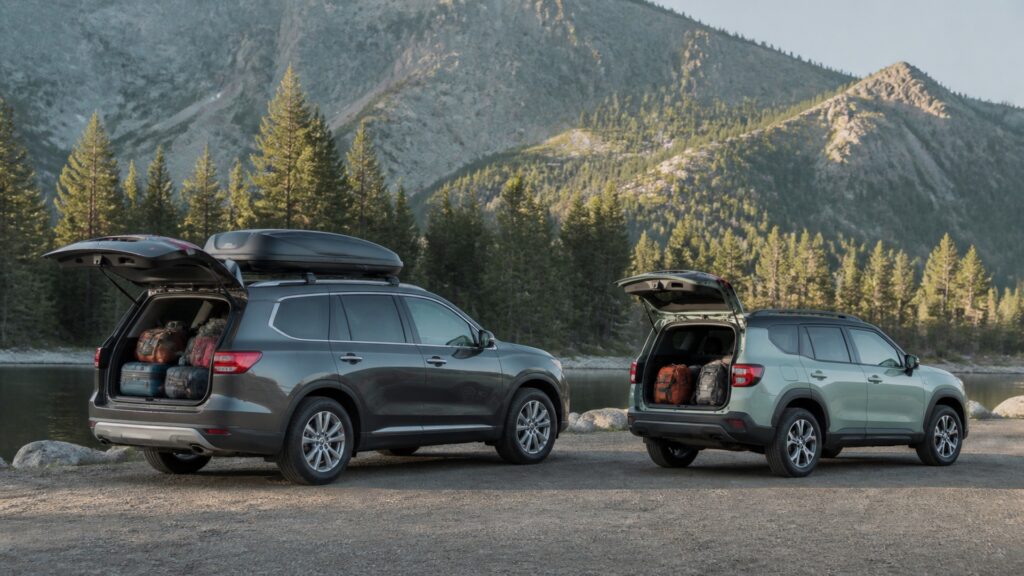
midsize suvs explainer hero image for Review Streets
What You'll Learn

When the Extra SUV Space Earns Its Keep

The decision starts with the trip your current vehicle struggles to handle, then checks whether a larger SUV fixes it.

  • Recognize passenger and cargo needs that justify moving up a size.
  • Compare luggage space with the seats you need still upright.
  • Separate towing capability from the weight the SUV can carry.
  • Check the larger vehicle against your garage and daily routes.
  • Know when a compact SUV remains the more practical choice.

Tip: Bring the bulky items you actually carry to a vehicle viewing; empty cabins make almost every SUV look spacious.

Definitions

Six Measurements Behind a Useful Size Upgrade

These terms describe different constraints. An SUV can pass one test and still fail another.

Usable passenger space

The room occupants can comfortably use with the seats adjusted for everyone aboard. Seat shape, foot space, and access matter alongside published dimensions.

  • Example: A tall rear passenger sits behind the regular driver without forcing the driver forward.
  • Check: Set the front seats first, then try every occupied rear position.
  • Limit: Extra exterior length does not guarantee more room in the seat you need.

Cargo space with seats in use

The luggage area remaining behind the last occupied row. It is the relevant space for trips carrying passengers and bags together.

  • Example: A stroller and weekend bags fit with the third row upright.
  • Check: Compare the same seating configuration and test the hatch opening.
  • Limit: Maximum cargo volume usually assumes some rear seats are folded.

Third-row access

The route passengers use to reach and leave the rearmost seats. Sliding seats and aisle layouts affect whether those seats are practical.

  • Example: A passenger can reach the back without disturbing the seating arrangement used on daily trips.
  • Check: Try entry, exit, foot room, and headroom with the second row in its normal position.
  • Limit: An occasional extra seat may be uncomfortable for regular adult travel.

Payload

The weight allowance available for occupants and cargo, with added equipment and trailer load also consuming capacity. Read the specific vehicle’s loading label and manual.

  • Example: Family members, suitcases, and hitch load must fit within the same allowance.
  • Check: Account for the complete traveling load, not just luggage.
  • Limit: A larger cabin is not proof of a larger available weight allowance.

Towing configuration

The combination of vehicle equipment and ratings that determines whether a particular trailer is suitable. Engine, drivetrain, cooling, hitch, and other requirements can vary.

  • Example: Two versions of the same SUV may have different trailer limits.
  • Check: Use the manual and towing guide for the exact vehicle and equipment.
  • Limit: A fitted hitch does not establish the vehicle’s tow rating.

Everyday footprint

The space the vehicle occupies and needs to maneuver, including mirrors, opening doors, and liftgate clearance.

  • Example: An SUV fits inside the garage but leaves too little room to unload a child.
  • Check: Measure usable parking space and test turning and reversing.
  • Limit: A parking camera helps visibility but cannot create physical clearance.

Tip: Passenger comfort, luggage volume, and permissible weight are separate checks; all must work for the same trip.

Passenger needs

Move Up When the Second Row Is Regularly Compromised

A compact SUV can work well for a small household, but the arrangement becomes less comfortable when rear passengers are tall, several seats are occupied, or a child restraint leaves too little room for the person ahead. A midsize SUV is worth considering when its actual cabin layout removes that recurring compromise.

  • Set the driver’s seat for the person who will normally drive.
  • Have regular passengers sit together rather than checking each seat in isolation.
  • For child restraints, follow both vehicle and restraint instructions and verify fit in the intended position.

For example, a family that cannot comfortably seat a front passenger ahead of its rear-facing restraint has a specific reason to compare larger cabins. The midsize label still does not guarantee a workable installation.

Seats and luggage

Choose the Seating Layout Before Comparing Cargo Figures

A two-row midsize SUV may offer the extra luggage floor you want without adding seats you rarely use. A three-row version serves a different need: carrying more people. Those passengers occupy space that may otherwise hold bags, so an impressive maximum cargo figure can be irrelevant to a full-family trip.

  • Load the stroller, mobility aid, sports bag, or suitcase that is hardest to accommodate.
  • Leave every needed seat upright during the comparison.
  • Check lift-over height, floor length, and the space between wheel housings.

If six people and their holiday luggage cannot travel together, folding the third row is not a solution. Compare another layout or vehicle type instead of buying on the advertised seat count.

Towing and loading

Use Verified Capacity When a Trailer Is the Reason to Upgrade

A suitably equipped midsize SUV may handle a trailer that a compact cannot, but segment names are not towing specifications. Check the loaded trailer, the exact vehicle’s ratings, and the equipment the manufacturer requires. The trailer’s empty weight is not its traveling weight.

  • Confirm towing, combined-weight, axle, and hitch limits in the applicable manufacturer information.
  • Count trailer tongue load together with occupants, cargo, and added equipment against the relevant vehicle limits.
  • Verify required towing equipment rather than assuming every trim shares the highest advertised rating.

A family may reach a vehicle loading limit before reaching the headline trailer limit. If the full trip does not fit every applicable rating, extra engine power does not resolve the mismatch.

Daily tradeoffs

Make the Larger SUV Pass Your Ordinary Week

The added space travels with you even when you are alone. A vehicle that makes holidays easier can still make the garage, school pickup, or a narrow parking structure frustrating. Test the exact model on the kinds of roads and parking spaces you use most.

  • Check mirror width, door-opening room, and liftgate clearance.
  • Compare fuel economy for the specific engine and drivetrain, not just the size class.
  • Get insurance and replacement-tire quotes for the versions you are considering.

For a gasoline comparison, annual miles divided by combined MPG estimates annual gallons. At 12,000 miles, 30 MPG uses about 400 gallons and 24 MPG about 500. These are illustrative figures, not typical ratings for either SUV class; multiply the difference by your fuel price.

Decision test

Separate a Recurring Need from a Rare Exception

Write down the trips that make your compact SUV feel too small. If the same passenger or cargo problem appears every week, a well-chosen midsize model can bring a daily benefit. If the problem occurs only during one annual trip, compare the cost and convenience of an occasional rental before committing to a larger vehicle.

  • List the people, bulky items, and trailer you expect on the demanding trip.
  • Test that arrangement in both shortlisted vehicles.
  • Then check whether the larger choice is comfortable to park, drive, and pay for during normal use.

The upgrade makes sense when it solves a demonstrated problem and its everyday costs remain acceptable. If both vehicles handle your regular load comfortably, the compact deserves to stay on the shortlist.

Quick Reality Check

Which SUV Size Fits Your Actual Trips?

Use these situations to narrow the choice before comparing individual models.

A midsize SUV deserves a closer look when…

Regular passengers are cramped in a compact, and the larger cabin demonstrably improves their seating positions.

You need additional seats, more luggage room with occupied seats, or verified towing capability that the compact lacks.

A compact SUV may already be enough when…

Your normal passengers and bags fit comfortably, while easy parking is valuable every day.

The extra capacity would be used rarely, or the midsize model adds outside bulk without solving your particular cabin problem.

Common Myths

Misconceptions About Moving from Compact to Midsize

Size labels can hide important differences between individual SUVs.

Every midsize SUV has a third row

Some are designed around two rows. Check the seating layout of the exact version, including whether a bench or captain’s chairs changes the total number of seats.

More seats also means more luggage space

An occupied third row takes up cabin space. Check luggage room with that row upright; a large seats-folded figure does not describe a trip with every seat occupied.

A larger SUV can automatically carry more weight

Cabin volume and load allowance are different measurements. Equipment and configuration affect the available allowance, so use the particular vehicle’s loading information.

A midsize SUV always costs more to fuel

Fuel use depends on the exact powertrain and driving conditions. A hybrid midsize and a conventional compact may not follow a simple size-based ranking; compare their actual ratings.

Tip: Treat the size class as a shortlist filter, then check the vehicle you would actually own.

FAQ

Questions About Choosing Midsize Over Compact SUVs

Practical answers for households deciding whether they need more vehicle.

Is a midsize SUV necessary for a family of four?

Not automatically. A compact may provide enough room. A midsize becomes more useful when the actual restraint arrangement, passenger heights, or regularly carried luggage exposes a space problem.

Should I choose two rows or three?

Choose two rows when five or fewer seating positions meet your needs and cargo space is the priority. Consider three rows when you need the additional seats, then verify access, comfort, and luggage room with those seats occupied.

Can a compact SUV still work for road trips?

Yes, if everyone can sit comfortably and the luggage fits within the vehicle’s space and loading limits. Trip length alone is not a reason to move up a size.

What should I bring to a test drive?

Bring regular passengers and the awkward items you carry, such as a stroller or large suitcase. With the seller’s permission, check child-restraint fit using the applicable instructions. Take garage measurements too.

What is the strongest reason to buy the midsize?

A repeated need that the specific midsize vehicle meets and the compact does not. More usable room or suitable towing capacity is a stronger justification than the expectation that larger must be better.

Bottom Line

Use a midsize SUV when it solves a passenger, cargo, or verified towing limitation you encounter often enough to justify the larger vehicle.

Test the complete trip with seats occupied and bags aboard, then check the ordinary week. Keep the compact in consideration if it already meets those needs with less parking effort or lower ownership costs.

Next Steps

Go Deeper or Compare Your Options

Use these Review Streets paths to compare related categories and practical next decisions.

Midsize SUVs

Explore the category after listing your required seating and luggage arrangement.

SUVs

Compare SUV categories when the first size or layout you try does not work.

Vehicles

Consider other vehicle types if frequent full-passenger trips need more room.

For vehicle-specific checks, see the owner’s manual and loading labels. Further reading: NHTSA guidance on vehicle loading information and EPA explanation of fuel economy labels.

Quick Summary

Midsize or Compact?

  • Buy for a recurring space or capability need.
  • Test cargo room with required seats upright.
  • Check the exact vehicle’s loading and towing limits.
  • Measure parking clearance and compare running costs.
  • A roomy compact can still be the better fit.