
Recovery Support
Recovery support helps manage comfort, tightness, or preparation around training.
- Example: using a roller after a hard leg session
- Check: judge pressure and target access
- Limit: it does not replace training or medical care
Use muscle recovery rollers instead of exercise bikes when the problem is recovery support, tightness management, or movement preparation rather than cardio training. A roller applies pressure; a bike creates the workout.
The two products can both belong in a fitness routine, but they are not substitutes. A roller helps around training. An exercise bike is used during training for indoor cycling, conditioning, and repeatable cardio work.
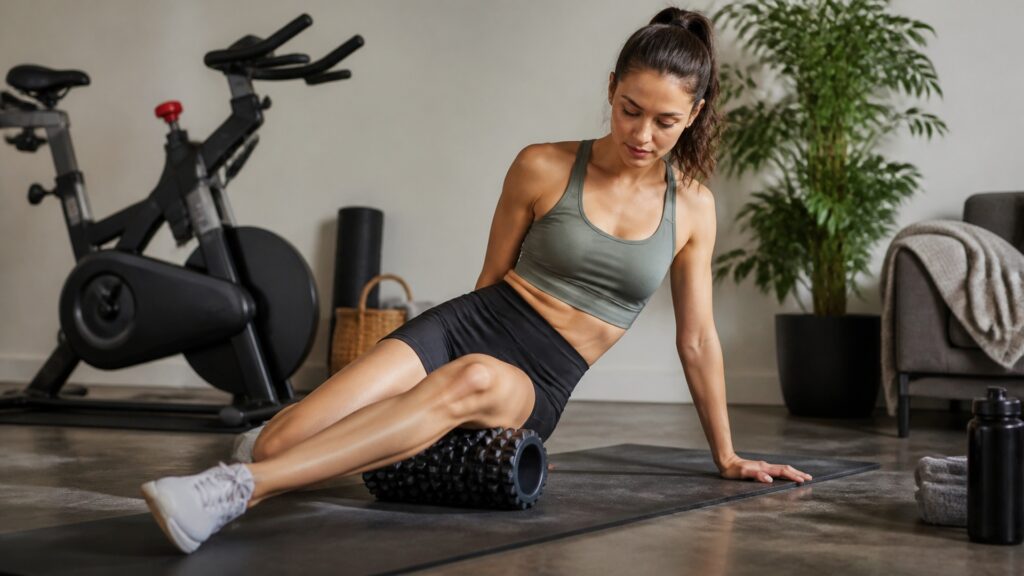
A practical way to choose between recovery support and cardio equipment.
Tip: If the need is targeted pressure, choose the roller. If the need is indoor cardio, compare bikes.
These terms clarify the difference between recovery support and cardio equipment.
Recovery support helps manage comfort, tightness, or preparation around training.
Cardio training raises effort through repeated movement over time.
A pressure tool lets the user apply force to a specific area.
A resistance machine creates effort by making movement harder.
Routine timing is when the product is used around the workout.
Commitment level is the cost, space, and habit required to benefit from a product.
Tip: A roller helps the body feel ready or recovered. A bike supplies the exercise session.
A recovery roller is the better fit when the user wants controlled pressure for a tight or stiff area around training. It is small, direct, and focused on support.
The roller solves a pressure and preparation problem.
An exercise bike belongs in the decision when the user needs indoor cardio, cycling workouts, conditioning, or a low-impact training option.
The bike earns its place by creating the workout.
A user might roll before biking, ride the bike for cardio, and roll gently afterward. In that case, the products are partners, not alternatives.
The routine can include both when each has a clear role.
A roller is low-cost and easy to store. A bike is a larger machine with space, setup, and habit requirements. The right choice depends on which problem is real now.
Good buying decisions match the scale of the need.
If the user already trains but needs help managing tightness, the roller may be the better immediate tool. If the user lacks cardio access, the bike is the separate decision.
The clearest choice comes from the job the product must do.
The roller supports recovery. The bike supplies cardio.
You need controlled pressure for tightness, warmup, cooldown, or recovery support.
You want a small tool for targeted use around training.
You need a repeatable indoor cardio workout.
You have the space, budget, and motivation for a dedicated bike.
The products solve different fitness problems.
A roller supports recovery, but it does not create a cycling workout.
A bike provides exercise. Recovery support may still matter.
A small roller may solve the current problem more directly.
Pressure is applied to tissue. Resistance makes exercise movement harder.
Tip: Choose recovery support for recovery problems and cardio equipment for cardio problems.
Short answers about choosing recovery support or cardio equipment.
Buy the roller first if tightness or recovery support is the problem. Consider the bike if cardio access is missing.
Yes. Rolling can fit before or after cycling if the pressure feels useful and tolerable.
Compare density, texture, size, pressure control, vibration, and target access.
Compare fit, resistance, stability, console features, footprint, and noise.
Use a roller for recovery support and an exercise bike for cardio training.
Use muscle recovery rollers when the need is targeted recovery support, not indoor cardio training.
An exercise bike creates the workout. A roller supports the routine around workouts by applying controlled pressure before or after training.
Use these Review Streets paths to compare related fitness categories and practical buying decisions.
Explore the category before comparing individual products.
Browse related fitness categories and buying decisions.
Review the equipment category separately from this support tool.
Choose a retailer
Prices checked regularly. We may earn a commission at no cost to you.