When to Use Off-Road Vehicles Instead of Luxury Performance Cars

Choose an off-road vehicle over a luxury performance car when the routes you actually need to travel demand clearance, traction equipment, and protection that the road-focused car does not provide. A rough access road to a remote property can make those capabilities useful every week. A paved commute with an occasional maintained gravel parking area may not. The deciding question is what the vehicle must cross, not which category looks more adventurous.

Here, off-road vehicles means passenger vehicles designed and equipped for travel over challenging unpaved terrain. Luxury performance cars combine strong road performance with comfort and refinement. There is overlap: some capable four-wheel-drive vehicles are also luxurious. Compare the exact models, tires, and packages against your route and everyday needs before treating the labels as mutually exclusive.

By: Review Streets Research Lab
Updated: October 1, 2026
Explainer · 8-12 min read
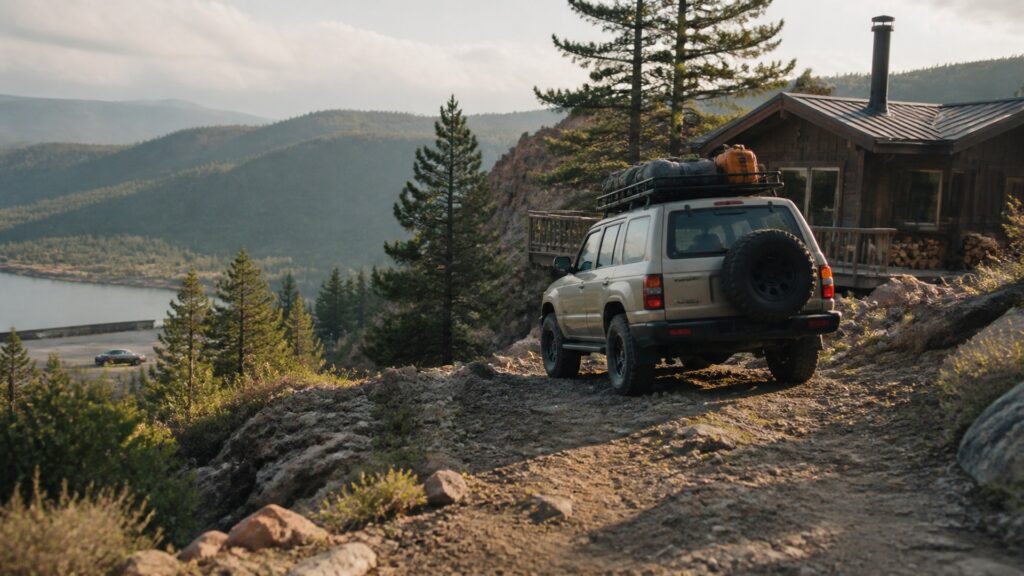
off-road vehicles explainer hero image for Review Streets
What You'll Learn

Choosing for the Roads You Actually Use

Match terrain requirements to capability, then weigh the everyday ownership tradeoffs.

  • Identify when clearance and traction equipment solve a real access problem.
  • Separate occasional gravel travel from demanding terrain.
  • Compare the exact equipment fitted to each candidate.
  • Allow for passengers, luggage, and routine road use.
  • Consider a different route or occasional rental when capability is rarely needed.

Tip: Write down the hardest necessary part of the journey. It often tells you more than the most impressive specification.

Definitions

Six Details That Shape the Vehicle Choice

Each detail connects a vehicle characteristic to a practical travel requirement.

Ground clearance

The space beneath the vehicle, measured at a stated point or limiting component.

  • Example: a low underbody component approaching a raised center strip on an access road
  • Check: compare relevant clearance at the expected load
  • Limit: one number does not describe every contact risk

Approach and departure angles

Geometric measures of the slopes the front and rear can meet without the body contacting the surface under the stated conditions.

  • Example: a front overhang approaching a sharp rise
  • Check: look at both ends of the actual vehicle
  • Limit: ruts and uneven obstacles are more complex than a simple ramp

Low-range gearing

An additional reduction ratio available in some four-wheel-drive systems for low-speed operation.

  • Example: a vehicle providing controlled slow travel without relying on high road speed
  • Check: confirm the equipment and its permitted use
  • Limit: all-wheel drive does not necessarily include low range

Terrain-suitable tires

Tires whose construction and tread suit the intended surfaces while meeting vehicle requirements.

  • Example: a suitable all-terrain tire on a vehicle used on both pavement and approved dirt roads
  • Check: compare the fitted tire specification
  • Limit: an aggressive appearance does not establish suitability for every condition

Payload allowance

The permitted load carried by the vehicle, including occupants and cargo as specified by its manufacturer.

  • Example: passengers and camping equipment using part of the available allowance
  • Check: use the vehicle label and account for added equipment
  • Limit: large cargo space is not the same as high load capacity

Road refinement

The combined experience of ride, noise, seating, controls, and comfort during ordinary driving.

  • Example: a quiet cabin making a long paved commute more pleasant
  • Check: test the exact configuration on representative roads
  • Limit: a luxury badge does not tell you how every tire or suspension package rides

Tip: A required capability and a desirable comfort feature can both matter. Identify which one is essential to completing the journey.

Route first

Choose Terrain Capability When Access Depends on It

An off-road vehicle makes sense when the necessary route contains obstacles or surfaces beyond the supported use of a road-focused car. Clearance, body geometry, traction, and durability must fit together. Do not assume every unpaved road demands specialized hardware: Joshua Tree National Park, for example, distinguishes routes suitable for ordinary two-wheel-drive vehicles from routes requiring high clearance and four-wheel drive. Current conditions can change the requirement.

  • Find the route requirements before selecting the vehicle.
  • Distinguish maintained gravel from deeply rutted or rocky access.
  • Check that travel is permitted and conditions remain suitable.

If your regular destination is reached only by a rough, approved access track, capability may outweigh cabin quietness. If the difficult section is optional, a different route may make the road-focused car entirely practical.

Equipment

Look Beyond the Four-Wheel-Drive Badge

Sending drive to four wheels addresses only part of the problem. A luxury performance car can have all-wheel drive yet lack the geometry, tires, underbody protection, or low-speed gearing needed for a particular trail. Equally, an off-road model name does not guarantee every trim has the same equipment. Factory options and later modifications can materially change the vehicle you are considering.

  • Check tires, clearance, and vulnerable underbody areas.
  • Identify the actual drivetrain and available traction aids.
  • Read the requirements for that model year and configuration.

Two versions of the same SUV can be different choices for a rough route. Assess the fitted hardware rather than assuming that the most expensive version is the most capable on that surface.

Daily driving

Keep the Paved Part of the Journey in the Decision

A vehicle selected for terrain still has to serve the rest of your life. Parking dimensions, step-in height, steering feel, tire noise, and ride over broken pavement can all influence satisfaction. Luxury performance cars often put road response and cabin comfort near the center of their design, but individual examples vary. A representative test drive is more informative than assuming either category has one fixed character.

  • Include the commute and parking space in your assessment.
  • Try the seats and controls with the usual passengers.
  • Compare running costs for the exact vehicles.

Someone who spends most of the week on paved roads may prefer a comfortable, road-oriented configuration that still meets a modest access requirement. More extreme equipment is not automatically more useful.

Trip load

Check the Loaded Vehicle, Not Just the Empty One

Passengers, water, luggage, and accessories consume load allowance and can affect ride height and vehicle behavior. A spacious cabin does not prove that everything you want to carry fits within the permitted load. Roof equipment adds another set of limits. The practical choice is the vehicle that can carry the people and equipment for the journey within its specified capacities.

  • Account for occupants as well as bags and accessories.
  • Check vehicle, axle, and any roof-system limits.
  • Include the loaded condition when evaluating clearance.

A weekend trip for two and a remote trip with several adults may lead to different choices even on the same route. Compare the actual travel load before deciding that one body style solves the problem.

Frequency

Buy for a Recurring Need and Plan for the Exceptions

Frequent terrain access can justify accepting compromises elsewhere. A rare excursion may be better handled with a suitable rental, organized trip, or a less demanding destination, subject to rental terms and local access rules. This is a use-frequency decision rather than a judgment about which vehicle is better. The useful capability is the capability you can use responsibly and often enough to value.

  • Separate regular requirements from imagined future trips.
  • Include maintenance and storage in ownership costs.
  • Evaluate alternatives for occasional demanding travel.

A driver who needs a rough rural access road every day has a different case from a driver planning one guided desert holiday. Both can make a sensible choice without selecting the same kind of vehicle.

Quick Reality Check

When Each Choice Makes More Sense

The strongest reason to switch is a real requirement that the other vehicle cannot meet.

An off-road vehicle may fit when

Necessary routes demand its verified clearance, traction equipment, and terrain capability.

You regularly value access to suitable unpaved destinations enough to accept the daily tradeoffs.

A luxury performance car may fit when

Your routes stay within its supported use and road comfort and response are central priorities.

The demanding terrain trip is rare or can be handled through another appropriate arrangement.

Common Myths

Misconceptions About Choosing Terrain Capability

Broad labels can hide the details that determine whether a vehicle fits your trip.

Any gravel road requires a dedicated off-road vehicle

Some maintained dirt roads are suitable for ordinary vehicles. Assess the specific route and current conditions.

All-wheel drive makes a luxury car trail-ready

Drive layout does not establish clearance, protection, tire suitability, or low-range availability.

Luxury and off-road capability cannot coexist

Some vehicles combine both. Check the actual specification instead of forcing the choice into two exclusive labels.

The most capable vehicle is always the best daily choice

Unused capability can bring costs and compromises. Match it to a recurring need and the rest of your driving.

Tip: A useful comparison explains where you need to go and what each exact vehicle can support.

FAQ

Questions About Choosing an Off-Road Vehicle

Start with the trip, then work through the equipment and ownership details.

Should I switch just because I sometimes drive on gravel?

Not necessarily. Route condition, permitted use, clearance, and tire suitability matter more than the surface label alone.

Can an off-road vehicle also be comfortable on highways?

Yes. Ride, noise, seats, and chassis tuning vary substantially. Test the configuration you would actually own.

Does more ground clearance settle the choice?

No. Body angles, traction, dimensions, load, and the condition of the route remain relevant.

Is a performance SUV automatically suitable?

No. An SUV body and strong acceleration do not establish terrain capability. Check its hardware and manufacturer guidance.

What if neither candidate suits the route?

Change the vehicle or the travel plan. A desired destination does not make an unsuitable vehicle appropriate.

Bottom Line

Choose an off-road vehicle when verified terrain capability solves a recurring access requirement that the luxury performance car cannot meet.

Then confirm that the same vehicle fits your passengers, load, commute, and budget. If the terrain requirement is modest or rare, road refinement may deserve more weight.

Next Steps

Go Deeper or Compare Your Options

Use these Review Streets paths to compare related categories and practical next decisions.

Vehicles

Explore how vehicle types serve different journeys.

Further reading: National Park Service route-planning example; Ford Bronco equipment and configuration examples.