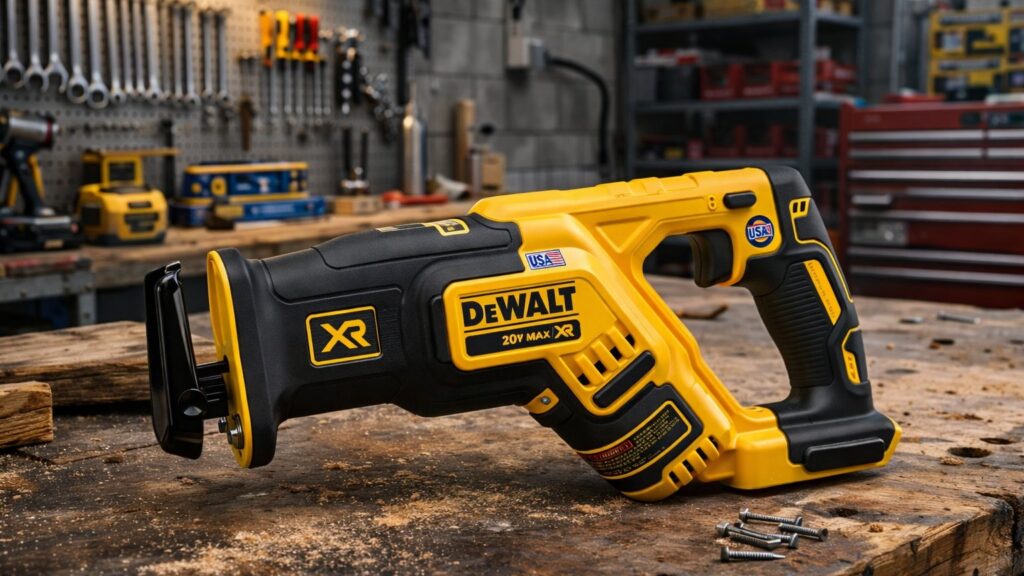
Reciprocating saws and circular saws operate on fundamentally different cutting systems, yet they are often treated as interchangeable. A reciprocating saw uses a push-pull blade motion designed to separate material through repeated strokes, while a circular saw relies on continuous rotational cutting for controlled, linear passes. The distinction is not simply about tool type, but about how each mechanism interacts with material, resistance, and control surfaces in real working conditions.
This explainer clarifies when the reciprocating system is functionally appropriate in place of a circular system. It outlines how motion, blade exposure, and cutting dynamics influence access, stability, and material engagement. By the end, readers will understand the structural conditions, constraints, and use scenarios that define where a reciprocating saw becomes the correct mechanical approach.