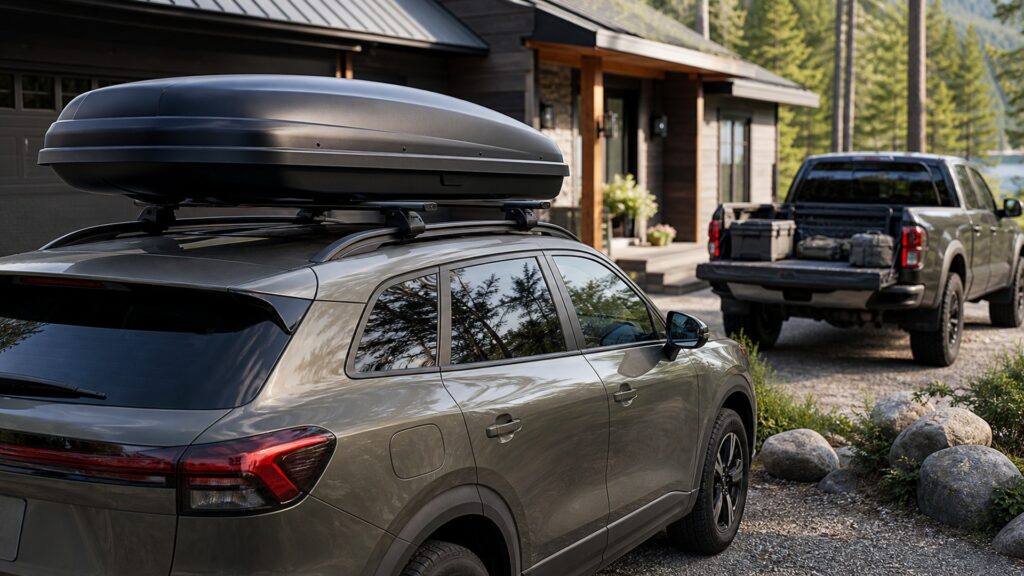
Vehicle attachment point
Within “When to Use Roof Cargo Systems Instead of Truck Bed Accessories,” vehicle attachment point carries rack loads into roof structure designed or approved for that purpose; it is checkpoint 1 for evaluating the decision to choose it over Truck Bed Accessories; within the operating boundary created by the alternative boundary that a clamp that sits on plastic trim instead of the intended structure may loosen or crush the cap.
- Role: Connect vehicle attachment point to transferring cargo weight and aerodynamic loads through a carrier, crossbars, towers, and approved roof attachment points without exceeding the vehicle's limits in the specific context of when to use roof cargo systems instead of truck bed accessories, while distinguishing that role from adding containment, protection, storage, or load-control hardware to a specific bed while preserving tailgate operation, drainage, tie-down access, and payload limits; where the decisive evidence comes from the decision to choose it over Truck Bed Accessories through transferring cargo weight and aerodynamic loads through a carrier, crossbars, towers, and approved roof attachment points without exceeding the vehicle's limits.
- Check: For this article's the decision to choose it over Truck Bed Accessories, identify the exact roof configuration before selecting towers or feet; provided the setup accounts for the intended outcome of additional cargo space for long or bulky equipment while keeping the passenger compartment usable.
- Limit: The conclusion in “When to Use Roof Cargo Systems Instead of Truck Bed Accessories” must account for the fact that a universal-looking clamp is not evidence that the roof can carry the proposed load; while the user also checks the fitment requirement covering roof type, fixed points or rails, crossbar spread, hatch and antenna clearance, carrier clamp geometry, and both dynamic and parked load ratings.
Tower and crossbar
Within “When to Use Roof Cargo Systems Instead of Truck Bed Accessories,” tower and crossbar creates the supported span on which a box, basket, or sports carrier is mounted; it is checkpoint 2 for evaluating the decision to choose it over Truck Bed Accessories; because the result still depends on the safety boundary covering stay within the lowest load rating, center and restrain cargo, recheck hardware, preserve visibility, and account for extra height and changed handling.
- Role: Connect tower and crossbar to transferring cargo weight and aerodynamic loads through a carrier, crossbars, towers, and approved roof attachment points without exceeding the vehicle's limits in the specific context of when to use roof cargo systems instead of truck bed accessories, while distinguishing that role from adding containment, protection, storage, or load-control hardware to a specific bed while preserving tailgate operation, drainage, tie-down access, and payload limits; as the article tests the upkeep routine to clean clamp interfaces, inspect corrosion and cracked plastics, verify torque, lubricate locks as directed, and remove unnecessary hardware when practical.
- Check: For this article's the decision to choose it over Truck Bed Accessories, match bar profile, width, spacing, and tower torque to both vehicle and carrier; with the tradeoff measured against how vehicle attachment point carries rack loads into roof structure designed or approved for that purpose.
- Limit: The conclusion in “When to Use Roof Cargo Systems Instead of Truck Bed Accessories” must account for the fact that incorrect spread or loose towers can allow movement even below the advertised weight limit; with the conclusion tied to the field check to identify the exact roof configuration before selecting towers or feet.
Carrier interface
Within “When to Use Roof Cargo Systems Instead of Truck Bed Accessories,” carrier interface clamps the cargo box, basket, or equipment mount to the crossbars; it is checkpoint 3 for evaluating the decision to choose it over Truck Bed Accessories; when the evidence is checked against the limit that a universal-looking clamp is not evidence that the roof can carry the proposed load.
- Role: Connect carrier interface to transferring cargo weight and aerodynamic loads through a carrier, crossbars, towers, and approved roof attachment points without exceeding the vehicle's limits in the specific context of when to use roof cargo systems instead of truck bed accessories, while distinguishing that role from adding containment, protection, storage, or load-control hardware to a specific bed while preserving tailgate operation, drainage, tie-down access, and payload limits; under the practical condition of how tower and crossbar creates the supported span on which a box, basket, or sports carrier is mounted.
- Check: For this article's the decision to choose it over Truck Bed Accessories, confirm every clamp fully engages without contacting the roof; with special attention to the field check to match bar profile, width, spacing, and tower torque to both vehicle and carrier.
- Limit: The conclusion in “When to Use Roof Cargo Systems Instead of Truck Bed Accessories” must account for the fact that mixed hardware or partial engagement can release under vibration and wind load; as verified through the limit that incorrect spread or loose towers can allow movement even below the advertised weight limit.
Load restraint
Within “When to Use Roof Cargo Systems Instead of Truck Bed Accessories,” load restraint keeps the cargo from sliding, lifting, or shifting as the vehicle turns and stops; it is checkpoint 4 for evaluating the decision to choose it over Truck Bed Accessories; within the operating boundary created by how carrier interface clamps the cargo box, basket, or equipment mount to the crossbars.
- Role: Connect load restraint to transferring cargo weight and aerodynamic loads through a carrier, crossbars, towers, and approved roof attachment points without exceeding the vehicle's limits in the specific context of when to use roof cargo systems instead of truck bed accessories, while distinguishing that role from adding containment, protection, storage, or load-control hardware to a specific bed while preserving tailgate operation, drainage, tie-down access, and payload limits; where the decisive evidence comes from the field check to confirm every clamp fully engages without contacting the roof.
- Check: For this article's the decision to choose it over Truck Bed Accessories, secure independent items and recheck tension after the first miles; provided the setup accounts for the limit that mixed hardware or partial engagement can release under vibration and wind load.
- Limit: The conclusion in “When to Use Roof Cargo Systems Instead of Truck Bed Accessories” must account for the fact that a closed basket or box does not automatically restrain everything inside it; while the user also checks how load restraint keeps the cargo from sliding, lifting, or shifting as the vehicle turns and stops.
Clearance envelope
Within “When to Use Roof Cargo Systems Instead of Truck Bed Accessories,” clearance envelope defines the added height and the space needed by the hatch, antenna, sunroof, and cargo; it is checkpoint 5 for evaluating the decision to choose it over Truck Bed Accessories; because the result still depends on the field check to secure independent items and recheck tension after the first miles.
- Role: Connect clearance envelope to transferring cargo weight and aerodynamic loads through a carrier, crossbars, towers, and approved roof attachment points without exceeding the vehicle's limits in the specific context of when to use roof cargo systems instead of truck bed accessories, while distinguishing that role from adding containment, protection, storage, or load-control hardware to a specific bed while preserving tailgate operation, drainage, tie-down access, and payload limits; as the article tests the limit that a closed basket or box does not automatically restrain everything inside it.
- Check: For this article's the decision to choose it over Truck Bed Accessories, measure total loaded height and test hatch movement before travel; with the tradeoff measured against how clearance envelope defines the added height and the space needed by the hatch, antenna, sunroof, and cargo.
- Limit: The conclusion in “When to Use Roof Cargo Systems Instead of Truck Bed Accessories” must account for the fact that garage doors, branches, crosswinds, and automated washes can contact equipment above the driver's sightline; with the conclusion tied to the field check to measure total loaded height and test hatch movement before travel.
Rated load path
Within “When to Use Roof Cargo Systems Instead of Truck Bed Accessories,” rated load path limits the combined mass of rack, carrier, and cargo under driving or parked conditions; it is checkpoint 6 for evaluating the decision to choose it over Truck Bed Accessories; when the evidence is checked against the limit that garage doors, branches, crosswinds, and automated washes can contact equipment above the driver's sightline.
- Role: Connect rated load path to transferring cargo weight and aerodynamic loads through a carrier, crossbars, towers, and approved roof attachment points without exceeding the vehicle's limits in the specific context of when to use roof cargo systems instead of truck bed accessories, while distinguishing that role from adding containment, protection, storage, or load-control hardware to a specific bed while preserving tailgate operation, drainage, tie-down access, and payload limits; under the practical condition of how rated load path limits the combined mass of rack, carrier, and cargo under driving or parked conditions.
- Check: For this article's the decision to choose it over Truck Bed Accessories, use the lowest applicable rating among roof, rack, carrier, and fasteners; with special attention to the field check to use the lowest applicable rating among roof, rack, carrier, and fasteners.
- Limit: The conclusion in “When to Use Roof Cargo Systems Instead of Truck Bed Accessories” must account for the fact that a static tent rating cannot be substituted for the lower dynamic rating used while driving; as verified through the limit that a static tent rating cannot be substituted for the lower dynamic rating used while driving.