
Guided Bar Path
A guided bar path is the rail-controlled route a Smith machine bar follows.
- Example: a Smith machine press moving along fixed rails
- Check: test whether the path fits the exercise
- Limit: fixed paths do not fit every movement
Use Smith machines instead of cable machines when the workout needs a guided bar path rather than adjustable cable resistance. Smith machines are built for barbell-style movements on rails, while cable machines are built for resistance from different angles.
The Smith machine is the better fit when selected presses, squat variations, rows, shrugs, or calf raises benefit from a fixed track. A cable machine is better when the goal is pulldowns, curls, pressdowns, rotations, and accessory work from changing lines of pull.
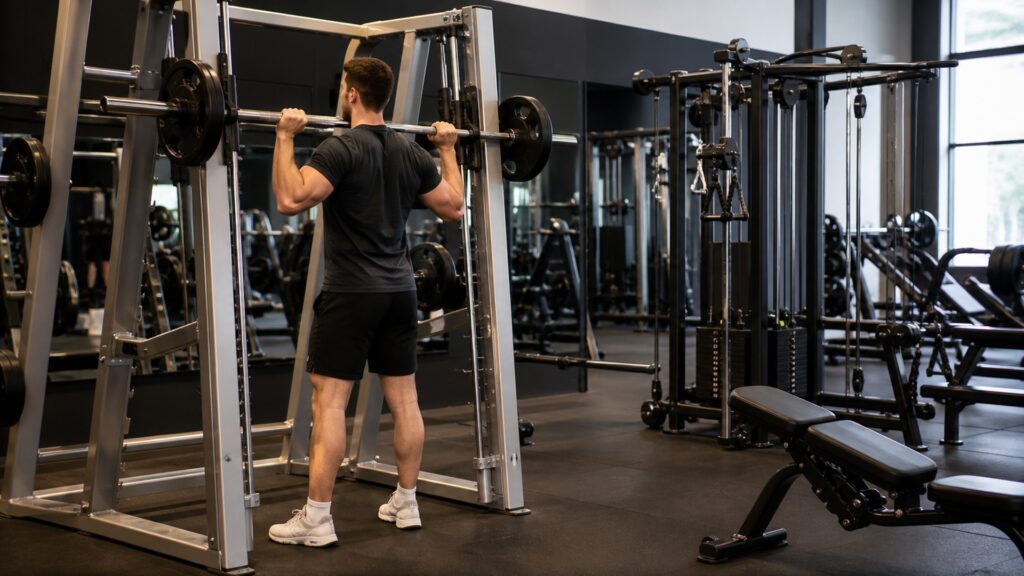
A practical decision path for choosing guided-bar training over cable-angle resistance.
Tip: Start with the exercises the smith machines must support every week, then judge features by whether they make those movements easier to repeat.
These concepts clarify how smith machines fit real home strength training decisions.
A guided bar path is the rail-controlled route a Smith machine bar follows.
Cable resistance uses pulleys and attachments to create load from different directions.
Fixed track is the machine path that guides the Smith bar.
Line of pull is the direction cable resistance travels.
Exercise priority is the main type of movement the equipment must support.
Setup tradeoff is the balance between fixed guided movement and adjustable resistance angles.
Tip: The best choice is the one that matches the user's repeated workouts, available space, and setup habits.
A Smith machine makes sense when the routine needs a bar moving on rails. That is different from pulling handles through cables.
The Smith machine wins when the guided bar is the main need.
Cable machines are stronger when the user needs resistance from high, low, side, or diagonal positions.
Cable machines win when angle control matters most.
The right choice is not about which machine is more advanced. It is about whether the week depends on guided-bar lifts or cable accessory work.
The main movements should decide the purchase.
Smith machines need room for the frame, plates, and bench. Cable machines need room for the user to step, kneel, rotate, or place a bench.
The better fit has to work in the room.
If the home gym lacks guided barbell-style movements, choose the Smith machine. If it lacks angle-based accessory resistance, choose the cable machine.
The first choice should solve the larger training problem.
The choice depends on guided-bar structure versus cable-angle flexibility.
The user wants selected guided-bar lifts on rails.
The fixed path fits the intended exercises.
The user needs adjustable lines of pull and attachment-based accessories.
Pulldowns, rows, rotations, and isolation work drive the routine.
They are both strength tools, but they solve different problems.
One guides a bar; the other changes resistance angle through cables.
They can be central when cable movements drive the program.
They are easier only when the track fits the exercise.
The better tool is the one that matches the routine.
Tip: Broad equipment claims deserve a practical setup check before they influence a purchase.
Short answers for comparing home gym equipment.
Choose it when guided-bar exercises are the main need.
Choose it when adjustable pulley resistance and accessory movements matter most.
Only for limited routines. They usually solve different needs.
Yes. Smith machines can handle guided-bar work while cables handle accessory angles.
Choose Smith machines for guided-bar structure and cable machines for adjustable lines of pull.
Smith machines make more sense than cable machines when guided-bar exercises are the main training need.
Cable machines remain better for adjustable-angle accessory work and cable-specific movement variety.
Use these Review Streets paths to compare related categories and practical next decisions.
Explore guided-bar strength equipment and setup tradeoffs.
Compare free-barbell rack training with guided-bar machines.
Review cable-focused equipment for accessory and angle-based work.
Choose a retailer
Prices checked regularly. We may earn a commission at no cost to you.