When to Use Trail Running Gear Instead of Road Running Gear

Use trail running gear instead of road running gear when the surface, route, and conditions create problems that road gear is not built to solve. Loose dirt, mud, rocks, roots, elevation changes, remote routes, and fast weather shifts all change the equipment job.

Trail gear is not automatically better. It can be heavier, warmer, stiffer, or unnecessary on pavement. The useful decision is whether the route needs traction, protection, carry capacity, navigation, or weather margin beyond a normal road run.

By: Review Streets Research Lab
Updated: September 2, 2026
Explainer · 8-12 min read
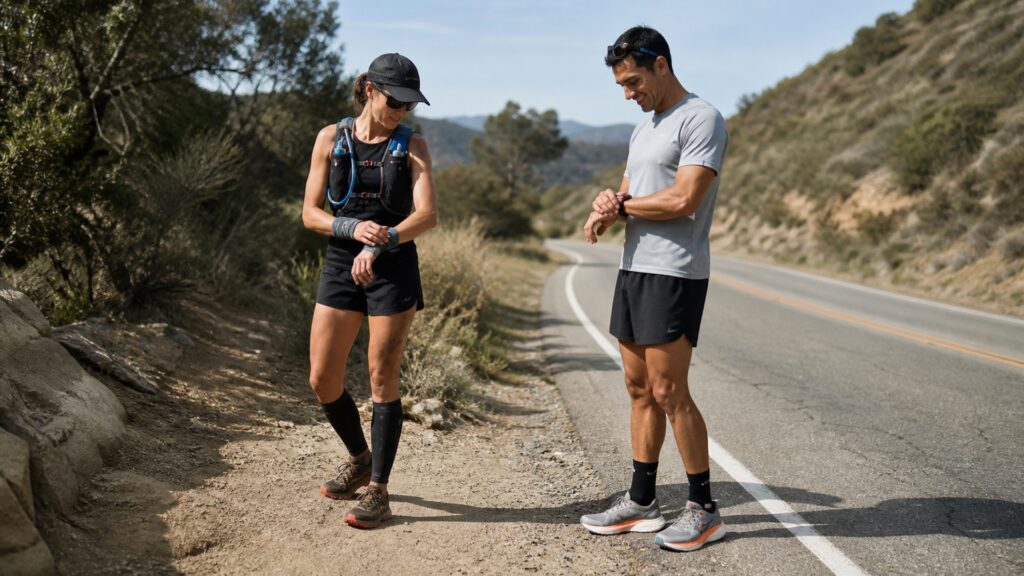
trail running gear explainer hero image for Review Streets
What You'll Learn

How Terrain Changes the Running Gear Job

Trail running gear fits routes where traction, protection, carry capacity, navigation, and weather margin matter more than road-running simplicity.

  • Why outsole lugs and rubber matter on loose surfaces
  • How rock plates, toe guards, and gaiters add protection
  • Where hydration vests and extra storage become useful
  • Why navigation and weather layers matter on remote routes
  • How trail gear can feel worse on pavement
  • Why trail gear reduces some risks without eliminating falls

Tip: Name the condition the gear changes before trusting a feature list.

Definitions

Key Concepts That Define Trail Running Gear and Road Running Gear

Trail running gear is equipment designed for uneven, loose, remote, or variable terrain. The remaining concepts explain the variables that change real training use.

Trail running gear

Trail running gear is equipment designed for uneven, loose, remote, or variable terrain.

  • It often emphasizes traction, protection, carry capacity, and weather readiness.
  • It can be overbuilt for pavement.
  • The route decides its value.

Road running gear

Road running gear is designed around smoother surfaces, predictable footing, and lighter carry needs.

  • It often prioritizes cushioning, low weight, and simple clothing.
  • It may lack trail traction or protection.
  • It works well when the route stays predictable.

Lugs

Lugs are raised outsole shapes that bite into dirt, mud, gravel, or loose surfaces.

  • Deeper lugs usually grip softer ground better.
  • They can feel awkward or wear faster on pavement.
  • Rubber compound matters too.

Rock plate

A rock plate is a protective layer in some trail shoes.

  • It reduces sharp underfoot sensation from rocks.
  • It can add stiffness.
  • Not every trail needs one.

Gaiter

A gaiter is a fabric cover used to keep debris out of shoes.

  • It helps on dusty, sandy, snowy, or loose trails.
  • It adds warmth and another fit point.
  • It is unnecessary for many road runs.

Weather margin

Weather margin is extra protection carried because trail routes can be longer, exposed, or slower to exit.

  • A shell, gloves, light, or emergency layer can matter.
  • Extra gear adds weight.
  • Route remoteness changes the margin.

Tip: Road running gear is designed around smoother surfaces, predictable footing, and lighter carry needs.

Surface

Loose Ground Needs Different Outsole Behavior

Trail routes ask shoes to grip dirt, mud, rock, roots, and off-camber surfaces. Road shoes are usually optimized for smoother ground.

  • Lugs bite into soft surfaces.
  • Sticky rubber can help on rock.
  • Wide platforms can feel stable.
  • Road foam may feel tall on uneven terrain.
  • Mud can overwhelm shallow tread.

Use trail gear when traction has a real job.

Protection

Trails Add Underfoot and Debris Problems

Rocks, roots, branches, sand, and puddles introduce protection needs that road routes rarely create.

  • Toe guards reduce front impact sensation.
  • Rock plates limit sharp underfoot pressure.
  • Gaiters block debris.
  • Durable uppers resist abrasion.
  • Protection often adds weight.

Trail gear trades lightness for margin.

Carry and Navigation

Remote Routes Need More Self-Sufficiency

Trail runs can be slower, farther from water, harder to navigate, and more exposed to weather. Gear may need to carry fluid, fuel, layers, and light.

  • Vests carry more than belts.
  • Maps or watches help route finding.
  • Headlamps matter when exits are slow.
  • Weather shells add safety margin.
  • Phones may lose service.

Trail gear often solves route independence.

Road Tradeoff

Trail Gear Can Be Wrong on Pavement

Deep lugs, stiff plates, heavy uppers, and extra packs can feel clumsy or hot on roads. Using trail gear everywhere can create its own compromises.

  • Lugs can wear quickly on pavement.
  • Stiff shoes may feel harsh.
  • Extra storage traps heat.
  • Heavy gear changes rhythm.
  • Smooth routes may reward simplicity.

Trail gear should match terrain, not identity.

Decision

Choose Trail Gear When the Route Stops Being Predictable

The decision is less about distance and more about surface, remoteness, weather, and consequences of being underprepared.

  • Use trail shoes for loose or technical terrain.
  • Use road shoes for smooth predictable routes.
  • Carry more when refills are absent.
  • Add layers when exposure changes.
  • Remember that gear cannot eliminate fall risk.

Trail gear belongs when conditions require its specific protections.

Quick Reality Check

Where Trail Running Gear and Road Running Gear Helps and Where It Needs Context

The useful explanation is practical: what the gear or concept changes, when that change matters, and where claims need restraint.

What This Clarifies

It shows which real running or lifting condition trail running gear and road running gear changes.

It helps readers judge claims by mechanism, setup, conditions, and user context.

What It Cannot Prove

It cannot guarantee performance, safety, injury prevention, recovery, or health outcomes.

It cannot replace qualified coaching or medical guidance for pain, symptoms, or individualized training decisions.

Common Myths

Misconceptions About Trail Running Gear and Road Running Gear

Common shortcuts and misunderstandings can make the topic seem simpler than it is.

Trail Running Gear and Road Running Gear works the same for every user

The useful answer changes with body, route, terrain, weather, session length, training age, and tolerance.

More features mean better gear

Extra data, storage, cushion, traction, or adjustment only helps when it solves the actual workout problem.

A product can guarantee safety or results

Gear can support better decisions, but it cannot control traffic, fatigue, technique, recovery, weather, or individual response.

One good run proves the setup

A single run gives feedback, while repeated use across conditions reveals fit, durability, and limits.

Comfort language is enough to explain the category

Good explanations need the actual mechanism: contact, carry, sensing, visibility, load path, resistance, or setup.

Tip: For trail running gear and road running gear, keep the explanation tied to the route, movement, load, setup, or condition being changed.

FAQ

Frequently Asked Questions About Trail Running Gear and Road Running Gear

Concise answers to common questions readers may have after the main explanation.

Which mechanism should guide decisions about trail running gear and road running gear?

Start with the condition being changed: ground contact, carry stability, route feedback, awareness, weather, resistance path, or setup margin.

Does this guarantee better performance or safety?

No. It can support better choices, but general fitness content cannot guarantee safety, recovery, injury prevention, or results.

What should readers compare first?

Compare the mechanism and use context before comparing price, brand language, or feature count.

How should someone test the decision?

Test one variable during ordinary training before relying on it for long runs, hard sessions, races, or heavy lifts.

When should someone get qualified guidance?

Qualified help matters for pain, symptoms, medical concerns, complex programming, major form changes, or heavy lifting technique.

Bottom Line

Trail Running Gear and Road Running Gear matters when it changes a specific running or strength-training condition.

The better decision follows mechanism, fit, setup, environment, and evidence limits instead of treating gear as a shortcut around training judgment.

Next Steps

Go Deeper or Compare Your Options

Use these related explainers to continue the Review Streets fitness decision path around trail running gear and road running gear.

Quick Summary

Trail Running Gear and Road Running Gear Explained

  • Why outsole lugs and rubber matter on loose surfaces
  • How rock plates, toe guards, and gaiters add protection
  • Where hydration vests and extra storage become useful
  • Why navigation and weather layers matter on remote routes
  • Claims about safety, injury prevention, recovery, or performance need limits.