When to Use Travel Clothing & Footwear

Use travel clothing or footwear when a specific part of your itinerary gives it a job. At a waterfall deck, that might mean putting on a poncho as you step into the mist. Shoes for sightseeing, a second trouser length and a scarf for a match answer different needs as the day unfolds.

By: Review Streets Research Lab
Updated: November 24, 2026
Explainer · 11–14 min read
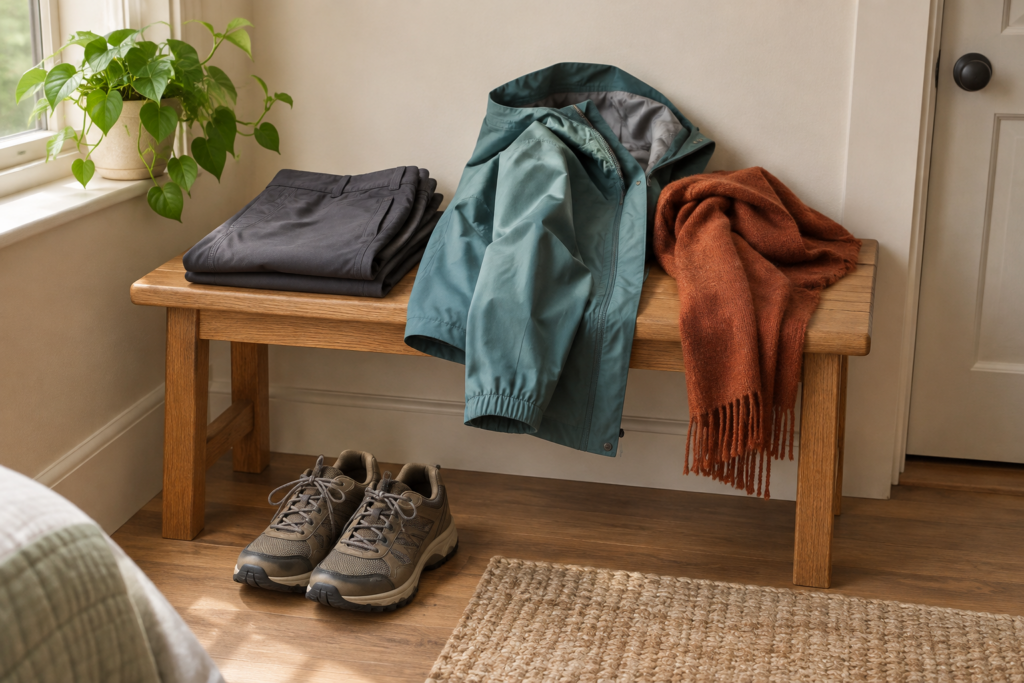
Walking shoes below a wooden bench holding folded trousers, a rain jacket and a knit scarf.
What You’ll Learn

Read Your Itinerary for Clothing Cues

Read the day in order and notice where you change activities, such as starting a walk or stepping into waterfall mist.

  • Pinpoint where a waterfall visit takes you into spray.
  • Identify the stop where the operator supplies the layer.
  • Mark the part of the sightseeing route you’ll walk.
  • Decide which shorter trouser length you want.
  • Find the sole guidance for the floor you’ll dance on.
  • Find the scarf cue for your match.
  • Work out what changes in your plan if you take another connection.

Tip: Write the activity next to the item. For example, put walking shoes beside the leg you plan to walk from the ferry dock.

Key Terms

Six Terms for the Moment of Use

Use these terms to describe the job you need in plain language, from a foot route to a particular trouser length.

Travel Leg

One part of a journey, such as the connection between a ferry arrival and your first visit.

  • Beginning: Mark where one activity hands over to the next, such as at the ferry dock.
  • End Point: Give the walk a destination you can name.
  • Way of Getting There: Specify how you’ll get there, on foot or by another mode.

Packable Rain Jacket

A rain jacket made to take a compact form between wearing intervals.

  • Carry State: A self-stowing model serves as its own package when carried.
  • Planned Use: Think of the outdoor leg when you would actually put the personal jacket on.
  • Local Provision: If the attraction supplies a poncho, record that against the relevant activity.

Walking Shoes

Footwear for the part of the outing you spend on foot, such as sightseeing between stops.

  • Between Stops: Count the connecting walks as part of the outing.
  • Arrival Point: The foot leg can begin at a ferry dock or train station.
  • Shorter Walk: If you change modes, decide what walking still remains.

Convertible Pants

Trousers with more than one intended leg length.

  • Full Length: The ordinary long trouser length can be your starting point.
  • Shorts: Some models make shorts the second option.
  • Capri Length: A capri option still extends below the knee.

Floor-Appropriate Sole

A shoe bottom of the kind and condition the host describes for its dance floor.

  • Clean Contact: An organizer can ask for clean soles.
  • Sole Type: Look for distinct details such as softness or grip.
  • Familiar Examples: Ordinary shoes may figure in a host’s examples, with conditions.

Supporter Scarf

A wearable team scarf that can be raised at a club’s cue.

  • Wearable Use: Bay FC’s shop lists wearing among the uses for its scarf.
  • Before Play: A cue can come as players take the field.
  • During Play: An event in the match itself can also be the signal.

Tip: Finish the thought “I want the shorter length when…” to put the clothing decision at a specific point in the day.

Waterfall Spray

When the Route Takes You Into Waterfall Spray

Give the outer layer a start point. Look for the operator’s poncho cue in the day’s itinerary, then mark when you expect to use it.

  • At Journey Behind the Falls in Ontario, Niagara Parks tells you to put on its poncho as you enter the lower observation deck, when that deck is accessible.
  • Maid of the Mist describes rain or shine operation for its US-side boat. It supplies a poncho before boarding. Even a hypothetical visit on a clear day has that handoff on the itinerary.
  • For a hypothetical outing with two outdoor stops, decide who provides the layer for each. You might wear the Maid of the Mist poncho on the boat and want a separate rain jacket for an evening walk.
  • Patagonia says its men’s Torrentshell 3L Rain Jacket stows into its own hand pocket. For the hypothetical evening walk, the relevant detail is that you can carry the jacket before you reach the part of the route where you want to wear it.
  • Niagara Parks identifies wind and time on the deck as two things that can affect how wet you get. Draw the start of the wear interval around the deck visit, keeping those conditions in mind.

For a waterfall stop, start with the place you’ll put on the poncho and identify who provides it. Give a personal jacket its own entry if you’d wear it for a different part of the day.

Sightseeing on Foot

When the Next Leg Is on Foot

Where you arrive matters when the next part of the trip is on foot. The Mackinac Island tourism bureau places the ferry arrivals it lists at their downtown docks and describes several attractions as within walking reach of one another.

  • In a hypothetical island afternoon, you leave the ferry and visit three places on foot. The shoe decision includes the walks between stops. Draw those links into the itinerary, with the visits as points along the way.
  • The tourism bureau suggests walking shoes for island sightseeing. In that hypothetical afternoon, think about the first walk after arrival and each connection to the next stop when you apply the advice.
  • The bureau describes Mackinac Island as car-free and lists horse-drawn taxis among the ways to get around. In a different hypothetical afternoon, taking one for a connection leaves you planning for only the links you still intend to walk.

Name the walking stretches on your schedule, from where you start to the last stop you’ll reach on foot. If the route changes, use the stretches still in your plan.

A Second Trouser Length

When You Want a Different Leg Length Later

A second trouser length has a clear use when you want a different amount of leg coverage later in the same outing. Decide what length you want for each block before you think about what to wear between them.

  • Suppose, hypothetically, you want full-length trousers in the morning and shorter legs for an afternoon walk, with the two activities back to back. The point to use the shorter setting is when you move into the second activity.
  • If you mean shorts for that afternoon, REI Co-op’s men’s Sahara Convertible Pants are one documented example. Columbia’s UK listing for the men’s Silver Ridge Elite Convertible Hiking Trousers specifies shorts as well.
  • For that hypothetical afternoon, you might prefer a shorter length that still reaches below the knee. KÜHL’s women’s Freeflex Roll-Up Pant offers full-length and capri configurations. Capri is the one that matches the coverage in this plan.

Put the shorter setting at the time you plan to use it. If you’d wear the same length for both activities in the hypothetical day, leave the switch off your schedule.

Shoes for Social Dancing

When You’ll Dance on a Shared Floor

Give social dancing its own footwear decision if you’ll spend part of the trip on the floor. The particular host can tell you what kind of sole and what condition it has in mind.

  • Toronto Contra Dance’s normal rule keeps street shoes out of the dance hall. Its floor guidance allows running shoes as an example when they meet its conditions, including clean, soft soles and wide heels.
  • Central Pennsylvania Swing Dance Club calls for clean shoes on its dance floor. It favors less grip, naming leather soles and suggesting well-worn sneakers as another possibility.
  • In a hypothetical weekend, you spend the afternoon sightseeing and the evening dancing with the Central Pennsylvania club. Sole condition and grip enter your plan for the second activity because that’s when you’ll be on its floor.

Read the shoe examples with the floor guidance that accompanies them. The host’s description gives you the details to consider for the time you’ll be dancing there.

A Supporter Scarf

When You Want to Join a Match’s Scarf Gesture

Give your scarf its own entry in the plan if you want to join the gesture. Start with the club and find its cue.

  • In its 2026 gameday update, Colorado Rapids invites supporters to raise their scarves during the pregame procession as the players take the field. On a hypothetical visit, you wear yours on the way there and choose to raise it during that procession. For that moment it’s part of what you came to take part in.
  • Minnesota United’s rookie guide invites fans to join a scarf twirl at a corner kick. On a hypothetical first visit to Allianz Field, you’d watch the pitch for that moment.
  • Bay FC’s official shop describes wearing and displaying its supporter scarf and identifies a raise before kickoff at PayPal Park. If that was the club you were visiting in a hypothetical weekend, that’s the cue you’d put next to the scarf in your plan.

Put the scarf gesture at the club’s cue. Decide separately if you want to wear the scarf for the rest of the outing.

Reality Check

What Changes the Clothing Decision

A change in supplies or activities can change the clothing decision.

The Poncho Is Already Part of the Stop

A hypothetical traveler wants an outer layer only for the Maid of the Mist boat ride. Since the operator supplies a poncho before boarding, this traveler can base their decision for the ride on that provision.

A second hypothetical traveler has a separate walk outdoors on the schedule and wants a personal rain jacket for it. The choice about that jacket belongs with the walk, even though the two plans include the same attraction.

Watching and Joining at a Match

Imagine two hypothetical visitors to Allianz Field. One wants to join Minnesota United’s scarf twirl. The other plans to watch from their seat.

The second visitor might still wear a supporter scarf. In their plan the scarf is part of what they’ve chosen to wear to the match. For the first visitor, it also has a job when they take part in the gesture.

Myths

Assumptions That Change the Decision

A gear label or a cue from one activity can give you an incomplete picture of the next one.

Does the Maid of the Mist poncho settle how wet I’ll get?

Maid of the Mist says you can still get wet in the hooded poncho it supplies for the boat ride.

Does a car-free destination mean I’ll spend the whole visit walking?

Mackinac Island’s tourism bureau lists horse-drawn taxis as well as places you can explore on foot. In a hypothetical day using both modes, use the walking stretches to make the shoe decision.

Does convertible always mean the second length is shorts?

The length depends on the model. Columbia’s UK listing specifies shorts. KÜHL’s Freeflex Roll-Up offers capri length. Use the stated endpoint for the activity you have in mind.

Is dedicated dance footwear the only option for a beginner?

Portland Lindy Society presents lightweight shoes as an option for beginning swing dancers. Give that starting advice the scope of the group offering it, and read the organizer’s guidance for your own session.

If one club raises scarves before play, is that the cue everywhere?

Use the cue for the club you’re visiting. Colorado’s 2026 procession takes place before play. Minnesota United’s corner-kick cue comes during the match.

Tip: When you remember a shorts setting or a match cue, keep the name of the model or club alongside it.

FAQ

Practical Questions Before the Outing

Start with the detail that changes your plan, such as the specific dance floor.

Is there an enclosed passenger space on Maid of the Mist?

No. Maid of the Mist says its passenger space is all outside. For a hypothetical traveler who’d planned to spend the ride inside, that changes which part of the visit they’re dressing for.

What if I want an outer layer only for the boat ride?

You can plan to use the poncho Maid of the Mist supplies before boarding. If you’d also wear a personal rain jacket later, give it a separate place in your plan.

How do I spot a walking leg when I arrive by rail?

Look for the first place you’ll walk to. Venezia Unica lists Santa Lucia station or Piazzale Roma as departures toward Campo San Pantalon on its Dorsoduro itinerary. Its separate walking guidance for Venice covers narrow streets and bridges.

What if I plan to go back to my room between activities?

If you’re already planning a change of clothes during that hypothetical stop, decide what length you want for the next activity at that point. You may have less reason to use one garment for both lengths that day.

Where can I find an organizer’s advice about soles?

Look for the event’s own footwear guidance. Central Pennsylvania Swing Dance Club, for example, covers sole grip in its FAQ.

Do I need to wear the scarf all day to use it at a cue?

You can plan to hold it up just for that moment. Bay FC’s official shop describes wearing and displaying its scarf as two intended uses.

Where should a first-time visitor look for a scarf cue?

Try the club’s gameday material or first-visit guide. Minnesota United’s rookie guide, for example, addresses first-time visitors to Allianz Field.

Can I use an old guide to time a scarf raise?

Use it as background and look for material that covers the club and occasion you’ll attend. Colorado’s gameday update describes its 2026 procession, so keep the year attached to that example.

Tip: Save the specific line of guidance that changes your plan, such as the host’s sole advice or the date of a match update.

The Bottom Line

Name the moment you’ll use the item. Give it a verb you can put on your itinerary, such as step onto the deck or walk to the next stop. That gives you a clear place to revisit the decision when the plan changes.

For a hypothetical trip, redraw the plan with one change. Say you take a taxi for a leg you were going to walk. Make the shoe decision for the remaining stretches you expect to spend on foot.

Related Reading

Explore Travel Clothing & Footwear

Browse the category by article format.