
Extrinsic Stain
Color deposited on the outer enamel surface.
- Use: identify toothpaste-compatible change
- Variable: diet, tobacco and hygiene
- Tradeoff: May need professional cleaning
Use whitening strips instead of whitening toothpaste when the goal is to chemically lighten the color of natural teeth beyond removable surface stain. Most strips hold peroxide against teeth for a defined contact time, while whitening toothpastes mainly use abrasives and detergents during brushing to remove extrinsic stains.
Strips are a treatment cycle, not an everyday cleaning replacement. They can cause temporary tooth sensitivity or gum irritation, especially when gel contacts soft tissue or directions are exceeded. Whitening does not change crowns, veneers, fillings, or implants, so a dental exam is useful before treating uneven, sudden, single-tooth, or unexplained discoloration.
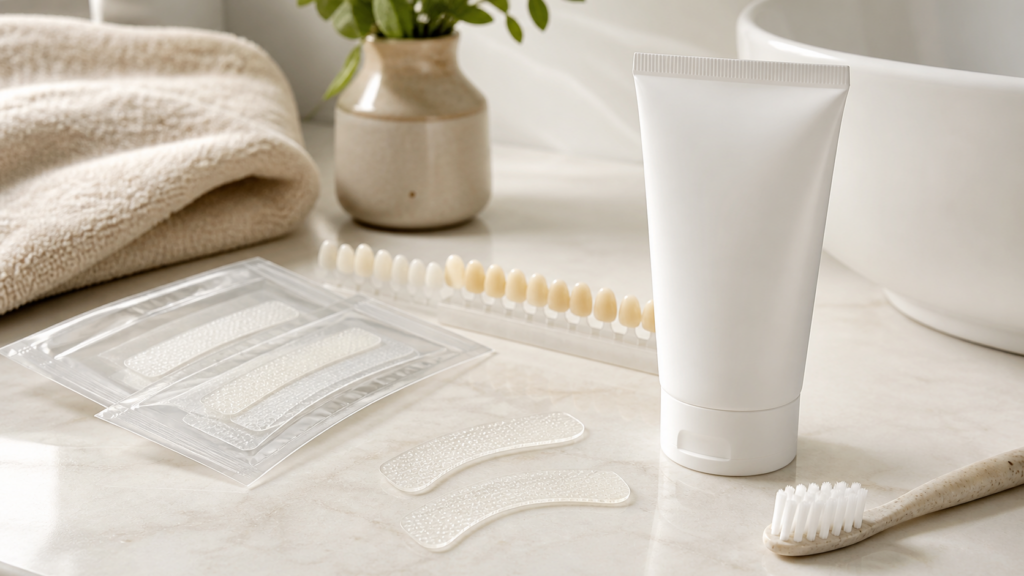
Choose peroxide strips when a healthy, professionally screened mouth needs broader natural-tooth color change, while reserving whitening toothpaste for gradual surface-stain management; integrate restorations, sensitivity, fit, contact time, routine, and counterexamples.
Tip: Chemical whitening is appropriate only when chemical color change is the goal.
These when to choose whitening strips concepts separate mechanism, application, limits, and purchasing consequences.
Color deposited on the outer enamel surface.
Color arising within enamel or dentin rather than loose surface deposit.
Chemical oxidation that changes colored compounds within tooth tissues.
Particle-assisted removal of surface deposits during brushing.
Color difference between whitened natural teeth and unchanged dental work.
Labeled sequence of applications followed by reassessment.
Tip: Use these terms to test when to choose whitening strips instead of relying on a front-label promise.
Start only after the mouth is healthy and the discoloration is understood. Place strips on teeth rather than gums and use the labeled schedule.
Chemical whitening is appropriate only when chemical color change is the goal.
A fluoride whitening toothpaste can combine cavity protection with surface-stain removal. Compare abrasivity, sensitivity, flavor, and the specific whitening claim.
Toothpaste earns its place by supporting daily health first.
A single darkening tooth, pain, cracks, decay, leaking restorations, or new spots needs diagnosis. Bleaching can mask contrast without addressing the cause.
Color can be a clinical clue, not just a cosmetic target.
Use only as directed and stop after substantial or persistent sensitivity, burning, whitening of gum tissue, or sores. Do not cut or stack strips to intensify exposure.
Tingling is not a performance measure.
Compare after the full cycle and after temporary dehydration resolves. Consider evenness, sensitivity days, gum comfort, and whether fillings now contrast.
A lighter shade is not successful if comfort or color harmony deteriorates.
Choose strips for broader peroxide bleaching; choose toothpaste for ongoing hygiene with modest surface-stain control.
The shade goal concerns multiple healthy natural teeth rather than one abnormal tooth.
The user can follow contact time and placement exactly.
Existing restorations may become more visibly mismatched.
Pain, cavities, cracks, or gum disease should be addressed before cosmetic bleaching.
These claims flatten the variables that determine how when to choose whitening strips performs in a real routine.
Most whitening toothpastes primarily remove extrinsic surface stain; some include low peroxide, but action differs from strip contact.
Bleaching acts on natural tooth tissue and does not change tooth-colored restorations, creating possible mismatch.
Exceeding directions can increase sensitivity and gum irritation without a proportionate or predictable benefit.
ADA reports insufficient evidence for safe, effective charcoal whitening; abrasive DIY use can damage surfaces.
Sensitivity is an adverse effect, not a success signal. Persistent or localized pain needs evaluation.
Tip: Test the exact when to choose whitening strips tool, setting, and routine before generalizing from its category.
The remaining decisions about when to choose whitening strips concern technique, compatibility, safety, upkeep, and value.
An adult with healthy natural teeth, generalized discoloration, realistic expectations, and no unresolved sensitivity or dental disease after appropriate screening.
Coverage will be uneven and adhesive placement difficult. Ask the orthodontic and dental team about timing.
Avoid stacking irritating or abrasive products unless advised. A standard fluoride toothpaste may be more comfortable.
Follow the product cycle; concentration and regimen vary. Do not compare products by peroxide percentage without contact-time context.
Surface dehydration, uneven contact, anatomy, stains, and restorations can affect appearance. Persistent unevenness deserves dental review.
Stop for marked sensitivity, gum burning, sores, pain, or unexpected color change and seek advice when symptoms persist.
Use whitening strips when peroxide bleaching of multiple healthy natural teeth is the actual goal. Use whitening toothpaste when daily fluoride brushing plus gradual surface-stain removal is sufficient.
Screen discoloration first, expect restorations not to change, follow strip contact time exactly, and track sensitivity and gum comfort. Do not self-whiten pain, cracks, decay, or a single dark tooth.
These Review Streets paths narrow the next when to choose whitening strips decision by format, goal, and routine fit.
Browse toothbrushes, interdental cleaners, whitening, and daily oral-care categories.
Compare manual, electric, sonic, and specialty toothbrush formats.
Choose a retailer
Prices checked regularly. We may earn a commission at no cost to you.