
Ambidextrous sling
A sling described as wearable on either shoulder using the same bag.
- Placement: Shoulder refers to where the strap rests on the wearer.
- Unit: The term describes one physical bag.
- Reading it: Here, the feature in view is the strap.
Travel bags and backpacks are worth comparing when a difference could change what you carry or what you can do with it. One sling may let you use either shoulder. Two detachable pieces may serve different carrying roles. And if you need a jacket on arrival, the useful detail is what you can leave packed.
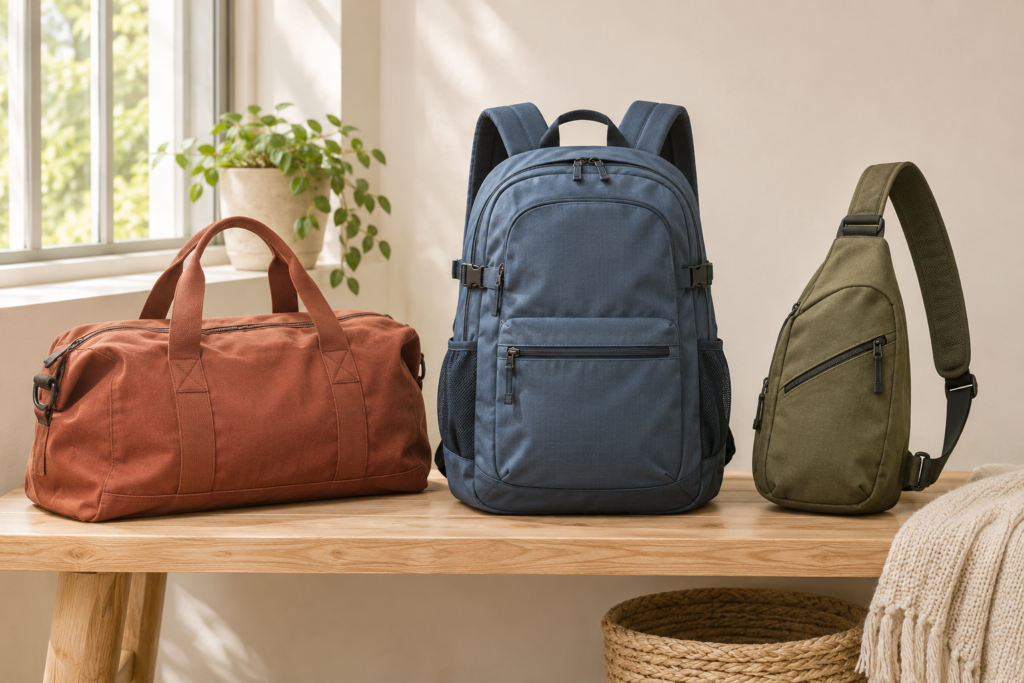
The examples here start with a particular trip, purchase requirement or bag you already own. Each shows how a small detail can settle the part of the choice that matters to you.
Tip: Picture what you want to be able to say afterward, such as “The rest can stay where it is.” That gives a broad comparison a finish line you can recognize.
These terms identify the item, part or action a listing describes. That distinction matters when two descriptions look like they address the same question.
A sling described as wearable on either shoulder using the same bag.
A version of a bag identified by the shoulder it’s intended to go over.
Backpack wear using one piece on its own.
A bag label communicating certification of production processes.
A way to return used gear to its maker.
A way to reach a garment while leaving the contents of the main compartment packed.
Tip: If a product sentence seems to answer two questions at once, finish it in your own words. What exactly gets worn, labeled, sent back or opened?
Osprey describes where you can wear its Transporter Sling. ALPAKA names shoulder-specific versions of its Metro Crossbody.
The comparison earns its place when the plan calls for alternate shoulders with one unit. For that plan, the Transporter’s either-shoulder specification directly answers the placement question.
Imagine two travelers parting at a train station. Each will take a different route from there, and for the next leg each wants to carry their belongings on their back. They have arrived with one combined bag system.
If each traveler’s belongings fit their part, Onli documents two backpack carries. WAYKS documents one backpack and one shoulder carry.
Imagine a traveler asked to document a finished-item production mark for a work bag. The paperwork calls for a statement about the bag they’re considering.
For the paperwork in this example, Thule’s statement supplies finished-item evidence. The Patagonia statement answers a fabric question.
Imagine you own a Patagonia Black Hole Pack 32L and are trying to work out which U.S. program to ask about. Keep the model the same and picture it at different points in its useful life.
The first condition supports a trade-in eligibility inquiry. The second is the condition Patagonia describes in its separate end-of-use invitation.
Imagine getting to a venue with just enough time to take out a jacket. You intend to leave your other belongings packed until you reach your room later. Both actions are part of the requirement.
When the main compartment needs to stay packed, the Tote’s description supports the planned stop. For the Duffel, the missing detail is what happens to the rest of the load during garment removal.
Even after you’ve read the right record, you can be left with a second question. These examples show where a different kind of evidence would help.
For the finished-item mark, bluesign allows for some components from outside the production processes it assessed under its criteria.
Imagine that the same paperwork asks whether your belongings will stay in place in a particular bag. A production-process mark addresses how things were made. You would need evidence about the loaded bag to answer that question.
Suppose an older pack closes and carries, but you’re unsure whether the wear on it still meets the trade-in requirement for good condition. You have a condition judgment to resolve.
Tell Patagonia what still works and where the pack shows wear. Its eligibility remains open.
Each of these readings extends a real statement beyond the item or action it describes. The correction is usually in a word you can pin down, such as version, fabric or compartment.
With the Metro Crossbody, left and right identify choices in the lineup. The wording for same-bag wear would identify either shoulder as an option for the strap on that one model.
Detachment describes how the pieces come apart. The separate Cube, for example, has a documented shoulder carry.
Patagonia’s Mini MLC statement specifies fabrics. A finished-item designation addresses a different subject.
Patagonia uses different condition criteria for U.S. trade-in and its invitation to return its own products at end of use.
A compartment tells you where a garment goes. An access description has to tell you what happens to the other load when you use that opening. Halfday gives that detail for the Garment Tote.
Tip: Try stating what the description actually identifies before applying it to your own plans. “This fabric” and “this finished item” give you different starting points.
The details below help if you’re reading a version selector, looking at a label or trying to understand a bag that’s already packed.
The right-shoulder Metro Crossbody page names the shoulder in the title and shows a separate left-shoulder choice under its variations. The title identifies the page you’re on even when both options appear.
Yes. Onli lists backpack carry for its Expandable Tote Pack, alongside the tote use its name suggests.
With both pieces set up as WAYKS specifies, one traveler can wear the Day Pack while the other shoulder-carries the Cube.
bluesign’s 2026 transition renames bluesign PRODUCT as bluepass Consumer Product and bluesign APPROVED for articles as bluepass Article. Earlier labels already in use remain valid there.
Scan the bluepass label’s QR code to reach the bluesign verification page.
Good condition is also required. Patagonia’s U.S. wording says “most,” so those conditions leave the specific pack’s eligibility open.
A continuous view of the exact model would be useful. It would start with the duffel closed and loaded and show the main compartment and its contents as the garment comes out. That would let you see what, if anything, had to move.
A difference earns attention if it affects something you actually need. You might care about getting to a jacket when you arrive and have no reason to alternate shoulders.
Tip: A softer preference can sit alongside a firm requirement. If leaving the main load packed is firm, keep it in the question you ask about garment access.
Put the task ahead of the category name. Getting dressed between arrival and check-in is a different task from packing before departure. Thinking in terms of the moment you need the bag makes it easier to see when a product description actually answers your question.
A difference is worth pursuing as long as its answer could change what you do. If a detail is still open, describe the exact action or condition you need evidence for. Once you have that answer, you can move on with the choice it informs.
Continue with the Travel Bags & Backpacks archives.
Browse the lists archive.
Visit the comparisons archive.
Open the buying guides archive.
Choose a retailer
Prices checked regularly. We may earn a commission at no cost to you.