When Travel Electronics Are Worth Comparing

If you buy travel data too early, your service period can end before you land. If two plans behave differently, that can change whether you buy now or wait. Use the same test for other travel electronics. Put both options in the same situation, then change one condition to see whether the difference still matters.

By: Review Streets Research Lab
Updated: November 27, 2026
Explainer · 10–12 min read
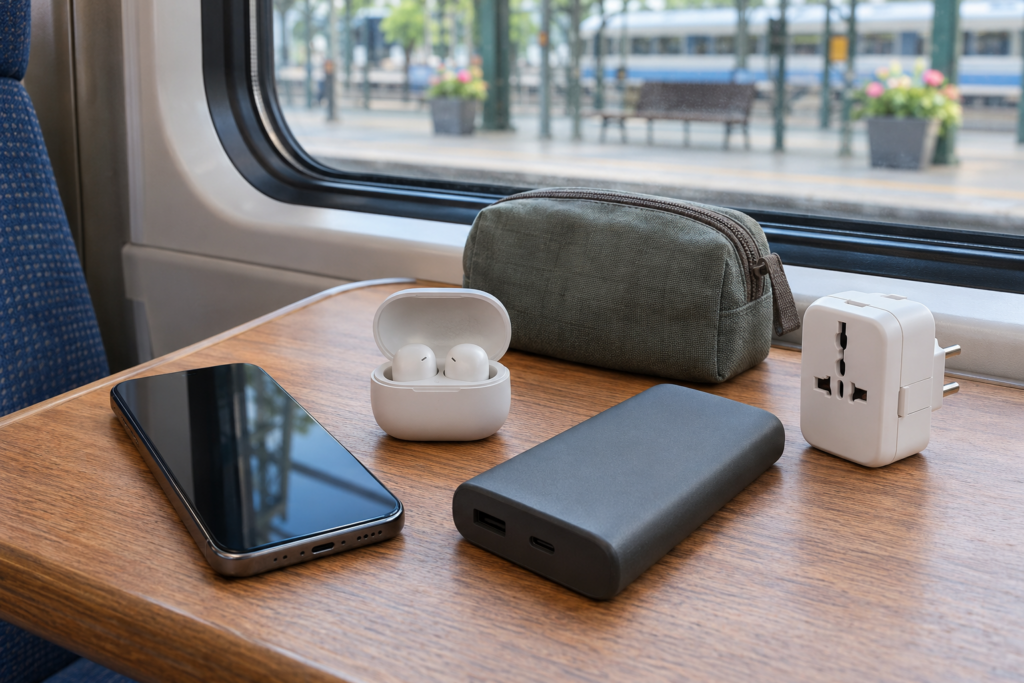
A phone, wireless earbuds, a power bank, and a travel plug adapter on a train table.
What you’ll learn

Find the difference you’ll actually notice

Picture the moment you would reach for the device or count on the service. That gives you something concrete to look up when the options seem similar.

  • Distinguish time to activate from time to use the plan.
  • Decide whether an early purchase makes sense.
  • Identify when the contact needs a phone number.
  • Find the music control for one-bud listening.
  • Understand an output rule during low demand.
  • Read a destination listing alongside the equipment class.
  • Decide when you have enough information to stop comparing that detail.

Tip: Write down what you would do differently. If the answer is the same for both options, move on to the question you still need to answer.

Definitions

The terms behind the decisions

The same listing can answer several questions at once. These terms help you pick out the sentence that answers yours.

Activation window

How long a purchased offer can remain unstarted.

  • Starting date: Count from purchase for the two Japan plans.
  • Installation: Nomad allows installation before activation.
  • At the cutoff: The cutoff can trigger activation. It can also end eligibility.

Validity period

The service term that follows activation.

  • Listed duration: An offer can express that term in days.
  • Service trigger: For SmartStart, covered arrival can start service when the line is on.
  • Calendar dates: The start date anchors the term on your calendar.

Data-only plan

A plan whose own line supplies internet data without carrier calls, texts or a phone number.

  • Where the label applies: The label describes services on the plan’s own line.
  • Internet contact: A shared messaging app can use internet access.
  • Carrier contact: Calls placed by number use the plan’s carrier voice service.

On-earbud playback control

A control on the bud for media on a connected player.

  • Action: Starting music is one such command.
  • Assignment: A command can be assigned to one side.
  • Separate functions: Call controls have their own documented assignment.

Low-draw output

Output available to a device that requests little power.

  • Demand: A bank’s low-draw rule can cover periods when a device requests no power at all.
  • Mode: Anker’s trickle mode is intended for low-powered accessories.
  • Timer: An output mode can have its own timer.

Protective earth

A separate grounding connection for equipment designed to use it.

  • Another term: A description may call that equipment or interface earthed.
  • Device class: Unearthed equipment is a separate class in SKROSS’s product descriptions.
  • Reference point: Equipment class and outlet type can be listed separately.

Tip: Keep the term attached to the particular offer, command or port it describes. That tells you where to look for exceptions.

Purchase timing

Will the plan still be usable when you land?

Imagine buying data four months before a 10-day Japan trip. Assume you take no action to start either plan and make no eligible network connection before departure. You’re deciding whether to pay now or wait.

  • Nomad’s Japan fixed-data listing includes 5 GB for 30 days. Ubigi’s Japan SmartStart offer lists the same 5 GB for 15 days.
  • Nomad gives the Japan offer 60 days from purchase to start. Ubigi’s Japan offer can wait six months from purchase.
  • On day 60 Nomad automatically starts the unused plan’s service term. At Ubigi’s deadline the unactivated offer expires instead.
  • On that calendar, Nomad’s 30 days after the automatic start would end before arrival. The Ubigi offer would still be eligible. If service starts at covered arrival with the Ubigi line on, its 15 days can span the stay.
  • Now move the purchase closer to departure. With both starting on arrival under their own terms, either duration spans 10 days. The calendar gives you less reason to favor one.

The longer service term can end before the shorter one starts.

The callback

Can the rental desk call you back?

Imagine a rental desk in France wants to ring you when a vehicle is ready. The clerk will dial the number you supply for your travel line from the desk’s landline. The method of contact is already decided.

  • Orange Travel’s France catalog lists separate Data and Data+Calls+SMS options. A larger data allowance on its own does nothing for an incoming carrier call.
  • The France data-only offer lacks its own phone number. The active Data+Calls+SMS offer has a French +33 number that can receive an ordinary call from the desk’s landline.
  • Now suppose the desk has agreed to use an app you both have. If the app and connection are available, the clerk can use data and has no need for the plan’s phone number for that exchange.

If the travel line itself has to take the call, compare both the supplied number and the incoming service.

One-earbud listening

Can you start the song from the left earbud?

Imagine waiting for a train with a paused song and your connected phone zipped away. You’re using just the left earbud with the original control assignments.

  • On the Sony WF-1000XM6, the default control for starting music is on the right bud. With only the left, Sony directs you to the connected player to start music.
  • Bose’s QuietComfort Ultra Earbuds (2nd Gen) support left- or right-only listening. The manual puts play and pause on a single tap of either bud. In this scene, the phone can stay put.
  • Now picture the phone already in your hand. Sony’s playback control on the connected device is within reach, so the left earbud’s assignment matters less.

Compare the command you’ll use while the other bud is cased. One-bud listening leaves that detail open.

Power between tasks

What happens between an accessory’s scheduled tasks?

Imagine a compatible USB-A accessory that draws almost nothing for three hours between tasks. Its cable stays attached and the bank still has usable energy. The question is what the manual says about that pause.

  • Anker’s PowerCore Essential 20000 has a USB-A trickle mode for low-powered devices. Assume you turn on the mode and connect the accessory as the pause begins. The bank exits the mode after two hours, before the second task in this example. The guide leaves ordinary output behavior after the timer open.
  • Voltaic’s 2025 instructions for the V25 describe two USB-A Always On outputs. With the cable attached and usable energy still available, low or zero demand alone would not cut their output during the three-hour pause.
  • The V25’s top USB-C Power Delivery port is excluded from Always On. A brief charging session with no idle period would give you a different reason to look at the output.

The timed mode and the low-draw rule describe output behavior. They give you no measured runtime for the accessory.

Equipment eligibility

Which adapter listing covers the required device class?

Imagine two adapters that look plausible for a U.S. trip. The device is documented as grounded European Type F, or Schuko, and the intended outlet is already established as grounded U.S. Type B. The question left to settle is the stated equipment class.

  • SKROSS lists U.S. use for both the base PRO Light and the MUV Micro.
  • The base PRO Light lists European Schuko Type F devices and U.S. Type B outlets. SKROSS classifies both interfaces as earthed. The MUV Micro specifies unearthed devices.
  • If your device is documented as unearthed and the interfaces otherwise match, the grounded equipment requirement falls away. The manuals list both as plug adapters and exclude voltage conversion.

For the grounded class on this path, the base PRO Light has the relevant manufacturer declaration. That declaration describes the adapter’s scope. It cannot verify the wiring of an actual outlet.

Reality check

When a condition changes mid-trip

A comparison can be right for the situation you had in mind and less useful after a change of plan. Locate the change before trying to carry the original conclusion over.

Arrival can test eligibility. Return can test the service term.

Imagine an airline pushes your outbound flight back after you buy data. You could land with an already running service term or with the unused offer expired, depending on the cutoff terms.

If only the return moves, you have a different question. Compare the new return date with the end of the activated term. An earlier start would bring that endpoint forward as well.

What remains available during the pause?

Imagine you switch to the right earbud for the return journey. Sony’s factory music control is now on the earbud you’re wearing. With the same pair, the original reason to think about left-side control falls away.

On the V25, unplugging the accessory removes the cable condition that enables Always On at USB-A. That is a different change from leaving the accessory plugged in between its tasks.

Myths and misconceptions

What a short label can leave out

These are tempting shortcuts when you see one line of a listing. The surrounding terms tell you how far that line goes.

Does a missed activation deadline always cancel the plan?

Nomad’s deadline can start the service term. Ubigi’s deadline can instead end eligibility for a plan still unactivated.

Does a France eSIM always include a French number?

Within Orange’s France offers, the voice-enabled service supplies a number. The data-only offer leaves that service out.

Do both earbuds have the same music control?

Sony’s factory playback assignment belongs to one side. Listening alone tells you little about the controls available.

Does a low-power mode stay on for an entire night?

It can have a timer of its own. The named Anker model ends trickle mode after two hours.

Does a country listing settle whether the adapter supports grounded equipment?

SKROSS lists the United States for the MUV Micro and specifies unearthed equipment. A destination label leaves room for that narrower equipment class.

Tip: When a short label seems to answer a bigger question, read the instruction or condition next to it. Pay special attention to words that give a state or an end point.

FAQ

A few cases that need a closer look

The examples use a fixed starting point. These questions cover the details that can change it.

Where are Nomad’s activation steps?

Nomad’s Japan page says some offers need manual activation and directs you to the installation email. Its help page distinguishes enabling an installed line from starting service.

What if I buy Ubigi’s plan in a covered area?

Ubigi says an in-area purchase starts service immediately. The service days begin at purchase in that case.

When can I find my trip number to give it to someone?

Orange says the +33 number appears in the account after activation and lasts for the plan’s term.

How can a data-only line carry app messages without ordinary texts?

The messaging app uses the plan’s internet access. Ordinary texts require a separate carrier service.

What if I’ve changed the touch controls?

Sony allows reassignment in Sound Connect. Use your current settings when comparing an earbud you already own.

Can I answer a supported call when I’m wearing just one Sony earbud?

Yes. Sony documents incoming-call control on either WF-1000XM6 earbud, and says to use the one you’re wearing in single-bud use.

What about the top USB-C port on the V25?

Voltaic excludes it from Always On. The worked low-draw example uses the USB-A outputs.

What does SKROSS mean by an earthed Schuko device?

SKROSS classifies Schuko Type F as earthed and identifies a separate grounding contact at the side.

Tip: For details that depend on something you’ve already changed, start from the plan or settings you actually have today.

Bottom line

Put both options against the same task. Separate the conditions you can change from the ones the task requires. A difference matters most when one option still leaves the task out of reach under a condition you have to keep.

If you can change that part of the trip, revisit the comparison before changing the product.

Related reading

Continue with travel electronics

Choose the format that fits the decision you still have to make.