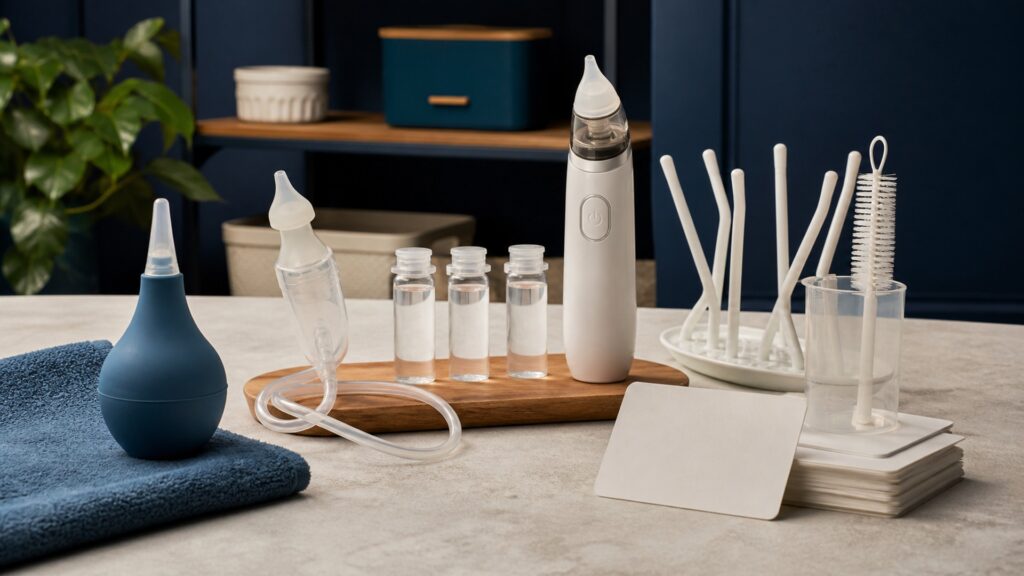
For baby nasal aspirators, a sound approach must consider the infant's age, congestion pattern, saline preparation, suction type and strength, tip depth, nostril seal, session frequency, mucus character, feeding response, nasal irritation, bleeding, breathing effort, hydration, and clinician guidance.
The analysis gives priority to the interpretation of results. It uses controlled suction, saline pretreatment, and shallow placement to explain what changes the outcome, where uncertainty enters, and which response is proportionate.