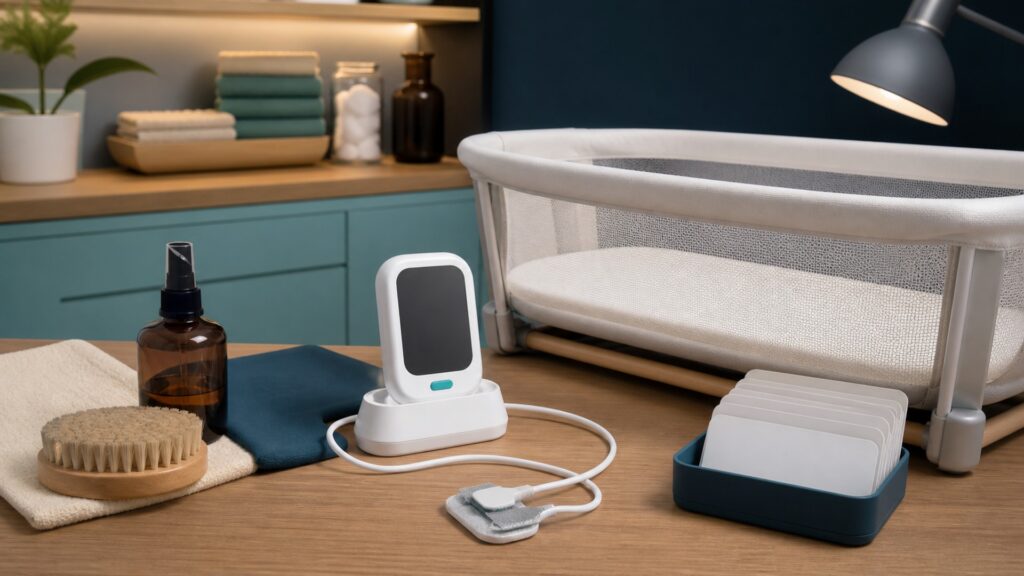
For baby oxygen monitors, a sound approach must follow safe sleep, inspect the sensor and skin, position only as authorized, confirm signal power connectivity and alarm volume, compare alerts with the infant's appearance, log meaningful trends, rotate sites if directed, clean the device, and review repeated alarms with a clinician.
The discussion examines the everyday workflow. It uses photoplethysmography, oxygen saturation, and perfusion to explain what changes the outcome, where uncertainty enters, and which response is proportionate.