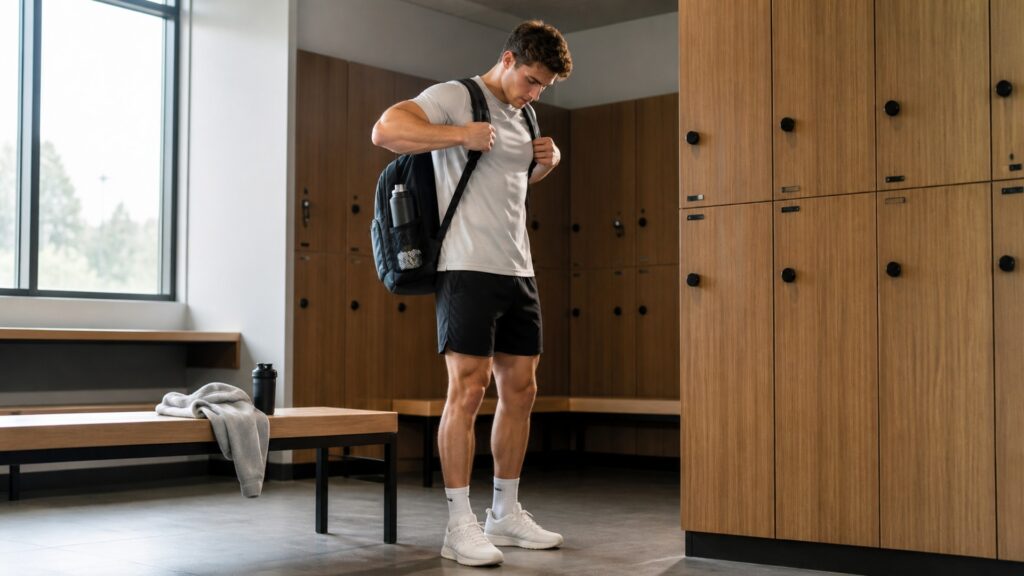
Main compartment
The movement pattern influence of main compartment comes from its ability to separate equipment so weight, access, moisture, and contamination are easier to manage at the input or starting-condition stage.
- Why it matters: It links main compartment to the path, range, body position, and timing encouraged by backpack gym bags.
- Check: For backpack gym bags, evaluate main compartment: pack the actual load and verify access without emptying the whole bag, then judge whether the movement remains repeatable without forced compensation.
- Do not assume: Main compartment resolves the whole issue; assuming that a guided or familiar path fits every body and task remains a risk.
Shoulder straps and back panel
The movement pattern influence of shoulder straps and back panel comes from its ability to set fit, retention, and how quickly the user can secure or release the item at the transfer and stabilization stage.
- Why it matters: It links shoulder straps and back panel to the path, range, body position, and timing encouraged by backpack gym bags.
- Check: For backpack gym bags, evaluate shoulder straps and back panel: check tension and release while reproducing the intended movement, then judge whether the movement remains repeatable without forced compensation.
- Do not assume: Shoulder straps and back panel resolves the whole issue; assuming that a guided or familiar path fits every body and task remains a risk.
Shoe or wet-item compartment
The movement pattern influence of shoe or wet-item compartment comes from its ability to separate equipment so weight, access, moisture, and contamination are easier to manage at the adjustment and user-control stage.
- Why it matters: It links shoe or wet-item compartment to the path, range, body position, and timing encouraged by backpack gym bags.
- Check: For backpack gym bags, evaluate shoe or wet-item compartment: pack the actual load and verify access without emptying the whole bag, then judge whether the movement remains repeatable without forced compensation.
- Do not assume: In backpack gym bags, shoe or wet-item compartment resolves the whole issue; assuming that a guided or familiar path fits every body and task remains a risk.
Pockets and organizers
The movement pattern influence of pockets and organizers comes from its ability to separate equipment so weight, access, moisture, and contamination are easier to manage at the contact or feedback stage.
- Why it matters: It links pockets and organizers to the path, range, body position, and timing encouraged by backpack gym bags.
- Check: For backpack gym bags, evaluate pockets and organizers: pack the actual load and verify access without emptying the whole bag, then judge whether the movement remains repeatable without forced compensation.
- Do not assume: In backpack gym bags, pockets and organizers resolves the whole issue; assuming that a guided or familiar path fits every body and task remains a risk.
Zippers and seams
The movement pattern influence of zippers and seams comes from its ability to set fit, retention, and how quickly the user can secure or release the item at the repeatability and durability stage.
- Why it matters: It links zippers and seams to the path, range, body position, and timing encouraged by backpack gym bags.
- Check: For backpack gym bags, evaluate zippers and seams: check tension and release while reproducing the intended movement, then judge whether the movement remains repeatable without forced compensation.
- Do not assume: Zippers and seams resolves the whole issue; assuming that a guided or familiar path fits every body and task remains a risk.
Fabric, ventilation, and carry handle
The movement pattern influence of fabric, ventilation, and carry handle comes from its ability to form the main contact point where pressure and control pass between user and product at the maintenance, storage, or release stage.
- Why it matters: It links fabric, ventilation, and carry handle to the path, range, body position, and timing encouraged by backpack gym bags.
- Check: For backpack gym bags, evaluate fabric, ventilation, and carry handle: judge pressure, reach, and control over a full-length session, then judge whether the movement remains repeatable without forced compensation.
- Do not assume: Fabric, ventilation, and carry handle resolves the whole issue; assuming that a guided or familiar path fits every body and task remains a risk.