Why Band Saw Blade Tension Matters

Band saw blade tension is a foundational parameter that directly governs how the blade behaves as a cutting element under load. It determines how the blade tracks across the wheels, resists deflection, and maintains its geometry during operation. Despite its central role, tension is often misunderstood as a simple tightening step rather than a calibrated balance between blade stiffness, material, and machine design.

This explainer outlines how blade tension functions within the band saw system, including its relationship to tracking, stability, and structural alignment. It clarifies how tension interacts with blade width, wheel configuration, and guide settings, and explains the mechanical principles that define proper tension. By the end, the reader will understand how tension shapes blade performance at a system level.

By: Review Streets Research Lab
Updated: April 19, 2026
Explainer · 8–12 min read
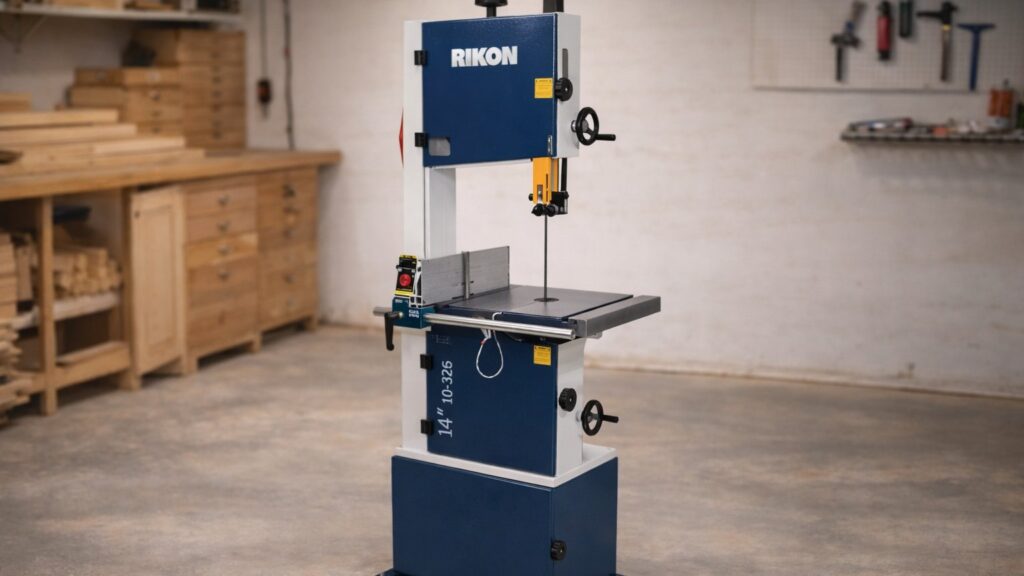
Rikon 10-326 band saw for woodworking projects
What You’ll Learn

Why Band Saw Blade Tension Matters

A focused explanation of how blade tension shapes tracking, stability, and structural behavior across the entire band saw system.

  • How tension gives the blade stiffness while it travels through the cut
  • Why tracking stability depends on balanced tension across wheels and guides
  • How insufficient tension increases deflection, wandering, and inconsistent blade behavior
  • Why excessive tension can overload wheels, bearings, frame, and blade
  • How blade width and material affect the required tension range
  • What tension changes in relation to guide setup and wheel alignment
  • How cutting forces interact with tension during straight and curved cuts

Tip: Think of blade tension as the force that turns a flexible loop into a stable cutting band.

Definitions

Key Parts That Shape Band Saw Blade Tension

Before tension makes sense as a system setting, it helps to understand which parts carry, guide, and react to that force.

Blade Tension

The internal stretching force applied to the blade as it runs around the wheels. That force gives the blade enough stiffness to track predictably and resist bending during a cut.

  • Purpose: Increases blade rigidity while the loop remains flexible enough to travel
  • Balance: Must match blade size, material, and machine structure
  • Effect: Changes how the blade reacts when cutting pressure pushes sideways

Wheels

The upper and lower wheels carry the blade and keep it moving in a continuous loop. Their alignment, crown, and rotation determine how tension is distributed across the blade path.

  • Support: Hold the blade under load as it circulates through the machine
  • Tracking: Wheel shape influences where the blade wants to ride
  • Transfer: Carry tension force through the full loop, not just the cut

Tensioning Mechanism

The adjustment system changes the distance or force between machine components to tighten the blade. It turns tension from a loose setup variable into a controlled structural condition.

  • Adjustment: Applies measured force to the blade through the upper assembly
  • Range: Must accommodate different blade widths and thicknesses
  • Stability: Holds that setting as the blade moves and heats during operation

Blade Guides

The guides limit side-to-side and front-to-back blade movement near the cut zone. They do not create tension, but they depend on correct tension to control the blade effectively.

  • Position: Work close to the blade to reduce unsupported movement
  • Interaction: Function best when the blade already has sufficient stiffness
  • Control: Help contain twist and drift under cutting force

Blade Width and Thickness

Blade dimensions affect how much force is needed to create adequate stiffness. A larger or thicker blade generally demands a different tension condition than a narrower one.

  • Width: Influences straight-line stability and minimum turning radius
  • Thickness: Changes bending resistance as the blade enters the work
  • Match: Determines how the blade responds to a given tension level

Frame and Bearings

The machine structure absorbs and resists the forces created by blade tension. Frame rigidity and bearing support matter because tension is carried through the entire saw, not isolated to the blade alone.

  • Load path: Structural parts receive the force created by blade tightening
  • Rigidity: Excess movement changes how consistently the blade stays aligned
  • Limits: Over-tension can stress components beyond their intended operating range

Tip: Blade tension is not a single setting in isolation, but a force that connects the blade, wheels, guides, and frame into one working system.

Tension Path

How Tension Moves Through the Band Saw System

Blade tension is not isolated to the blade itself—it travels through the wheels, frame, and guides as a continuous force. Understanding this path explains how stability is maintained during operation.

  • The tensioning mechanism applies force by extending the upper wheel assembly
  • The blade carries that force as internal stress around the loop
  • The wheels support and distribute tension as the blade rotates
  • The frame resists deformation caused by the applied force
  • The guides interact with a tensioned blade to control movement near the cut

Any inconsistency along this path changes how the blade tracks and responds under cutting load.

Blade Behavior

How Tension Changes Blade Stability and Tracking

Blade tension directly influences how the blade holds its shape while moving across the wheels and through the cut. This relationship determines how predictably the blade follows its intended path.

  • Higher tension increases stiffness, reducing lateral movement during cutting
  • Lower tension allows the blade to flex and wander under resistance
  • Tracking stability depends on consistent force across the blade width
  • Blade geometry is maintained when tension counteracts cutting pressure

Stable tracking emerges when the blade remains structurally consistent as it enters and exits the workpiece.

Blade Dimensions

Why Blade Size Determines Tension Requirements

Blade width and thickness define how much force is required to achieve adequate stiffness. Different blade configurations respond differently to the same applied tension.

  • Wider blades require more tension to maintain straight-line rigidity
  • Thicker blades resist bending but demand higher structural support
  • Narrow blades operate with lower tension to allow controlled curvature
  • Material properties influence how tension translates into stiffness

Each blade dimension changes how tension must be applied to maintain consistent behavior through the cut.

Force Limits

What Happens When Tension Is Too Low or Too High

Blade tension operates within a range defined by the machine structure and blade properties. Moving outside that range alters how forces are absorbed and distributed.

  • Insufficient tension increases deflection and inconsistent cutting paths
  • Excessive tension places added stress on bearings, wheels, and frame
  • Imbalance in tension changes how evenly the blade tracks on the wheels
  • Structural limits define how much force the system can carry safely

Performance shifts occur when tension moves outside the range where the system remains balanced and stable.

System Interaction

How Tension Works With Guides and Alignment

Tension alone does not control the blade; it works alongside guides and wheel alignment to stabilize motion. These elements interact continuously as the blade moves under load.

  • Guides rely on sufficient blade stiffness to limit unwanted movement
  • Wheel alignment ensures tension is distributed evenly across the loop
  • Misalignment can override correct tension and cause unstable tracking
  • Guide pressure must complement, not replace, proper blade tension

Consistent cutting behavior depends on how tension, alignment, and guides function together as a unified system.

Quick Reality Check

What Proper Blade Tension Supports — and What It Cannot Fix

A quick balance of what blade tension controls directly, and where other parts of the band saw system still determine behavior.

What Tension Directly Controls

Proper blade tension gives the blade enough stiffness to track more consistently, resist side deflection, and maintain its cutting geometry under normal load.

When the blade enters material, that internal force helps it stay stable between the wheels and guides instead of bending too easily under resistance.

What Tension Cannot Correct

Blade tension cannot compensate for poor wheel alignment, incorrect guide setup, unsuitable blade dimensions, or structural movement elsewhere in the saw.

Even with adequate tension, a misaligned wheel path or unstable guide relationship can still produce wandering, twist, or inconsistent tracking through the cut.

Common Myths

Misconceptions About Band Saw Blade Tension

Blade tension is often reduced to a simple setup step, when it actually shapes how the entire cutting system behaves.

Tighter blades always cut better

More tension does not automatically improve cutting behavior. Once tension exceeds the range the blade and machine are designed to carry, added force increases structural stress without solving unrelated tracking or alignment problems.

Blade guides create blade stability

Guides help limit movement near the cut, but they do not replace blade tension. The blade must already have sufficient internal stiffness for the guides to control motion effectively and predictably.

One tension setting fits every blade

Different blade widths, thicknesses, and materials respond differently to applied force. A setting that stabilizes one blade may leave another too flexible or place unnecessary load on the saw structure.

Drift always means tension is wrong

Blade tension is only one part of the system. Drift can also result from wheel alignment, guide position, blade condition, or uneven tooth geometry, even when tension is otherwise within a workable range.

Tension only affects the blade itself

Tension is carried through the wheels, bearings, and frame as well as the blade. That is why blade tension is a machine-wide force condition, not just a local blade adjustment.

Tip: The clearest way to understand blade tension is as a structural force that shapes how the blade, wheels, guides, and frame behave together.

FAQ

Frequently Asked Questions About Band Saw Blade Tension

Quick answers to the most common questions that come up when blade tension is viewed as a structural part of band saw behavior.

What does blade tension actually do in a band saw?

Blade tension applies stretching force to the blade, giving it enough stiffness to track consistently and resist bending during a cut. That force helps the blade hold its shape as it moves between the wheels and guides.

Does higher blade tension always improve cutting performance?

Not necessarily. More tension increases stiffness only up to the point where the blade and machine can use that force effectively. Beyond that, added tension mainly increases stress on the saw structure without correcting unrelated setup issues.

Why do different blades need different tension conditions?

Blade width, thickness, and material all change how the blade responds to applied force. A wider or heavier blade typically needs more tension to achieve the same stiffness that a narrower blade can reach with less.

Can blade guides make up for incorrect blade tension?

Blade guides help control movement near the cut, but they do not create the blade stiffness that tension provides. If the blade is too loose, the guides are working against a flexible cutting element rather than stabilizing a properly tensioned one.

Why can a properly tensioned blade still drift?

Drift is not caused by tension alone. Wheel alignment, guide position, blade condition, and tooth geometry can all alter how the blade enters the material, even when tension is otherwise within a workable range.

What parts of the saw are affected by blade tension?

Blade tension loads more than the blade itself. The wheels, bearings, frame, and tensioning mechanism all carry that force, which is why tension should be understood as a machine-wide structural condition.

How does low blade tension change cutting behavior?

When tension is too low, the blade has less resistance to lateral movement and twist. That makes it more likely to deflect under cutting force, track inconsistently, or behave differently as load changes through the cut.

Why is blade tension considered a system-level setting?

Because its effects are distributed across the entire saw. Tension influences how the blade, wheels, guides, and frame interact, so its role is best understood through the behavior of the full mechanism rather than one isolated part.

Tip: When blade behavior changes, think through the full force path: blade stiffness, wheel support, guide control, and frame stability all interact.

Bottom Line

Blade tension is a structural force, not just a setup adjustment. It shapes how the blade tracks, resists deflection, and transfers load through the wheels, guides, and frame during cutting.

Once that force path is understood, blade behavior becomes easier to interpret because stability, drift, and consistency can be traced back to system interaction.

Next Steps

Go Deeper or Explore Related Guidance

With blade tension explained, these pages help extend that understanding into broader band saw research and decision-focused reading.

Band Saw Roundups

Editorial roundup pages that organize band saw options by use case, helping readers narrow the field with clearer context.

Band Saw Comparisons

Focused comparison pages that examine key differences in design, capacity, and intended use across closely related machine types.

Band Saw Buying Guides

Decision-oriented guides that explain which machine characteristics matter, how features relate, and what tradeoffs shape long-term fit.

Quick Summary

Why Blade Tension Matters

  • Blade tension creates stiffness, allowing the blade to resist deflection under load
  • Tension force travels through wheels, guides, and frame as a system
  • Different blade sizes require different tension to achieve stable cutting behavior
  • Too little tension increases drift, wandering, and inconsistent tracking during cuts
  • Too much tension adds stress without correcting alignment or setup issues