
Soil Load
The mixture of pigment, oil, skin debris, and product left on a tool.
- Use: Choose an effective wash method
- Variable: formula and frequency
- Tradeoff: Heavy buildup takes longer to remove
Beauty tool hygiene matters because brushes, sponges, curlers, tweezers, and reusable applicators repeatedly move between hands, products, skin, eyes, water, and storage. Residue and moisture can change application long before a tool looks obviously dirty, while sharing creates another route for transferring microorganisms.
Hygiene is more than washing on a calendar. The right routine depends on where the tool is used, whether it enters wet or preserved product, how porous it is, and whether it can dry completely. Cleaning removes soil; it does not make a home tool sterile. A sound system also protects product containers, separates eye-area tools, inspects damage, and discards items that cannot be cleaned or restored reliably.
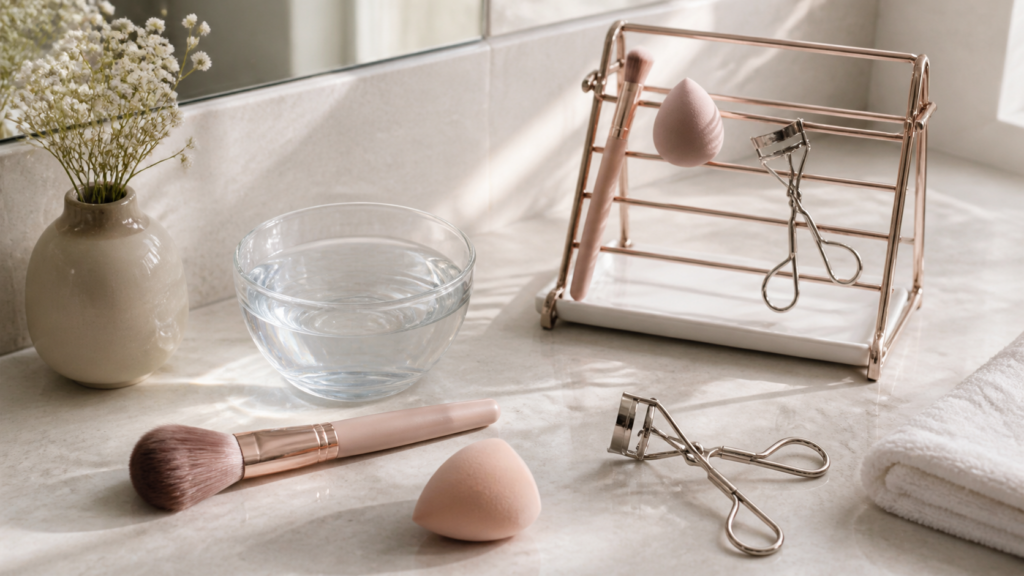
Different tools create different routes for residue, moisture, and microorganisms, so care should follow use rather than appearance.
Tip: Trace every surface the tool touches before deciding how to care for it.
These terms separate residue removal, transfer control, drying, and replacement instead of treating every problem as dirt.
The mixture of pigment, oil, skin debris, and product left on a tool.
Transfer from one person, body site, tool, or product to another.
Physical and chemical removal of visible and invisible residue.
A validated process that reduces specified microorganisms on a compatible surface.
The route moisture takes from the surface and interior into open air.
Damage or persistent change that makes reliable cleaning or use unlikely.
Tip: A clean routine protects the product and storage area as well as the tool.
A clean brush can be contaminated by unwashed hands, a shared palette, or repeated dipping into a jar. Work from clean hands and surfaces, dispense product when practical, and avoid returning a used applicator to the original container.
Breaking one transfer route can matter more than washing every item more aggressively.
Water-based residue, waxy makeup, and long-wear film do not release identically. Use a compatible cleanser, work it through the contact surface without soaking vulnerable joints, rinse until residue is gone, and avoid harsh methods that roughen fibers or foam.
Successful washing removes soil without creating new cracks, looseness, or roughness.
A sponge may feel dry outside while retaining moisture inside; a brush dried upright can channel water toward its ferrule. Provide airflow, keep damp tools out of sealed bags, and orient components so moisture moves away from joints.
Drying is a hygiene step, not empty time after cleaning.
Tools near the eye or used on inflamed, infected, or broken skin deserve conservative handling because consequences can be more serious. Keep them personal, stop during infection, and discard contaminated eye products or tools when guidance calls for it.
The body site changes the acceptable hygiene margin.
Permanent odor, tears, splintered edges, corrosion, loose joints, damaged coatings, shedding, and failed rebound can trap residue or impair control. Replacement is a performance and safety decision, not an admission that washing failed.
A visibly intact handle does not rescue a degraded working surface.
Routine care reduces residue and avoidable transfer, but it cannot guarantee sterility, rescue every damaged material, or diagnose a skin or eye problem.
Clean hands, separate tools, sound washing, complete drying, and protected storage reduce preventable contamination routes.
Regular inspection catches damage before application becomes rough, unreliable, or difficult to clean.
Porous or damaged items may remain unsuitable even after another wash.
Persistent rash, swelling, discharge, pain, or visual symptoms need appropriate professional assessment.
Appearance, alcohol spray, ownership, and frequent washing are incomplete signals when technique or drying is poor.
Pigment is only one kind of residue, and microorganisms are not visible to the naked eye. Judge hygiene through recent use, wash quality, drying, storage, sharing history, condition, and body area.
A quick spray may not penetrate soil, supply the required contact time, or suit foam, fibers, glue, coatings, and hinges. Remove residue first and use only methods supported for the material.
Frequent care helps only when the method removes residue and the item dries fully. Repeated soaking, harsh cleanser, or sealed damp storage can damage construction and create a less cleanable surface.
A single user can still move residue among hands, products, eyes, lips, irritated skin, and storage surfaces. Personal ownership removes sharing, but it certainly does not remove every contamination route.
Natural origin does not determine microbial safety or washability. Porosity, surface finish, seams, drying speed, compatible cleansers, and damage resistance matter more than whether a fiber, stone, or sponge sounds natural.
Tip: Ask what touched the tool before and after washing.
Use frequency, body area, construction, and visible condition to make care decisions.
The American Academy of Dermatology advises washing makeup brushes every seven to ten days. Eye use, wet formulas, acne concerns, professional use, visible residue, or contamination may justify a stricter schedule.
Frequent washing is prudent for damp porous applicators; AAD guidance recommends cleaning sponges after every use. Rinse thoroughly, remove excess water gently, and allow the entire sponge to air-dry before storage.
Personal tools are the safer default, especially near eyes and lips. Professional sharing requires product-safe, tool-compatible hygiene procedures; a casual rinse does not establish that an item is ready for another person.
Choose a dry, clean location protected from bathroom spray, dust, pets, and product spills. Do not close damp brushes or sponges inside a bag; allow complete airflow first, then use clean storage.
Replace it when the pad splits, compresses unevenly, hardens, or slips, and when the frame bends, corrodes, pinches, or no longer aligns. A fresh pad cannot correct a distorted metal frame.
Stop after significant burning, rash, swelling, broken skin, eye discharge, pain, or vision changes. Set the item aside, avoid sharing it, and seek appropriate care when symptoms are severe or persistent.
Beauty tool hygiene is a chain: clean hands, controlled product contact, suitable washing, complete drying, protected storage, personal use, and timely replacement all matter.
Choose care by material and body site, not by appearance alone. Home cleaning reduces avoidable contamination; it does not promise sterility or make a damaged tool dependable again.
These guides help choose tools whose surfaces, construction, and storage demands fit the routine.
Build a first kit around actual tasks, cleanability, storage, and replacement.
Compare applicators, grooming tools, materials, ergonomics, and upkeep.
Choose brush shapes and fibers that suit repeat daily application and cleaning.
Choose a retailer
Prices checked regularly. We may earn a commission at no cost to you.