Why Brake Calipers Fitment Matters

Brake caliper fitment matters because a caliper has to line up with the rotor, bracket, pads, hose, wheel, and electronic hardware in a very specific space. A part can look similar on a product page and still miss a mounting dimension, piston setup, or clearance detail that changes whether it works safely on the vehicle.

This explainer focuses on the practical fitment variables behind brake calipers: bolt spacing, rotor diameter and thickness, piston count, bracket style, side orientation, and hardware compatibility. The goal is to make fitment feel like a system check rather than a guessing game.

By: Review Streets Research Lab
Updated: June 16, 2026
Explainer · 8-12 min read
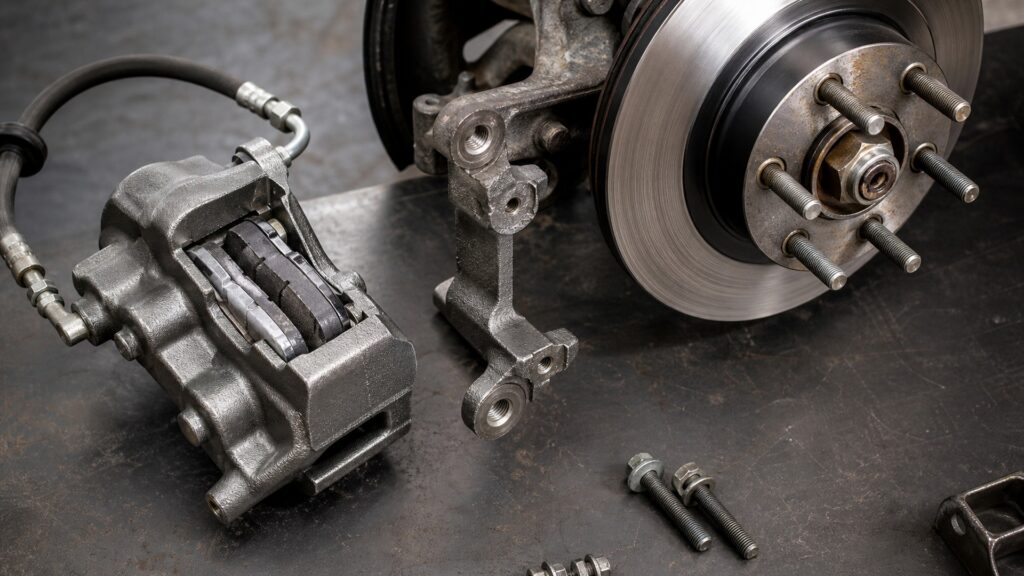
why brake calipers fitment matters brake caliper explainer image
What You'll Learn

Why Brake Caliper Fitment Is More Than Matching a Name

A buyer-first explanation of the dimensions, mounting relationships, and compatibility checks that decide whether a caliper belongs on a vehicle.

  • Why vehicle year, trim, drivetrain, and brake package can change caliper fit
  • How bracket spacing and rotor size control physical compatibility
  • Why left/right orientation and bleeder position matter
  • How piston count, bore size, and pad shape affect brake balance
  • Why hose routing, parking brake features, and sensors can block a near-match
  • What to verify before comparing replacement calipers

Tip: Read the concept as part of a system, then connect it back to the use case.

Definitions

Key Concepts That Define Brake Calipers Fitment

These definitions connect the main idea to the variables, limits, and practical signals readers need to compare options.

Mounting Bracket Pattern

The bolt spacing and bracket shape that attach the caliper to the knuckle or carrier.

  • Role: Determines whether the caliper can physically mount
  • Check: Must match the vehicle brake package, not just the model name
  • Limit: Similar-looking brackets can differ by millimeters

Rotor Diameter and Thickness

The disc size the caliper is designed to straddle and clamp.

  • Diameter: Affects radial pad position and caliper reach
  • Thickness: Determines the gap needed between pads and piston travel
  • Limit: Wrong rotor size can cause interference or poor pad contact

Piston Configuration

The number, size, and side placement of pistons inside the caliper.

  • Role: Shapes clamp force and brake balance
  • Compatibility: Must suit the master cylinder and ABS calibration context
  • Limit: More pistons do not automatically mean a correct fit

Pad Abutment Geometry

The surfaces and clips that position the brake pads inside the caliper or bracket.

  • Role: Keeps pads square to the rotor
  • Check: Pad shape and hardware must match the caliper family
  • Failure: Wrong geometry can cause rattle, drag, or uneven wear

Hose and Bleeder Orientation

The direction of brake hose ports and the position of bleed screws.

  • Hose: Must route without twisting, stretching, or rubbing
  • Bleeder: Needs to sit high enough to remove air
  • Limit: A side-swapped caliper can bolt on yet bleed poorly

Wheel Clearance Envelope

The space between the caliper, wheel barrel, spokes, and balancing weights.

  • Role: Prevents contact after installation
  • Check: Larger brake packages may need specific wheel clearance
  • Limit: Static clearance can change with heat, flex, or wheel weights

Tip: Keep the definitions connected; the strongest answer usually comes from the whole system, not one term.

Fitment Chain

How Caliper Fitment Starts With the Vehicle Brake Package

The correct caliper is tied to the exact brake package installed on the vehicle, not only the make and model. Trims, engines, towing packages, performance packages, and production breaks can change the hardware.

  • Confirm year, make, model, trim, drivetrain, and production notes
  • Identify the rotor diameter and thickness used by that brake package
  • Match the caliper bracket or carrier style
  • Check pad shape and included hardware
  • Confirm side orientation before installation

Fitment begins with the brake system version, then narrows to the specific caliper.

Mounting Geometry

Why Bolt Pattern and Rotor Position Must Agree

A caliper has to sit at the right radius and lateral position around the rotor. If the bracket or offset is wrong, the pads may not sweep the intended surface or may interfere with the rotor edge.

  • Bolt spacing fixes the caliper location on the knuckle
  • Bracket offset centers the caliper over the rotor
  • Rotor diameter determines how far outward the caliper must sit
  • Rotor thickness determines pad gap and piston travel

Small geometry differences can make a part unusable even when the category is correct.

Hydraulic Compatibility

How Piston Size Changes Fitment Beyond Shape

Fitment is not only physical. Piston bore size changes hydraulic behavior, pedal travel, and clamp force relationship within the brake system.

  • Larger piston area can increase clamp force for a given pressure
  • Different bore size may change pedal feel and fluid displacement
  • ABS and stability systems assume a certain brake balance
  • Matching the original brake package keeps behavior predictable

A caliper that bolts on may still be the wrong hydraulic match.

Clearance and Routing

Why Nearby Parts Can Reject a Near-Match

Brake calipers live in a crowded area. Wheels, hoses, suspension arms, dust shields, sensor wires, and parking brake mechanisms can all make a near-match fail.

  • Wheel barrels and spokes must clear the caliper body
  • Brake hoses need a natural path through steering and suspension travel
  • Bleeders must be positioned to let air rise out during bleeding
  • Parking brake levers or motors must match the vehicle design

The part has to fit dynamically, not only while the car is sitting still.

Fitment Checks

How to Reduce Caliper Ordering Mistakes

A practical fitment check combines catalog data with visible brake-system details. The safest path is to compare the installed part and brake package before choosing a replacement.

  • Use VIN or vehicle-specific lookup when available
  • Compare rotor size and pad shape against the installed system
  • Verify left/right side and bleeder orientation
  • Check whether the caliper includes or requires a bracket
  • Review core return and hardware details before disassembly

Good fitment work prevents both installation delays and brake behavior surprises.

Quick Reality Check

Where Brake Caliper Fitment Helps and Where It Has Limits

A practical check on what this concept clarifies, plus the points that still need vehicle-specific context.

What Brake Caliper Fitment Clarifies

It clarifies why two calipers for the same model family can be incompatible.

It helps readers compare replacement listings by dimensions and brake package rather than by broad vehicle labels alone.

Where the Shortcut Breaks Down

Fitment charts can still miss production breaks, previous modifications, wheel swaps, and regional variants.

Visual confirmation and vehicle-specific data remain important because brake systems are often revised within the same nameplate.

Common Myths

Misconceptions About Brake Calipers Fitment

Common shortcuts and misunderstandings can make the topic seem simpler than it is.

If the vehicle model matches, the caliper fits

Trim, drivetrain, rotor size, production date, and brake package can change the caliper even within the same model year.

Left and right calipers are interchangeable

They usually are not. Bleeder position, hose routing, and parking brake hardware can make side orientation critical.

The bracket is a minor detail

The bracket sets caliper position around the rotor. A wrong bracket can cause poor pad contact or direct interference.

Bigger calipers are always an upgrade

A larger caliper must match rotor size, wheel clearance, hydraulic balance, and mounting geometry. Otherwise it can create new problems.

Tip: Treat strong claims as starting points for comparison, not final answers.

FAQ

Frequently Asked Questions About Brake Calipers Fitment

Concise answers to common questions readers may have after the main explanation.

What should I check before buying replacement brake calipers?

Check the exact vehicle brake package, rotor size, bracket style, left/right side, hose port, bleeder location, and whether the listing includes the bracket.

Can the wrong caliper bolt on but still be incorrect?

Yes. A near-match can mount while creating bad hose routing, poor bleeding, wrong pad sweep, wheel interference, or hydraulic mismatch.

Why does rotor size matter for caliper fitment?

Rotor diameter and thickness determine where the caliper sits and how wide the pad gap must be. Wrong rotor dimensions can prevent proper clamping.

Does piston count matter for fitment?

Yes. Piston count and bore size affect both physical layout and hydraulic behavior, so they need to match the intended brake package.

Are remanufactured calipers harder to match?

They can be fine when properly cataloged, but core variations, bracket inclusion, and side orientation still need careful checking.

Bottom Line

Brake caliper fitment is a chain of physical, hydraulic, and clearance relationships.

The practical takeaway is to verify the exact brake package first, then confirm the caliper, bracket, rotor, hose, and wheel space all agree.

Next Steps

Go Deeper or Compare Your Options

Use these Review Streets paths to connect the explainer to related categories, comparisons, and next decisions.

Brake Calipers

Explore related Review Streets coverage in Brake Calipers.

Quick Summary

Brake Calipers Fitment Explained

  • Caliper fitment depends on the exact brake package.
  • Rotor size, bracket geometry, and side orientation are core checks.
  • A part can bolt on and still route or bleed incorrectly.
  • Hydraulic piston size matters beyond visible shape.
  • Vehicle-specific lookup plus visual confirmation reduces ordering mistakes.