
Hydraulic Pressure
The brake-fluid force delivered to the caliper when the pedal is pressed.
- Role: Moves the piston toward the pad
- Signal: Low or trapped pressure changes pedal feel
- Limit: Hose or fluid issues can imitate caliper faults
Brake caliper operating function matters because the caliper is where hydraulic pressure becomes controlled clamping force at the wheel. A caliper has to apply pressure quickly, hold the pad square to the rotor, and release cleanly when pedal force drops.
That operating sequence affects brake feel, pad wear, heat, and whether a replacement part solves the real complaint. Looking at piston travel, seal rollback, slide-pin movement, and hose pressure gives readers a clearer way to compare calipers than shape or price alone.
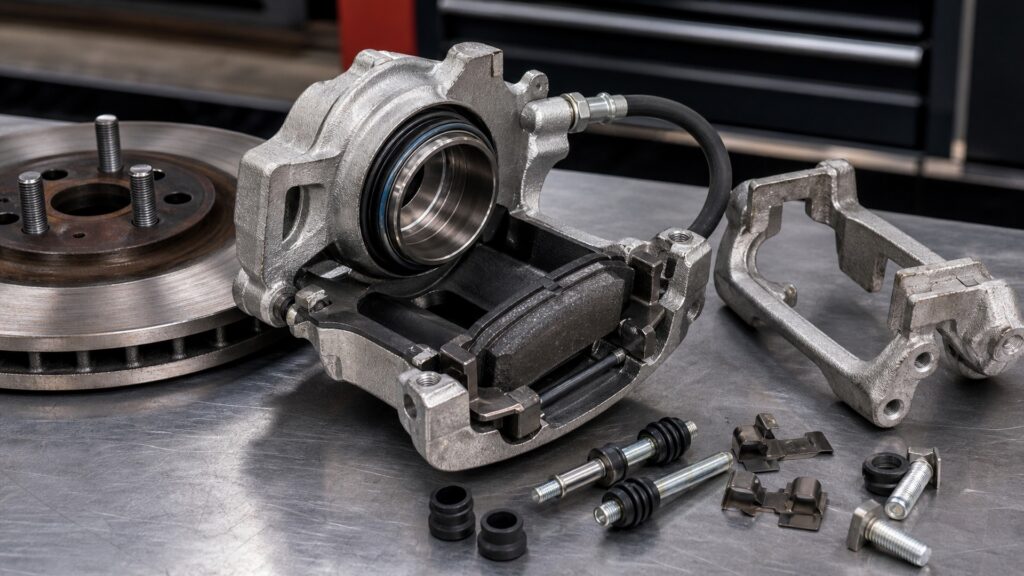
A practical look at pressure, piston movement, pad clamping, release, and heat in a disc brake caliper.
Tip: Read the concept as part of a system, then connect it back to the use case.
These definitions connect the main idea to the variables, limits, and practical signals readers need to compare options.
The brake-fluid force delivered to the caliper when the pedal is pressed.
The controlled movement that pushes the inner pad into the rotor.
The small elastic return action of the piston seal after braking.
The side-to-side motion that lets a floating caliper center itself.
The pressure applied across both rotor faces by the caliper and pads.
The tiny space restored after pedal force is removed.
Tip: Keep the definitions connected; the strongest answer usually comes from the whole system, not one term.
A caliper responds to pressure created upstream by the master cylinder. The important operating question is whether that pressure reaches the piston cleanly and then returns when the driver releases the pedal.
Operating function is a pressure cycle, not a one-way squeeze.
The piston has to move far enough to clamp the pad without scraping, cocking, or sticking. Rough piston movement can turn a good pad and rotor into an uneven braking pair.
The piston is the caliper's main moving converter of fluid pressure.
On a floating caliper, the piston usually pushes one pad first. The caliper body must slide so the opposite pad can press the other side of the rotor.
Slide movement is part of caliper operation, not just hardware trivia.
A caliper that clamps but does not release can keep turning motion into heat after the stop is over. That heat can harden pads, discolor rotors, and shorten fluid and seal life.
Release quality is the difference between braking and dragging.
Operating-function issues are usually diagnosed through patterns rather than a single clue. Heat, wear, pedal feel, and side-to-side behavior have to be read together.
The best caliper decision follows the symptom trail back to movement and pressure.
Operating function explains many disc-brake symptoms, but it does not replace full brake diagnosis.
It explains why piston movement, seal return, and slide-pin motion affect feel and wear.
It helps separate a caliper problem from a simple pad or rotor replacement decision.
Brake hoses, master cylinders, ABS valves, pads, and rotors can mimic caliper issues.
A visual match does not prove the replacement will operate correctly on the exact brake package.
Common shortcuts and misunderstandings can make the topic seem simpler than it is.
It also has to release cleanly, center the pads, and manage heat without binding.
Pads cannot correct a seized piston, dry slide pin, or residual hydraulic pressure.
A stuck hose, parking brake fault, pad binding, or wheel bearing issue can create similar heat.
The basic idea is similar, but guide-pin layout, piston size, and bracket design can change behavior.
Tip: Treat strong claims as starting points for comparison, not final answers.
Concise answers to common questions readers may have after the main explanation.
It is the full apply-and-release cycle: pressure reaches the piston, pads clamp the rotor, and the caliper lets the pads relax afterward.
They allow a floating caliper to center itself so both pads share the work instead of one pad dragging or wearing too quickly.
Yes. A piston or slide pin can bind mechanically even when the hydraulic seal is still holding fluid.
A hot wheel, burning smell, uneven pad wear, or drag after braking can point to poor release, though other parts must be checked too.
It can, but pedal feel also depends on fluid condition, air in the system, hoses, master cylinder behavior, and ABS components.
Brake caliper operating function matters most when it is read as part of a brake system, not as an isolated catalog label.
The practical takeaway is that the caliper must apply force and recover from it; a part that clamps but drags is still not operating correctly.
Use these Review Streets paths to connect the explainer to related categories, comparisons, and next decisions.
Use the Automotive Replacement Parts path for related brake component explainers and comparisons.
Use the Brake Components path for related brake component explainers and comparisons.
Use the Brake Calipers path for related brake component explainers and comparisons.
Choose a retailer
Prices checked regularly. We may earn a commission at no cost to you.