
Inside Diameter
The internal friction diameter the shoes press against.
- Role: Sets shoe contact radius
- Check: Must match the brake package
- Limit: Oversize beyond service limit is unsafe to reuse
Brake drum fitment matters because the drum has to match both the wheel hub and the internal shoe assembly. Diameter, depth, pilot size, bolt pattern, shoe width, and parking-brake hardware all affect whether the drum can rotate, center, and brake correctly.
A near-match can cause more than installation frustration. The wrong drum may rub, leave poor shoe contact, change adjustment range, or fail to center on the hub. Good fitment starts with the exact brake package rather than the vehicle name alone.
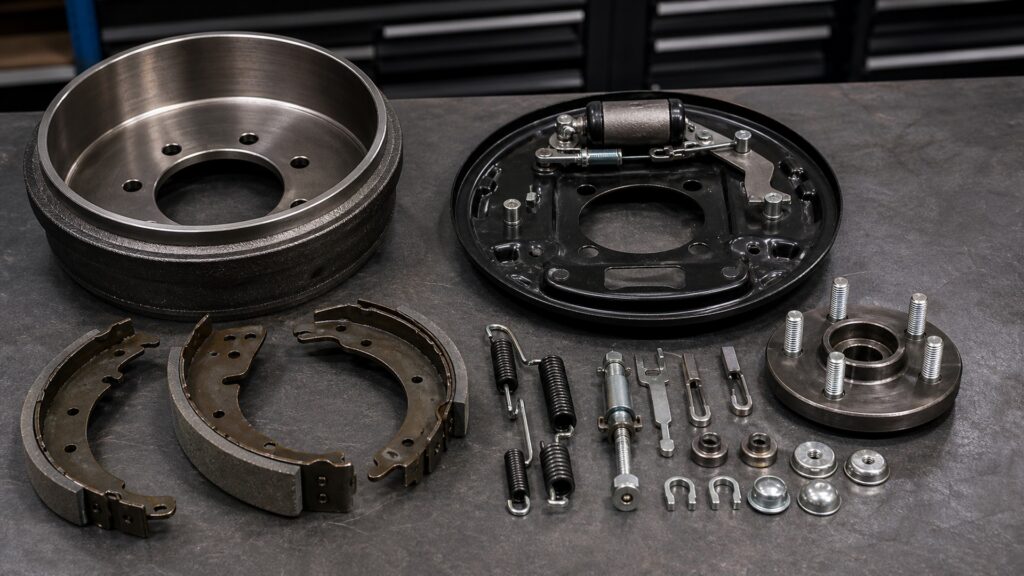
A clear explanation of brake drums fitment, focused on role, mechanism, fit, service limits, and repair decisions.
Tip: Read the concept as part of a system, then connect it back to the use case.
These definitions connect the main idea to the variables, limits, and practical signals readers need to compare options.
The internal friction diameter the shoes press against.
The distance that determines how the shell covers the shoe assembly.
The center bore that locates the drum on the hub.
The stud layout that lets the drum fit over the hub.
The friction lining width the drum is designed to cover.
The space needed for parking brake levers, cables, and adjuster parts.
Tip: Keep the definitions connected; the strongest answer usually comes from the whole system, not one term.
The correct drum is tied to the installed rear-brake package, not only the model name. Small changes in axle, trim, or production range can change the drum dimensions.
Fitment is a chain of dimensions.
A drum must sit centered on the hub before the wheel clamps it in place. If the pilot or bolt pattern is wrong, the drum may not seat or rotate true.
Physical fit is also rotational fit.
Shoes need the right contact surface inside the drum. Diameter and width shape both contact pattern and adjustment range.
The shoe and drum are matched friction partners.
A drum can slide on but still be wrong if its depth or internal clearance does not match the backing plate hardware.
Fitment is proven by rotation and clearance, not only installation.
A good ordering check compares the old drum, vehicle data, and measured brake package before relying on broad search results.
The exact dimensions matter more than a similar product photo.
Fitment keeps the drum centered, clear of hardware, and matched to the shoe arc.
It explains why a drum can look similar yet rub, vibrate, or contact shoes poorly.
It gives buyers concrete dimensions to check before ordering.
Correct fitment cannot repair leaking wheel cylinders or weak springs.
A drum within dimensions still needs a sound friction surface.
Common shortcuts and misunderstandings can make the topic seem simpler than it is.
Brake package, axle, production date, and trim can change dimensions.
Inside diameter, depth, center bore, and shoe width also matter.
It still needs correct centering, clearance, and friction alignment.
Drums have maximum service diameters that cannot be exceeded.
Tip: Treat strong claims as starting points for comparison, not final answers.
Concise answers to common questions readers may have after the main explanation.
Inside diameter is critical, but depth, shoe width, center bore, and bolt pattern also matter.
It helps center the drum so it rotates true on the hub.
Yes. It can create rubbing, poor shoe placement, or parking-brake interference.
When practical and safe, comparing dimensions helps avoid catalog mistakes.
Yes. It may fit physically but be cracked, oversize, scored, or out of round.
Brake drum fitment is about exact dimensions, not resemblance.
The practical takeaway is to match the drum to the brake package, shoe width, hub, and internal clearance before judging the repair.
Use these Review Streets paths to connect the explainer to related categories, comparisons, and next decisions.
Use the Automotive Replacement Parts path for related brake component explainers and comparisons.
Use the Brake Components path for related brake component explainers and comparisons.
Use the Brake Drums path for related brake component explainers and comparisons.
Choose a retailer
Prices checked regularly. We may earn a commission at no cost to you.