
Wheel-Cylinder Leak
Fluid escaping from the hydraulic cylinder that pushes the shoes outward.
- Risk: Reduces pressure and contaminates linings
- Signal: Wet boots or damp backing plate
- Limit: Shoes may need replacement too
Brake drum safety factors matter because many of the important parts are hidden behind the drum shell. Shoe lining, spring tension, wheel-cylinder sealing, adjustment, and the drum surface all affect whether the rear brake applies and releases predictably.
A safety-focused drum inspection does not mean making broad promises about stopping distance. It means identifying the conditions that raise repair urgency: fluid leaks, cracked lining, weak return hardware, excessive diameter, heat damage, and poor shoe return.
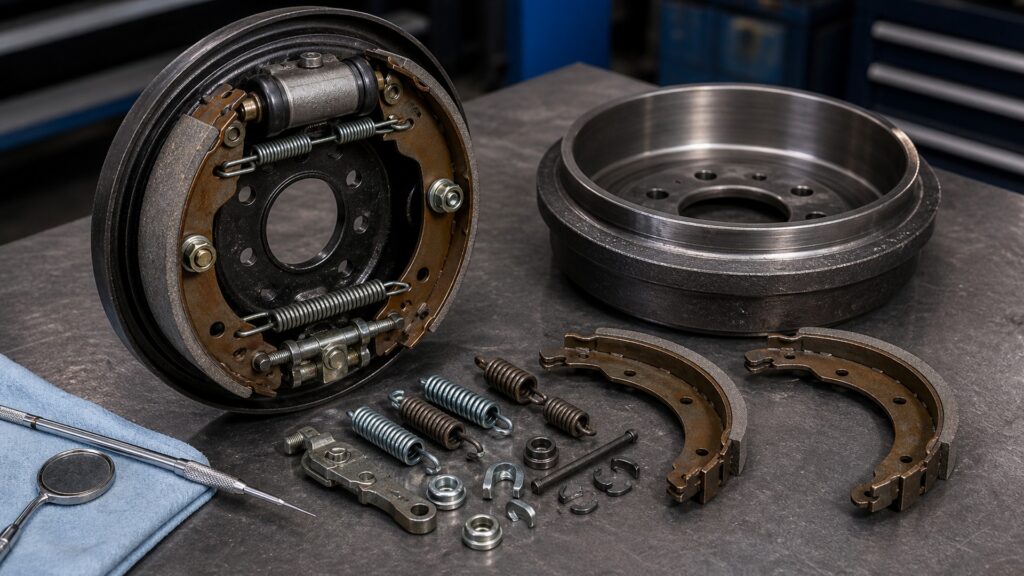
A practical look at the hidden drum-brake conditions that affect apply force, release, heat, and inspection priority.
Tip: Read the concept as part of a system, then connect it back to the use case.
These definitions connect the main idea to the variables, limits, and practical signals readers need to compare options.
Fluid escaping from the hydraulic cylinder that pushes the shoes outward.
The condition of the friction material bonded or riveted to the shoe.
The ability of springs to pull shoes away from the drum.
The largest safe internal diameter after wear or machining.
The state of the mechanism that maintains shoe clearance.
The ability of parking brake levers and cables to let the shoes return.
Tip: Keep the definitions connected; the strongest answer usually comes from the whole system, not one term.
A drum-brake safety check begins after the shell comes off because the most important clues are internal.
The hidden parts decide whether the drum brake can be trusted.
A leaking wheel cylinder is not only a hydraulic issue. Brake fluid can soak the shoe lining and change friction behavior.
Hydraulic leakage turns a small part failure into a larger brake repair.
Return springs finish the braking event by pulling shoes off the drum. If they are weak, the brake can remain partly applied.
Release is a safety factor, not just a comfort detail.
Heat can mark the drum surface, change lining behavior, and weaken hardware over time.
Heat patterns help separate normal wear from urgent service.
The practical response is to correct the failed function and recheck both rear brakes for balance.
Safety comes from the repaired assembly, not a single new part.
Safety checks prioritize hidden failures that can change brake behavior.
They highlight leaks, heat damage, spring fatigue, and service-limit problems.
They encourage axle-side comparison instead of isolated guessing.
They cannot guarantee stopping performance without full service verification.
Tires, hydraulics, ABS, and front brakes still shape vehicle behavior.
Common shortcuts and misunderstandings can make the topic seem simpler than it is.
The important clues are often hidden on the friction surface and internal hardware.
Weak springs can leave shoes dragging and create heat.
Fluid contamination can change lining friction and repair scope.
A quiet drum can still be beyond service diameter.
Tip: Treat strong claims as starting points for comparison, not final answers.
Concise answers to common questions readers may have after the main explanation.
Fluid leakage, severe drag, cracked lining, and drums beyond service diameter deserve prompt service attention.
Yes. They can delay release and overheat the drum.
Side-to-side comparison helps find imbalance in wear, heat, or leakage.
Yes. A cable or lever that does not release can keep shoes rubbing.
No. It means the drum, shoes, hardware, and hydraulics need evidence-based inspection.
Brake drum safety factors are hidden in leakage, lining condition, spring return, adjustment, and drum diameter.
The practical takeaway is to open, inspect, measure, and repair the assembly rather than trusting the drum's outside appearance.
Use these Review Streets paths to connect the explainer to related categories, comparisons, and next decisions.
Explore related Review Streets coverage in Automotive Replacement Parts.
Explore related Review Streets coverage in Brake Components.
Explore related Review Streets coverage in Brake Drums.
Choose a retailer
Prices checked regularly. We may earn a commission at no cost to you.