
Clip Profile
The shape of the pad abutment clip.
- Role: Matches bracket channels
- Check: Seating without distortion
- Limit: Similar clips can bind
Brake hardware kit fitment matters because small parts have very little tolerance for being almost right. A clip that is slightly wrong can pinch a pad, a boot that does not seal can expose a guide pin, and a spring with the wrong shape can pull a drum shoe incorrectly.
Fitment is more than matching the broad vehicle name. The kit has to match the brake package, caliper bracket, pad ear shape, drum backing plate, adjuster design, and side-specific hardware where applicable.
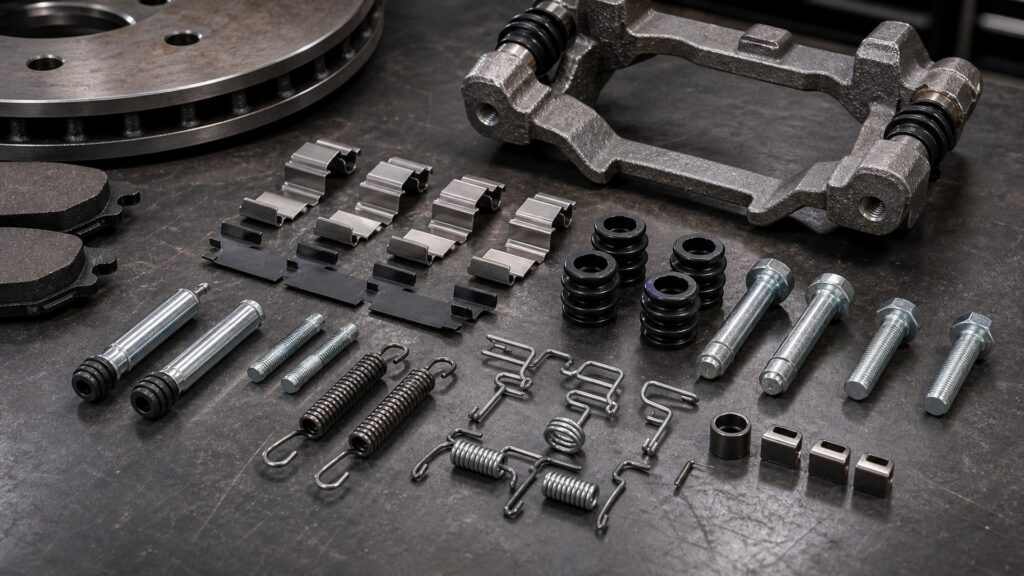
A practical explanation of brake hardware kits fitment for brake-component comparison and service decisions.
Tip: Read the concept as part of a system, then connect it back to the use case.
These definitions connect the main idea to the variables, limits, and practical signals readers need to compare options.
The shape of the pad abutment clip.
The size of guide pins or sleeves.
The sealing edge of rubber hardware.
The form and tension of drum return springs.
The screw and star wheel design for shoe clearance.
The space where pad ends ride in the bracket.
Tip: Keep the definitions connected; the strongest answer usually comes from the whole system, not one term.
Small hardware must sit correctly before pads or shoes can move correctly.
Fitment is proven by movement.
Disc hardware is shaped around the caliper bracket and pad ears.
A correct kit can still fail on a dirty bracket.
Drum hardware uses spring length, hook shape, and adjuster orientation to control shoe return.
Drum kit fitment is a map, not a pile of parts.
Poorly fitted hardware often shows up as noise, drag, or fast wear.
Small mismatch becomes road behavior.
A fitment check should compare the installed hardware and the exact brake package.
If a kit needs forcing, something is wrong.
Fitment prevents small parts from creating big movement problems.
It explains why nearly identical clips can behave differently.
It connects kit choice to pad and shoe movement.
It cannot fix a damaged bracket or backing plate.
It cannot replace proper cleaning and installation.
Common shortcuts and misunderstandings can make the topic seem simpler than it is.
Brake hardware is shaped for specific brackets and shoe layouts.
It also has to let the pad move freely.
Many drum adjusters are side-specific.
Small parts can cause drag or noise when mismatched.
Tip: Treat strong claims as starting points for comparison, not final answers.
Concise answers to common questions readers may have after the main explanation.
Small mismatches can bind pads, expose guide pins, or misposition drum shoes.
Yes. Rust under clips can narrow the channel.
Some spring and adjuster layouts are side-specific.
Yes, but also verify against service information because old parts may have been wrong.
It can affect retention, movement, and release, so it should be taken seriously.
Brake hardware kit fitment is about exact shape, seating, and motion.
The practical takeaway is to test fit by movement, not by whether a small part can be forced into place.
Use these Review Streets paths to connect the explainer to related categories, comparisons, and next decisions.
Explore related Review Streets coverage in Automotive Replacement Parts.
Explore related Review Streets coverage in Brake Components.
Explore related Review Streets coverage in Brake Hardware Kits.
Review drum brake parts and service decisions.
Choose a retailer
Prices checked regularly. We may earn a commission at no cost to you.