
Pad Guidance
How clips and bracket surfaces let pads slide.
- Function: Prevents binding
- Failure: Drag or tapered wear
- Limit: Requires clean bracket metal
Brake hardware kit operating function matters because the smallest parts often control whether larger brake parts move correctly. Clips guide pad ears, boots protect sliding pins, springs pull shoes back, and adjusters maintain clearance as friction material wears.
When that operating function fails, the symptom may appear as a caliper problem, a drum problem, noise, drag, or uneven wear. Understanding the small-part sequence helps readers avoid replacing the wrong component.
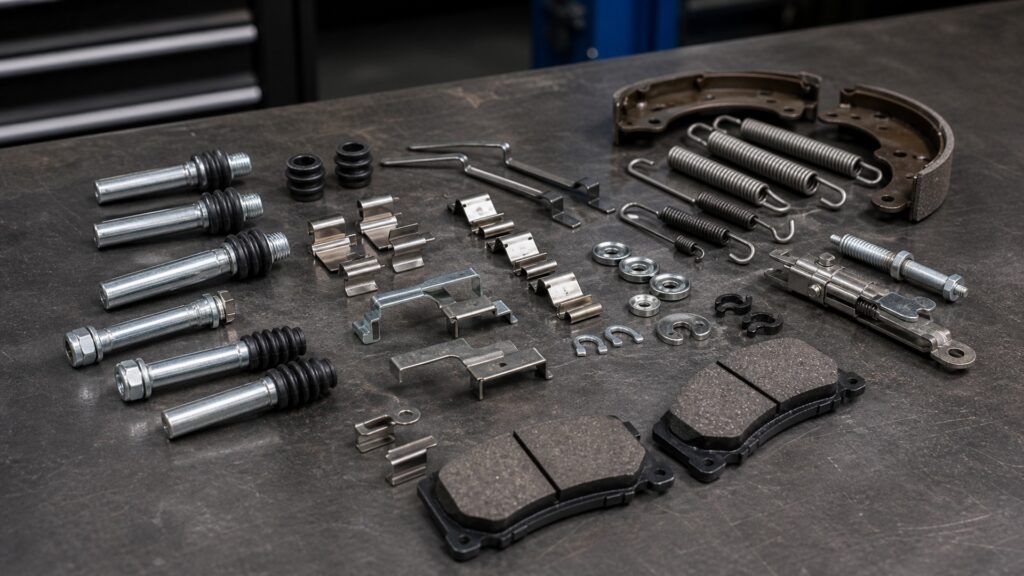
A practical explanation of brake hardware kits operating function for brake-component comparison and service decisions.
Tip: Read the concept as part of a system, then connect it back to the use case.
These definitions connect the main idea to the variables, limits, and practical signals readers need to compare options.
How clips and bracket surfaces let pads slide.
How boots and sleeves keep caliper pins moving.
How drum springs pull shoes back.
How pins and cups hold shoes to the backing plate.
How star wheels maintain shoe distance.
How shims and anti-rattle clips reduce vibration.
Tip: Keep the definitions connected; the strongest answer usually comes from the whole system, not one term.
Hardware does not create brake pressure, but it controls the path around the pressure.
Operating function is support, not force generation.
Disc hardware keeps pads moving squarely and protects the caliper's sliding pieces.
Disc hardware failure can look like caliper failure.
Drum hardware coordinates the hidden shoe mechanism.
Drum hardware is the choreography inside the shell.
A small hardware fault can keep friction material in light contact.
Small contact errors become thermal problems.
After installation, parts should move without force and return without sticking.
Hardware function is verified through movement.
This view explains brake symptoms that come from support parts rather than the main caliper or drum.
It shows how small parts control movement around friction components.
It helps diagnose drag or noise without assuming a large part failed.
Hydraulic leaks and damaged friction surfaces still need separate repair.
Wrong pads, shoes, drums, or calipers can defeat correct hardware.
Common shortcuts and misunderstandings can make the topic seem simpler than it is.
It can affect travel, drag, noise, and release.
Friction material needs hardware to stay aligned and return.
Brake springs are shaped and tensioned for specific positions.
Small hardware mistakes can create heat, noise, or uneven wear.
Tip: Treat strong claims as starting points for comparison, not final answers.
Concise answers to common questions readers may have after the main explanation.
It guides, retains, protects, adjusts, and quiets the friction parts.
Yes. Binding clips, seized pins, or weak return springs can keep friction material in contact.
They keep moisture and grit away from sliding surfaces.
They maintain shoe clearance so pedal travel stays reasonable.
Missing or incorrect clips, springs, and shims can contribute to rattle or squeal.
Brake hardware kit operating function is the control layer around pads and shoes.
The practical takeaway is that clips, boots, springs, retainers, and adjusters decide whether friction parts move and return correctly.
Use these Review Streets paths to connect the explainer to related categories, comparisons, and next decisions.
Explore related Review Streets coverage in Automotive Replacement Parts.
Explore related Review Streets coverage in Brake Components.
Explore related Review Streets coverage in Brake Hardware Kits.
Review drum brake parts and service decisions.
Choose a retailer
Prices checked regularly. We may earn a commission at no cost to you.