
Retention Clip
A part that keeps pads or shoes correctly located.
- Risk: Loose friction components
- Signal: Rattle or shifted wear
- Limit: Must match exact design
Brake hardware kit safety factors matter because retention, return, and protection are part of controlled braking. A missing clip, weak spring, torn boot, or frozen adjuster can affect whether pads or shoes stay positioned and release as expected.
This does not mean a hardware kit can guarantee brake safety. It means small support parts should be inspected seriously, especially when there is drag, rattle, uneven wear, corrosion, or evidence that friction parts are not sitting where they belong.
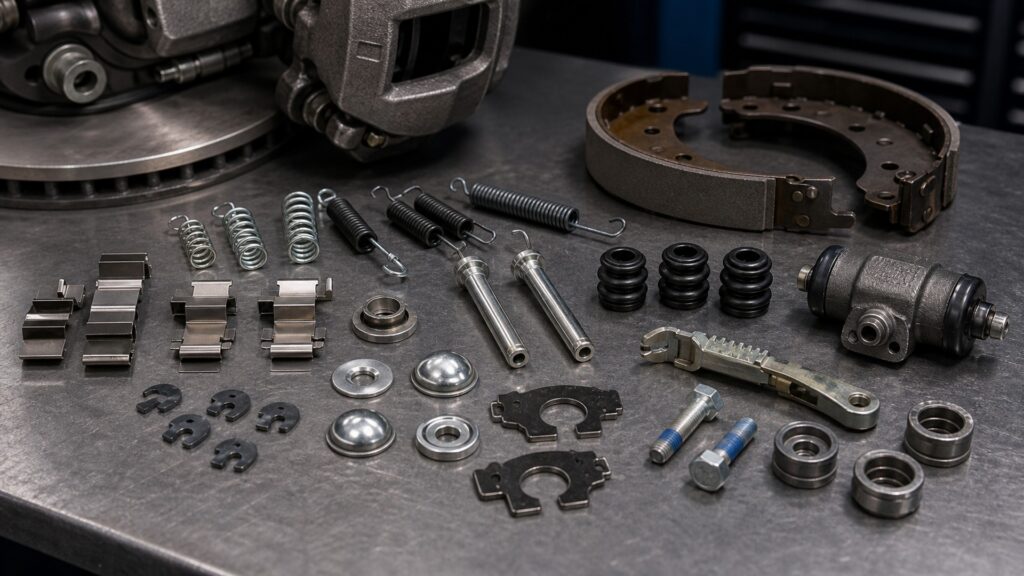
A practical explanation of brake hardware kits safety factors for brake-component comparison and service decisions.
Tip: Read the concept as part of a system, then connect it back to the use case.
These definitions connect the main idea to the variables, limits, and practical signals readers need to compare options.
A part that keeps pads or shoes correctly located.
A drum spring that pulls shoes away from the drum.
A rubber seal around caliper sliding hardware.
The ability of the adjuster to hold clearance correctly.
Rust that changes fit, tension, or movement.
The small space that lets pads or shoes release.
Tip: Keep the definitions connected; the strongest answer usually comes from the whole system, not one term.
Safety-related hardware problems usually work by mispositioning friction material or preventing release.
Small hardware helps keep braking predictable.
A missing or incorrect clip can let parts rattle, shift, or wear in the wrong place.
Retention is part of the brake design.
Hardware that fails to release friction material can create heat and imbalance.
Release failure can become heat failure.
Corrosion is important when it changes movement or retention, not merely because a part looks old.
Functional corrosion matters more than cosmetic color.
Hardware findings should lead to proper replacement and verification, not improvised bending or omission.
Correct small parts support the whole brake repair.
Safety-factor thinking gives small parts the attention they deserve without overstating what a kit can do.
It links clips, springs, boots, and adjusters to retention and release.
It helps explain why missing hardware should not be ignored.
Hydraulic condition, friction material, drums, rotors, and installation remain critical.
No kit is a substitute for full brake-system diagnosis.
Common shortcuts and misunderstandings can make the topic seem simpler than it is.
Small parts can affect retention, release, and heat.
It can also change pad movement and wear.
Brake springs have specific tension and hook geometry.
Corrosion can reduce tension or change fit enough to require replacement.
Tip: Treat strong claims as starting points for comparison, not final answers.
Concise answers to common questions readers may have after the main explanation.
Yes, when it affects retention, release, adjustment, or protection of moving parts.
It can matter if it changes pad position or movement, not only noise.
Yes. They allow contamination that can seize guide pins.
It should be inspected carefully because heat can weaken springs and damage rubber.
No. They support a proper repair but must be matched with correct diagnosis and installation.
Brake hardware kit safety factors are about retention, release, adjustment, and protection.
The practical takeaway is to treat small brake parts as functional components, not optional leftovers.
Use these Review Streets paths to connect the explainer to related categories, comparisons, and next decisions.
Explore related Review Streets coverage in Automotive Replacement Parts.
Explore related Review Streets coverage in Brake Components.
Explore related Review Streets coverage in Brake Hardware Kits.
Review drum brake parts and service decisions.
Choose a retailer
Prices checked regularly. We may earn a commission at no cost to you.