
Friction Material
The replaceable pad lining that contacts the rotor and converts motion into heat.
- Role: Creates stopping force
- Check: Thickness, cracks, glazing, and contamination
- Limit: Cannot compensate for stuck hardware
Brake pad maintenance is not just about waiting until the friction material looks thin. Pad condition, hardware movement, rotor contact, heat marks, and contamination all shape whether the brake corner can clamp and release predictably.
This explainer separates normal pad wear from maintenance clues that point to cleaning, lubrication, hardware replacement, rotor inspection, or a larger brake-system check. The goal is to make pad service feel specific rather than generic.
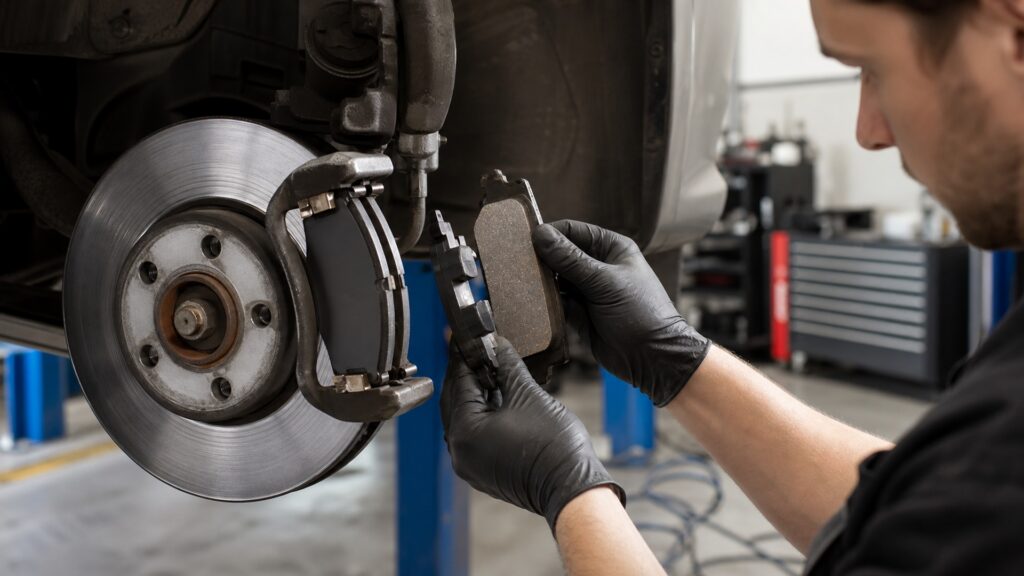
A practical explanation of why pad inspection, movement, friction condition, and hardware support matter before choosing replacement parts.
Tip: Read the concept as part of a system, then connect it back to the use case.
These definitions connect the main idea to the variables, limits, and practical signals readers need to compare options.
The replaceable pad lining that contacts the rotor and converts motion into heat.
The steel support behind the lining that keeps the pad stable under clamp force.
Small stainless clips that guide pad ears in the caliper bracket.
The caliper movement that allows clamping force to center over the rotor.
A thin film left on the rotor by the pad compound during normal braking.
The shape and rate of pad material loss across a corner or axle.
Tip: Keep the definitions connected; the strongest answer usually comes from the whole system, not one term.
Brake pads sit between hydraulic clamp force and rotor friction. Maintenance matters because the pads must move into contact, hold squarely, shed heat, and release cleanly after pressure drops.
Pad maintenance protects the path from pressure to friction, not just the amount of lining left.
A brake pad needs controlled movement. If pad ears bind in rusty clips or the caliper cannot slide, the pad may drag, wear unevenly, overheat, or fail to apply force evenly.
Movement problems often explain why a pad looks bad before its expected service interval.
A pad replacement becomes a broader repair when the evidence points beyond friction material. Hardware, rotors, calipers, fluid condition, and wheel-end issues can all affect the new pads.
Pads are consumables, but their failure pattern can reveal non-consumable problems.
Heat changes pad surfaces, rotor deposits, and the way the compound grips. Contamination from grease, brake fluid, or road chemicals can also reduce friction and create noise or pull.
Surface condition matters because brake pads work through controlled friction, not thickness alone.
A good pad-maintenance check compares both sides of the axle, confirms the correct brake package, and reads wear marks before parts are ordered.
The right pad service is the one that fixes the cause of the wear, noise, or drag.
A balanced look at what pad maintenance can prevent, plus the problems it cannot solve by itself.
It helps separate normal friction wear from binding, overheating, contamination, or poor hardware support.
It also improves the odds that new pads seat correctly and avoid repeat noise, drag, or uneven wear.
Pad maintenance cannot repair a seized caliper piston, damaged rotor, leaking hydraulic part, or incorrect brake package.
A safe repair still depends on vehicle-specific inspection, correct parts, and proper brake-service procedures.
Common shortcuts and misunderstandings can make the topic seem simpler than it is.
Thickness is important, but it is not the whole maintenance story. Uneven wear, glazing, contamination, cracked lining, noisy hardware, or dragging movement can make pads unsafe or ineffective before the material reaches its minimum limit.
New friction material may quiet a worn pad, but noise can also come from corroded clips, missing shims, rotor surface issues, loose hardware, or improper lubrication points. Replacing pads alone may leave the cause untouched.
Uneven wear often points to the surrounding system, not the pad material itself. Sticking slide pins, bracket corrosion, caliper piston drag, rotor problems, or installation errors can make one pad work harder than another.
A stronger compound can change bite or heat tolerance, but it does not eliminate inspection. Hardware still needs clean movement, rotors still need suitable surfaces, and higher-friction materials may create more dust, noise, or rotor wear.
Tip: Treat strong claims as starting points for comparison, not final answers.
Concise answers to common questions readers may have after the main explanation.
Brake pads should be inspected during routine service, tire rotation, or whenever braking feel, noise, vibration, or warning indicators change. Mileage alone is unreliable because driving style, vehicle weight, road conditions, and hardware movement affect wear.
Uneven wear usually means the pad is not sharing load evenly. Common causes include seized slide pins, bracket corrosion, caliper piston drag, rotor condition, missing hardware, or a pad that does not fit cleanly in its channel.
Good pad maintenance can reduce some rotor problems by catching worn lining, dragging pads, contamination, and hardware binding early. It cannot undo deep scoring, thickness variation, heat cracking, or rotor damage that already requires machining or replacement.
Hardware should be replaced when clips, shims, springs, boots, or contact points are corroded, distorted, loose, or missing. Many pad jobs benefit from fresh hardware because small support parts strongly affect movement, noise, and release.
Confirm the exact brake package, rotor type, pad shape, hardware requirements, and axle position. Then compare old-pad wear, slide-pin movement, bracket condition, and rotor surfaces so the replacement matches the actual maintenance need.
Brake pad maintenance matters because pads are friction parts working inside a guided, heated, moving assembly.
The practical takeaway is to read thickness, wear pattern, movement, hardware condition, and rotor surface together before deciding whether pads alone are the right repair.
Use these Review Streets paths to connect the explainer to related categories, comparisons, and next decisions.
Explore related Review Streets coverage in Automotive Replacement Parts.
Explore related Review Streets coverage in Brake Components.
Explore related Review Streets coverage in Brake Pads.
Choose a retailer
Prices checked regularly. We may earn a commission at no cost to you.