
Rotor Diameter
The outside width of the disc measured across its friction surface.
- Role: Matches pad sweep and caliper bracket position
- Check: Vehicle brake package specification
- Limit: Similar trims may use different sizes
Brake rotor fitment matters because the disc must occupy a precise space between the hub, wheel, caliper bracket, and brake pads. A rotor can look similar and still place the friction faces in the wrong position.
This explainer focuses on dimensions: diameter, thickness, hat height, center bore, bolt pattern, and brake-package clearance. Those details decide whether a rotor seats flat, clears the caliper, and sweeps the pads correctly.
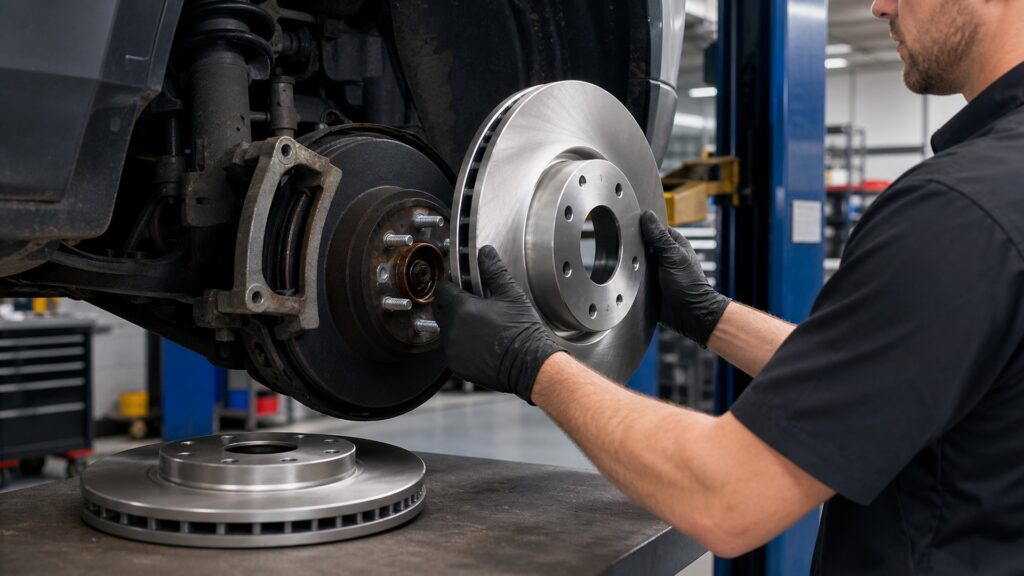
A fitment-focused guide to the measurements and mounting details that keep a rotor aligned with the hub, caliper, pads, and wheel.
Tip: Read the concept as part of a system, then connect it back to the use case.
These definitions connect the main idea to the variables, limits, and practical signals readers need to compare options.
The outside width of the disc measured across its friction surface.
The designed rotor thickness before wear, separate from the discard limit.
The offset from the wheel mounting face to the rotor friction faces.
The center opening that locates the rotor on the hub pilot.
The stud-hole layout that lets the rotor slide over the wheel studs.
The space between the rotor, caliper bracket, pads, and wheel.
Tip: Keep the definitions connected; the strongest answer usually comes from the whole system, not one term.
Fitment starts at the hub face, then sets where the rotor sits inside the caliper bracket. The pads can only work correctly if the rotor faces land in the intended sweep area.
Rotor fitment is really the geometry that puts the friction surface in the right place.
Diameter determines where the pads contact the disc. A rotor that is too small, too large, or matched to a different brake package can leave unswept areas or interfere with the caliper bracket.
Diameter is a brake-package measurement, not a styling preference.
Hat height and thickness control the rotor position between the pads. A small offset difference can cause rubbing, uneven pad contact, poor wheel seating, or caliper clearance problems.
Alignment depends on dimensions that are hard to judge from photos.
Rotor fitment can include vent direction, coating boundaries, parking-brake drum dimensions, ABS tone features, and wheel clearance. These details vary even among rotors that share a broad category name.
Small features decide whether the rotor works after it bolts on.
The practical check is to confirm the exact vehicle brake package, then compare the old rotor and new listing by measurements rather than relying on one compatibility claim.
Correct fitment is proven by measurements, seating, and clearance.
Fitment rules prevent wrong-part problems, but they do not replace inspection of the rest of the brake corner.
It explains why two rotors for the same model family may not interchange when brake packages, offsets, or rear parking-brake designs differ.
It also helps buyers catch wrong dimensions before installation creates rubbing, poor pad sweep, or wheel-clearance issues.
A perfectly fitted rotor can still perform poorly if pads, calipers, hubs, or installation procedures are flawed.
Fitment data should be paired with surface condition, thickness limits, runout checks, and symptom history.
Common shortcuts and misunderstandings can make the topic seem simpler than it is.
Bolt pattern only tells you whether the rotor can slide over the studs. Diameter, thickness, hat height, center bore, vent style, and brake-package details still decide whether it will actually fit and brake correctly.
Vehicles in the same model line can use different rotor sizes or rear designs based on engine, drivetrain, towing package, wheel size, or performance brake package. Fitment should be checked against the exact configuration.
A rotor may bolt on while still sitting too far inward, too far outward, or too close to the bracket. Correct fitment includes seating flat, clearing parts, and aligning with pad sweep.
Some fitment problems show up only after driving, heat cycling, pad wear, or wheel installation. Light rubbing, uneven sweep, or runout-related vibration can appear after the initial installation seems successful.
Tip: Treat strong claims as starting points for comparison, not final answers.
Concise answers to common questions readers may have after the main explanation.
Diameter, nominal thickness, minimum thickness, hat height, center bore, bolt pattern, and vent style matter most. Rear rotors may also need parking-brake drum dimensions or ABS-related features matched to the vehicle.
Manufacturers often offer different brake packages for trims, engines, drivetrains, wheel sizes, or towing and performance options. Those packages can change rotor diameter, thickness, offset, calipers, and pads within the same model year.
Yes. A poorly fitted rotor can rub the bracket, misalign pad contact, create runout, overheat pads, or interfere with wheel seating. Those problems can damage friction parts and create unsafe braking behavior.
Compare diameter, thickness, hat height, center bore, bolt pattern, vent design, parking-brake features, and overall friction-face position. Also inspect the hub face so rust or debris does not create a false mismatch.
Coating alone usually does not change fitment, but coating boundaries should not interfere with friction surfaces or mounting. The underlying rotor dimensions, venting, hub interface, and brake-package compatibility still matter more.
Brake rotor fitment matters because the rotor has to place its friction faces exactly where the pads and caliper expect them.
The practical takeaway is to match measurements and brake-package details before trusting visual similarity or a single compatibility note.
Use these Review Streets paths to connect the explainer to related categories, comparisons, and next decisions.
Explore related Review Streets coverage in Automotive Replacement Parts.
Explore related Review Streets coverage in Brake Components.
Explore related Review Streets coverage in Brake Rotors.
Choose a retailer
Prices checked regularly. We may earn a commission at no cost to you.