Why Cable Machines Safety Factors Matters

Safety factors matter in cable machines because the user is training against a moving cable, pulley, attachment, and resistance source. A cable machine can feel controlled, but safe use still depends on frame stability, cable condition, attachment security, weight-stack behavior, and enough room to move without being pulled out of position.

A good cable machine makes setup predictable and failures manageable. A poor setup can create pinched cables, loose clips, unstable stances, overloaded attachments, or awkward angles that turn ordinary exercises into unnecessary risks.

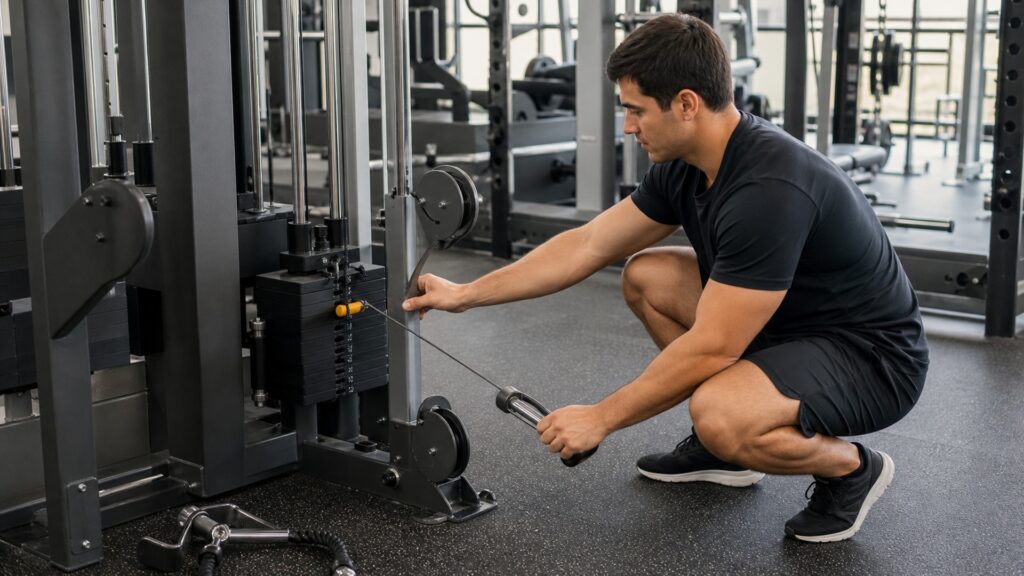
By: Review Streets Research Lab
Updated: September 25, 2026
Explainer · 8-12 min read
cable machines safety factors explainer hero image for Review Streets
What You'll Learn

How Safety Factors Affect Cable Machine Use

A practical look at stability, cable condition, attachments, setup, and workout space.

  • Why frame stability matters before loading the cable
  • How cable wear, pulleys, and clips affect safe use
  • Where attachment ratings and setup choices matter
  • Why stance, clearance, and cable angle change risk
  • What to check before repeating a cable exercise

Tip: Judge the machine by the exercises it makes easier to perform consistently, not by how many movements it claims to support.

Definitions

Key Concepts Behind Cable Machines Safety Factors Matters

These concepts clarify how cable machines fit into practical home strength training.

Frame Stability

Frame stability is how well the machine stays planted during loaded cable movement.

  • Example: a tower that does not rock during heavy rows
  • Check: test movement at realistic loads
  • Limit: wall-mounted or compact units may need correct installation

Cable Condition

Cable condition is the state of the cable coating, strands, pulleys, and travel path.

  • Example: checking for fraying or rough movement before use
  • Check: inspect cable travel and visible wear
  • Limit: hidden wear may require service review

Attachment Security

Attachment security is whether handles, carabiners, straps, cuffs, and bars are properly connected and rated for the exercise.

  • Example: locking a carabiner before a heavy row
  • Check: confirm the clip is closed and the attachment is undamaged
  • Limit: cheap accessories can be the weak point

Stack Control

Stack control is how predictably the resistance source moves and returns during a rep.

  • Example: a weight stack lowering smoothly without slamming
  • Check: use controlled tempo and watch the stack
  • Limit: fast reps can create bounce or cable slack

Clearance

Clearance is the room needed around the machine for the cable, user, bench, and attachment.

  • Example: stepping back far enough for a cable row
  • Check: measure the exercise path, not just the footprint
  • Limit: crowded spaces can change the movement

Setup Angle

Setup angle is how the cable lines up with the body and exercise.

  • Example: standing where the cable pulls straight through a chest fly
  • Check: avoid angles that twist joints or pull the user off balance
  • Limit: some exercises may not fit a specific machine

Tip: A cable machine is most useful when its movement path, resistance, and setup match the exercises a person will repeat.

Stability

The Frame Has To Stay Predictable

Cable machines handle force from different directions. The frame, wall mount, base, or guide rods must stay stable when the user pulls, rows, presses, or rotates.

  • Check anchoring and level placement.
  • Use realistic training loads during setup tests.
  • Stop if the machine shifts, rocks, or scrapes.

A stable frame makes the rest of the safety checks meaningful.

Hardware Check

Cables And Pulleys Need Regular Inspection

The cable system does the work every rep. Fraying, sticking pulleys, damaged coating, loose fasteners, or rough travel can signal a problem before a failure happens.

  • Inspect visible cable wear.
  • Listen for grinding or uneven pulley movement.
  • Keep the cable path free of twists and obstructions.

Smooth cable travel is both a performance and safety signal.

Attachments

The Clip And Handle Are Part Of The Load Path

A strong machine can still be limited by a weak attachment. Handles, straps, bars, cuffs, and carabiners should match the exercise and expected load.

  • Check clips before every set.
  • Replace worn straps or cracked handles.
  • Use attachments designed for the direction and load.

Attachment security matters because it sits between the user and the resistance.

Movement Space

Clearance Protects Position And Control

Cable exercises often need more room than expected. The user may need to step back, kneel, rotate, or place a bench while keeping the cable path clear.

  • Measure the whole exercise path.
  • Keep benches and storage away from the cable line.
  • Avoid stances that feel crowded or off balance.

Enough space helps the user stay in control through the full rep.

Technique

Controlled Reps Reduce Cable Slack And Swing

Cable machines reward steady movement. Jerky reps can create slack, stack bounce, attachment swing, or body positions that are harder to control.

  • Start with a manageable load.
  • Keep tension through the rep.
  • Lower the stack without slamming it.

Safe cable training depends on both equipment condition and controlled execution.

Quick Reality Check

Where Cable Machine Safety Checks Help And Where They Have Limits

Safety checks reduce avoidable risk, but they do not replace careful setup and maintenance.

Where They Help

They catch unstable frames, worn cables, loose clips, and poor clearance before training.

They keep the user focused on controlled movement and proper setup.

Where They Fall Short

They cannot make damaged equipment safe to use.

They cannot guarantee that every exercise fits every machine or user.

Common Myths

Misconceptions About Cable Machine Safety

Controlled resistance still needs careful setup.

Cable machines are automatically safer than free weights

They can reduce some risks, but cables, attachments, and body position create their own safety checks.

If the stack moves, the machine is fine

A moving stack does not rule out cable wear, loose clips, or poor alignment.

Any handle works for any exercise

Attachments should match the load, grip, and direction of pull.

Compact machines need less clearance

The machine may be compact, but the exercise path still needs room.

Tip: The strongest claims are worth checking against the actual exercises, space, and resistance range.

FAQ

Frequently Asked Questions About Cable Machine Safety

Short answers for choosing, using, and comparing cable machines.

What should I check before using a cable machine?

Check frame stability, cable condition, pulley travel, clips, attachments, load selection, and movement clearance.

Are wall-mounted cable machines safe?

They can be safe when installed correctly and used within the manufacturer's limits.

When should I stop using a cable machine?

Stop if the cable frays, pulleys stick, clips fail to close, the frame shifts, or the movement feels unstable.

Do cable machines need maintenance?

Yes. Cables, pulleys, guide rods, fasteners, and attachments should be inspected and maintained regularly.

What is the practical takeaway?

Use cable machines with stable setup, inspected hardware, secure attachments, enough clearance, and controlled reps.

Bottom Line

Safety factors matter because cable machines rely on a connected chain of frame, cable, pulley, attachment, user position, and resistance.

The safest setup is stable, inspected, uncluttered, and used with controlled movement through a cable path that fits the exercise.

Next Steps

Go Deeper or Compare Your Options

Use these Review Streets paths to compare related categories and practical next decisions.

Cable Machines

Explore the cable machine category before comparing setups.

Home Gym Systems

Compare broader home gym systems with cable-focused equipment.