
Color Fade
Loss or alteration of deposited or formed color over time.
- Use: set realistic expectations
- Variable: dye type and exposure
- Tradeoff: All cosmetic color changes eventually
Color protection matters because dyed and lightened hair changes with every wash, ultraviolet exposure, heat session, friction event, and later chemical service. Some color molecules leave the fiber during cleansing, while oxidation, surface damage, and tonal shifts can change what the eye perceives even when pigment remains.
A protective routine cannot freeze a salon result. It can reduce avoidable stress, extend an acceptable shade interval, and keep processed lengths easier to handle. Shampoo choice is only one part: water temperature, wash frequency, conditioning, heat control, sun exposure, pool care, shade choice, retouch overlap, and product residue all matter. Define which change—fading, brassiness, dullness, dryness, or breakage—you are actually trying to slow.
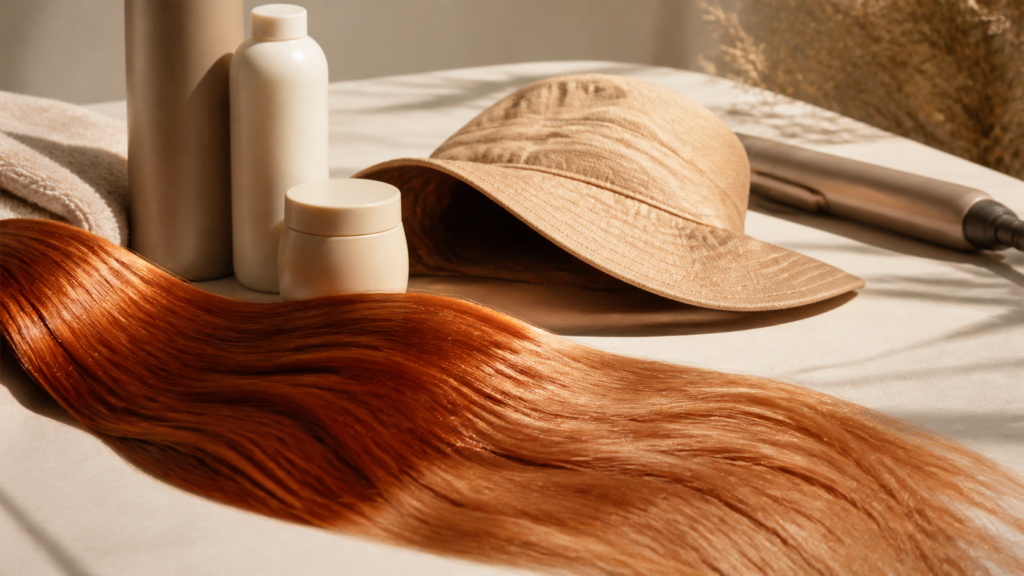
Frame protection as reducing cumulative color-change drivers—water, cleansing, ultraviolet light, heat, friction, mineral context, chemical overlap, and schedule—without promising that products can stop fading.
Tip: Color protection begins with naming the failure accurately.
These hair color protection concepts separate formula behavior, application choices, limits, and purchasing consequences before the mechanisms are compared.
Loss or alteration of deposited or formed color over time.
A change in visible warmth, coolness, or balance as pigments and fiber appearance evolve.
Cumulative water, cleanser, temperature, and friction applied across washes.
Light-driven chemical change affecting pigments and hair components.
Accumulated temperature and tool-pass exposure during drying and styling.
Applying new chemical processing onto previously treated lengths unnecessarily.
Tip: Use the terms to test hair color protection rather than relying on a front-label promise.
A red shade losing saturation, blonde revealing warmth, dark color looking dull, and bleached ends snapping require different responses. Photograph in consistent light and identify the location and timing before buying a color-protection claim.
Color protection begins with naming the failure accurately.
Wash as often as scalp comfort and residue require, using a compatible cleanser, moderate water temperature, gentle massage, and thorough rinse. Stretching washes past comfort can increase buildup or irritation and is not a worthwhile color strategy.
The goal is efficient washing, not the fewest possible showers.
AAD notes that sun can leave colored, bleached, or permed hair weak, dry, rough, faded, and brittle. Use hats or shade, follow explicit heat-protectant directions, lower tool settings, and reduce repeated passes.
Protection works by lowering total exposure, not making hair invulnerable.
Purple, blue, and depositing products can shift visible tone by adding color; they do not reverse structural damage. Overuse may create unevenness, dryness, staining, or unwanted cast, so use them according to the shade and formula.
A corrected tone can still sit on a fragile fiber.
Measure how many weeks and washes pass before the shade no longer meets the goal, then include masks, toners, salon visits, home color, heat tools, and time. A more maintainable shade can offer better value than maximum initial transformation.
The best-protected color begins with a service the routine can maintain.
A coordinated routine can slow avoidable fade, tonal drift, roughness, and breakage; it cannot prevent all change or undo severe processing.
Shade remains acceptable for more normal wash cycles without sacrificing scalp comfort.
Processed lengths keep enough slip and strength-related behavior for gentle styling.
Toners alter visible tone but do not rebuild damaged structure.
Severe breakage, scalp reactions, or repeated overlapping chemical services require more than another protective product.
These hair color protection claims collapse several variables into one rule and can lead to poor application or unnecessary purchases.
It may support a lower-stress routine, but no shampoo stops water exposure, pigment loss, ultraviolet change, heat damage, or future chemical effects. Judge the complete routine by wash count and visible shade.
Moderate water temperature may improve comfort and reduce harsh exposure, but hair is not permanently sealed by a cold rinse. Dye chemistry, porosity, cleanser, frequency, sunlight, and heat remain important.
Purple or violet pigment counteracts selected yellow tones visually. It does not reverse bleach damage and can create dryness, buildup, or an unwanted cast when overused; conditioning and gentle handling remain separate jobs.
Delaying washing may reduce wash exposures but can leave scalp oil, sweat, and styling residue unmanaged. Protect the shade with efficient appropriate washing rather than ignoring scalp comfort or hygiene.
Going darker often requires less lightening than major blonde changes, but dye processes and allergic reactions still deserve caution. Follow directions, perform required tests, avoid overlapping services, and stop after burning or swelling.
Tip: Test the exact hair color protection product, dose, and routine before generalizing from a category label.
The remaining hair color protection decisions concern application, compatibility, frequency, safety, and value in an ordinary routine.
Follow the color product or stylist's aftercare because dye systems differ. Once normal washing resumes, use a compatible routine and judge results by wash cycles rather than adopting a universal waiting period from social media.
A well-formulated alternative cleanser may suit some colored hair, but sulfate-free is not a fade guarantee. The whole surfactant system, wash frequency, water, shade, damage, and technique determine the practical result.
Use physical shade such as a wide-brimmed hat, limit prolonged exposure when practical, and choose products intended for colored hair. No spray provides complete protection, and hats also reduce direct light dose.
Wet hair with clean water when practical, use suitable pre-swim protection, wear a cap, rinse promptly, and remove pool residue with compatible care. Chlorine, minerals, sun, and friction vary by setting.
Use one when a specific unwanted tone emerges and the formula matches the hair color and condition. Follow timing closely; toning too frequently can create uneven pigment, dryness, or a cast.
Stop and follow product safety directions after significant burning, redness, swelling, rash, blistering, or breathing symptoms. FDA and AAD emphasize label instructions and testing; seek urgent care for severe reactions.
Color protection matters because pigment, tone, and processed-fiber condition change through cumulative washing, light, heat, friction, and chemical overlap. A product helps only as one part of that exposure budget.
Define the change you want to slow, protect scalp health, condition weathered lengths, control sun and heat, and avoid unnecessary retouch overlap. Measure success in acceptable washes and weeks—not permanent color.
These Review Streets paths narrow the next hair color protection choice by format, goal, and routine fit.
Compare masks, oils, serums, and bond-focused formulas by goal and format.
Explore intensive conditioning options for slip, softness, damage, and moisture needs.
Choose a retailer
Prices checked regularly. We may earn a commission at no cost to you.