Why Compact SUVs Maintenance Role Matters

Maintenance keeps a compact SUV useful for the small, frequent jobs that often define its ownership: commuting, errands, school runs, and trips with passengers and luggage. Short journeys and low annual mileage do not automatically mean little care is needed. Time-based requirements, tire condition, brake wear, and developing faults still matter.

Compact is a size class, so it does not identify one service schedule. A gasoline model, hybrid, plug-in hybrid, and battery-electric compact can have different powertrain requirements. Match the plan to the exact vehicle and its use, then keep enough records to know what was inspected, what was replaced, and what still needs attention.

By: Review Streets Research Lab
Updated: September 30, 2026
Explainer · 8-12 min read
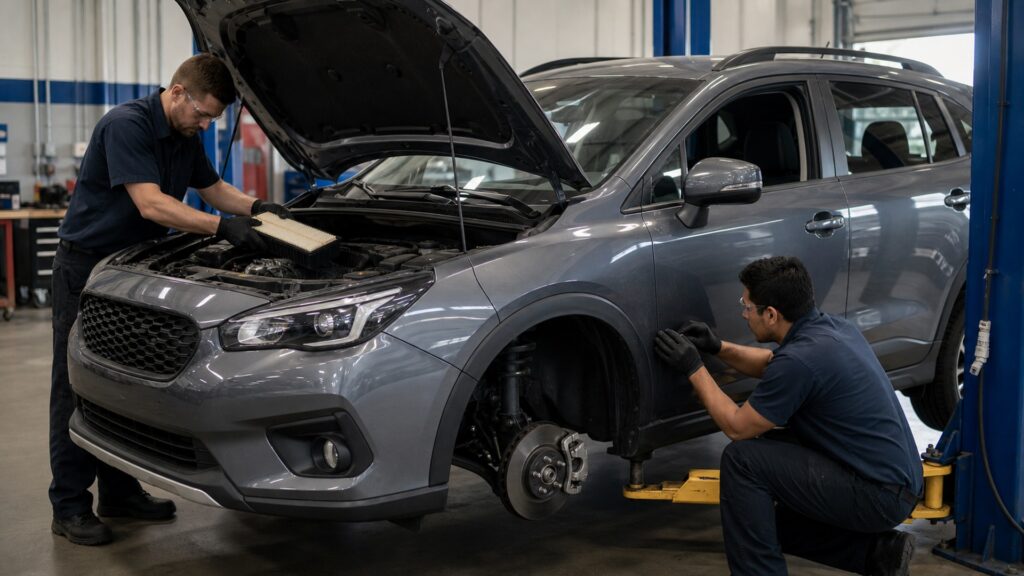
compact suvs explainer hero image for Review Streets
What You'll Learn

Keep Routine Use from Hiding Service Needs

A compact SUV’s maintenance plan should reflect its systems and actual driving pattern.

  • Use the correct schedule for the model and powertrain.
  • Track calendar limits alongside distance.
  • Check tires and brakes instead of assuming low mileage means good condition.
  • Distinguish service due from symptoms needing diagnosis.
  • Keep clear records for future decisions and resale.

Tip: A vehicle that starts every morning can still have overdue inspections or a fault that deserves attention.

Definitions

Service Terms That Make the Plan More Useful

These distinctions prevent a basic oil-change habit from standing in for complete care.

Calendar requirement

Service due after an elapsed period, regardless of distance traveled.

  • Example: A lightly driven SUV reaches a time limit in its schedule.
  • Check: Record the completion date and next due date.
  • Limit: Low mileage does not cancel a stated time limit.

Use-based requirement

An adjustment or additional task linked to conditions specified by the manufacturer.

  • Example: Repeated short trips or dusty use may trigger particular guidance.
  • Check: Check which conditions and tasks the exact manual identifies.
  • Limit: Do not apply another model’s severe-use schedule automatically.

Wear assessment

Inspection of the actual condition of a consumable or moving part.

  • Example: A technician measures tread or brake material.
  • Check: Ask for findings rather than only a replacement recommendation.
  • Limit: Remaining life cannot be guaranteed by an average mileage figure.

Fluid specification

The required properties or approvals for a fluid used in a system.

  • Example: A transmission requires the manufacturer-specified fluid.
  • Check: Match the specification and permitted service procedure.
  • Limit: Color or a generic product category does not prove suitability.

Diagnostic investigation

Work to identify the cause of a symptom or warning.

  • Example: A recurring vibration is checked rather than treated by guessing.
  • Check: Describe when it occurs and any recent changes.
  • Limit: Routine scheduled service may not resolve an unrelated fault.

Service history

A record of inspections, maintenance, repairs, and relevant findings.

  • Example: Receipts show both mileage and work performed.
  • Check: Keep records organized by date and vehicle.
  • Limit: A stamped entry alone may not show every task completed.

Tip: Know which category a recommendation belongs to before deciding whether it is due, conditional, or diagnostic.

Identify the schedule

Start with the Powertrain and Equipment You Own

Find the maintenance information for the exact model year, powertrain, and drivetrain. Engine-equipped compacts retain engine-related work; a BEV has a different service profile. All-wheel drive and other equipment may introduce components with their own requirements. Avoid assuming a package advertised for small SUVs covers every applicable task.

  • Confirm the schedule’s vehicle and powertrain application.
  • List distance and calendar deadlines.
  • Review instructions for fitted drivetrain equipment.

Two compacts from the same model family can require different fluids or inspections. A familiar badge does not make their maintenance instructions interchangeable.

Short trips and time

Compare the Driving Pattern with the Manual’s Conditions

Repeated short journeys, extended idling, dust, towing, or other conditions can affect service guidance on some vehicles. Read the exact conditions rather than labeling every urban driver a severe-use case. A low annual distance also makes calendar reminders especially important.

  • Record the kinds of trips that dominate the week.
  • Check whether the manufacturer assigns additional work to those conditions.
  • Use the stated trigger for each task.

An SUV used mainly for brief school runs may reach a calendar deadline before a mileage deadline. Waiting for the odometer alone could postpone work that the schedule already calls for.

Tires and brakes

Inspect the Parts Exposed to Daily Road Use

Curb contact, potholes, pressure changes, and ordinary wear can affect tires and alignment. Stop-and-go driving places repeated demands on braking, while hybrids and BEVs may use electrical energy recovery for some slowing. Neither pattern removes the need to inspect the actual hardware.

  • Use specified cold tire pressures and inspect for damage.
  • Have new pulling, vibration, or unusual wear assessed.
  • Follow the vehicle’s brake inspection and service requirements.

A tire can develop a problem long before its tread reaches the end of its expected life. Direct inspection after an impact or a new symptom is more useful than relying on the tire’s age alone.

Faults versus routine care

Do Not Let a Service Visit Replace Diagnosis

A warning, leak, abnormal sound, or changed control response may need investigation even when the scheduled service is current. Describe the symptom accurately, including when it began and the conditions in which it appears. Follow urgent warning instructions instead of waiting for a convenient maintenance appointment.

  • Record exact dashboard messages where safely possible.
  • Note whether the symptom relates to speed, temperature, or a recent event.
  • Ask what evidence supports the proposed repair.

If vibration appears after striking a pothole, an oil change does not address the underlying question. The service provider needs to assess the relevant tire, wheel, or running-gear condition.

Records and planning

Use the History to Plan the Next Useful Visit

Keep invoices, inspection results, and completed recall information with the vehicle records. Use them to determine what is due and to avoid unnecessary repetition. For a used compact SUV, compare documented work with the correct schedule and have current condition assessed rather than treating missing paperwork as proof of a specific defect.

  • Record dates, mileage, specifications, and findings.
  • Separate routine upkeep from fault repairs.
  • Budget for known upcoming work and uncertain repair risk separately.

A clear record that a fluid service or inspection was completed is more useful than a vague assurance that the car was looked after. It also helps a future technician interpret what has changed since the last visit.

Quick Reality Check

Routine Maintenance and Fault Repair Have Different Roles

Both matter, but they answer different questions.

Routine care establishes…

That required inspections and replacements are completed when due.

That present wear and condition are reviewed at appropriate intervals.

Diagnosis establishes…

Why an abnormal symptom or warning is occurring.

Which repair, adjustment, or further investigation the evidence supports.

Common Myths

Misconceptions About Compact SUV Upkeep

A smaller body does not remove ordinary vehicle responsibilities.

Does low mileage mean service can wait indefinitely?

No. Calendar requirements and current condition still apply.

Do all compact SUVs use the same schedule?

No. Powertrain, drivetrain, equipment, model year, and use can change requirements.

Does an oil change count as a complete inspection?

Only the documented work is established. Check what was actually included.

Can hybrid braking eliminate brake service?

No. Reduced friction use does not remove the need for prescribed brake care and inspection.

Tip: Match each task to a documented requirement or an observed condition.

FAQ

Questions for a Useful Maintenance Conversation

Specific questions make service recommendations easier to assess.

What should I bring to a service visit?

The service history, current mileage, and a clear description of symptoms or recent changes.

How do I assess an additional recommendation?

Ask whether it is scheduled, triggered by operating conditions, based on measured wear, or intended to diagnose a fault.

Should I use the same fluid as another compact SUV?

Only if it meets the exact required specification and application. Similar vehicle size does not establish compatibility.

What matters when buying a used example?

Review records, recall status, current condition, and any gaps against the applicable schedule; obtain an appropriate inspection.

Bottom Line

Compact SUV maintenance preserves dependable daily use by matching care to the actual vehicle and routine.

Track time and distance, inspect wear, investigate symptoms, and keep records that explain what has been done.

Next Steps

Go Deeper or Compare Your Options

Use these Review Streets paths to compare related categories and practical next decisions.

Vehicles

Compare related vehicle choices against the same carrying needs and driving routine.

SUVs

Compare related vehicle choices against the same carrying needs and driving routine.

Compact SUVs

Explore Compact SUVs with your passenger, cargo, and ownership requirements in mind.

Further reading: Tire maintenance guidance; Electrified-vehicle service differences; Recall lookup; Example of model-specific maintenance requirements. Use the owner’s manual for the exact vehicle’s instructions and limits.