
Cuticle Seal
Thin tissue adhering to the nail plate near its base.
- Use: protect the emerging nail area
- Variable: grooming and growth
- Tradeoff: Not meant for removal
Cuticle care matters because the thin seal at the base of the nail helps protect the space where the nail plate emerges. Cutting, tearing, or aggressively pushing this tissue can create openings, inflammation, pain, and infection risk without making the nail itself grow faster or stronger.
Useful care is conservative: wash gently, dry well, moisturize rough surrounding skin, avoid biting and picking, keep manicure tools clean, and limit product contact with skin. AAD advises leaving cuticles alone during manicures. Cosmetic oils and creams can soften and lubricate the area, but persistent swelling, drainage, discoloration, or pain needs evaluation rather than another grooming step.
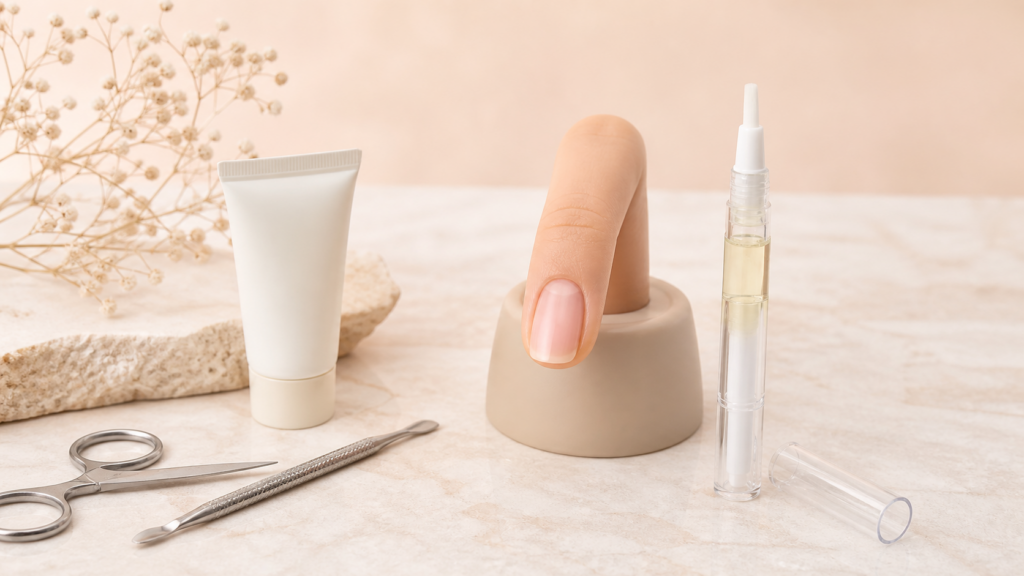
Explain the cuticle and proximal nail fold as parts of a protective seal around new nail growth, emphasizing moisturization, gentle grooming, limited chemical exposure, tool hygiene, and warning signs rather than aggressive cutting or cosmetic perfection.
Tip: A neat manicure should not require an injured barrier.
These cuticle care concepts separate mechanism, application, limits, and purchasing consequences.
Thin tissue adhering to the nail plate near its base.
Living skin bordering the base of the nail.
Torn fragment of skin beside the nail.
Rich film reducing water loss from surrounding skin.
Control of contamination on brushes, droppers, and tools.
Cut, split, or abrasion that compromises surrounding skin.
Tip: Use these terms to test cuticle care instead of relying on a front-label promise.
Do not cut or aggressively push the cuticle. The cosmetic goal is tidy, comfortable skin, not removal of a protective structure.
A neat manicure should not require an injured barrier.
Oil, cream, or petroleum jelly can reduce rough feel and friction. Apply a small amount to surrounding skin and allow absorption before polish preparation.
Consistency matters more than a complicated ingredient story.
Soften the area, use clean sharp nippers only on clearly detached skin, and avoid digging into the fold. Cover a minor break and monitor it.
Pulling converts a small edge into a larger wound.
Primers, adhesives, gels, acrylic monomers, and polish can irritate or sensitize. Keep product on the nail plate and follow the full system directions.
Better application protects both wear and skin.
Pain, warmth, swelling, pus, spreading redness, nail lifting, or persistent color change is not a cue to push harder or seal it under product.
Visibility is a safety feature of bare nails.
Cuticle care can preserve comfort and the protective seal; it cannot permanently remove cuticles, accelerate growth, or treat infection.
Surrounding skin stays flexible without being cut or abraded.
The nail base remains clean, comfortable, and easy to inspect.
Rich products can irritate or interfere with polish adhesion when poorly timed.
Cosmetic care is not a substitute for assessing persistent inflammation.
These claims flatten the variables that determine how cuticle care performs in a real routine.
Removing living protective tissue is unnecessary and can increase injury or infection risk. Clean the nail plate gently without cutting the seal.
Oil can lubricate and improve flexibility or surrounding-skin feel. Nail growth originates in the matrix and is not accelerated reliably by a cosmetic oil.
Pressure can still damage the seal or living fold. AAD recommends leaving cuticles alone, especially in dip manicures.
Pulling can tear healthy skin and enlarge the break. Trim only detached material with clean tools and protect the area.
Mild transient sensitivity can occur, but persistent pain, swelling, rash, drainage, or spreading redness requires stopping products and assessment.
Tip: Test the exact cuticle care tool, setting, and routine before generalizing from its category.
The remaining decisions about cuticle care concern technique, compatibility, safety, upkeep, and value.
No. It is one convenient moisturizer; fragrance-free cream or petroleum jelly may work well. Choose the texture and applicator used consistently.
After washing, at bedtime, and after polish removal are practical times. Before polish, remove residue as the coating system directs.
Use only as labeled, briefly, and without scraping living tissue. Stop after burning or irritation and wash off as directed.
Use properly cleaned and disinfected tools, avoid shared porous items, and do not allow cutting into living folds.
Covering may hide progression and expose broken skin to more chemicals. Pause the manicure and let the area be evaluated.
Controlled brush pens, pumps, or droppers that avoid repeated skin contact may be easier than open pots; cap promptly and do not share.
Cuticle care matters because an intact seal and comfortable surrounding skin protect the area where new nail emerges. The useful routine is moisturization, gentle handling, clean tools, and minimal chemical contact.
Leave cuticles intact, trim hangnails without pulling, pause manicures after barrier damage, and keep persistent pain, swelling, drainage, or nail change out of the cosmetic-treatment loop.
These Review Streets paths narrow the next cuticle care decision by format, goal, and routine fit.
Browse nail treatments, polish, removal, and care categories.
Compare cuticle oils by vehicle, applicator, feel, and routine fit.
Choose a retailer
Prices checked regularly. We may earn a commission at no cost to you.