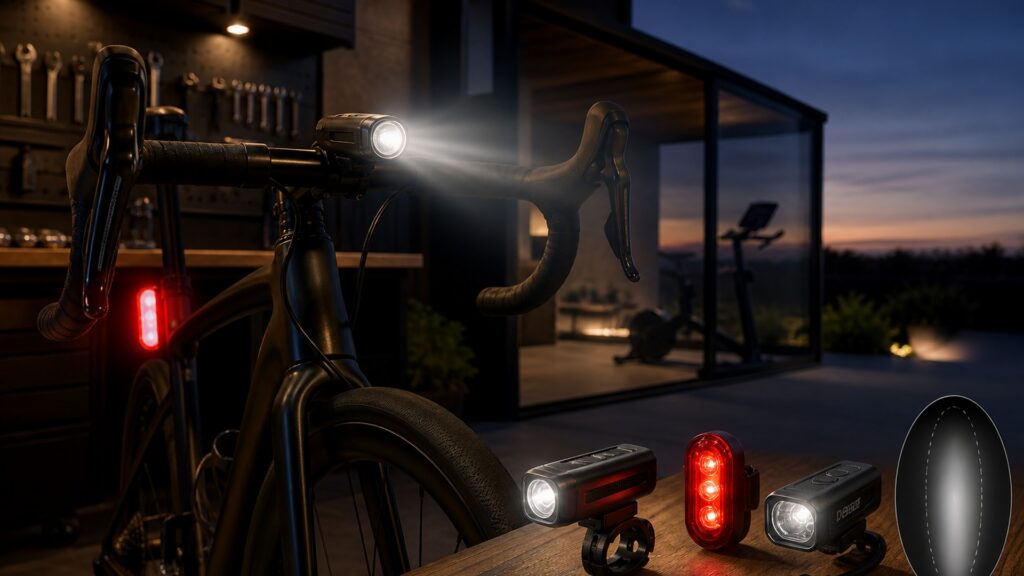
Front headlight
The movement pattern influence of front headlight comes from its ability to control visibility, beam placement, and whether the device stays aimed at the input or starting-condition stage.
- Why it matters: It links front headlight to the path, range, body position, and timing encouraged by cycling lights.
- Check: For cycling lights, evaluate front headlight: check the beam and mounting security in the actual traffic and weather setting, then judge whether the movement remains repeatable without forced compensation.
- Do not assume: Front headlight resolves the whole issue; assuming that a guided or familiar path fits every body and task remains a risk.
Rear light
The movement pattern influence of rear light comes from its ability to control visibility, beam placement, and whether the device stays aimed at the transfer and stabilization stage.
- Why it matters: It links rear light to the path, range, body position, and timing encouraged by cycling lights.
- Check: For cycling lights, evaluate rear light: check the beam and mounting security in the actual traffic and weather setting, then judge whether the movement remains repeatable without forced compensation.
- Do not assume: Rear light resolves the whole issue; assuming that a guided or familiar path fits every body and task remains a risk.
LEDs and optics
The movement pattern influence of leds and optics comes from its ability to coordinate the component's contribution at stage 3 of the cycling lights system.
- Why it matters: It links leds and optics to the path, range, body position, and timing encouraged by cycling lights.
- Check: For cycling lights, evaluate leds and optics: observe how leds and optics changes setup, control, or feedback during realistic use, then judge whether the movement remains repeatable without forced compensation.
- Do not assume: LEDs and optics resolves the whole issue; assuming that a guided or familiar path fits every body and task remains a risk.
Mounts and straps
The movement pattern influence of mounts and straps comes from its ability to set fit, retention, and how quickly the user can secure or release the item at the contact or feedback stage.
- Why it matters: It links mounts and straps to the path, range, body position, and timing encouraged by cycling lights.
- Check: For cycling lights, evaluate mounts and straps: check tension and release while reproducing the intended movement, then judge whether the movement remains repeatable without forced compensation.
- Do not assume: Mounts and straps resolves the whole issue; assuming that a guided or familiar path fits every body and task remains a risk.
Battery and charging port
The movement pattern influence of battery and charging port comes from its ability to supply the energy needed for powered controls and feedback at the repeatability and durability stage.
- Why it matters: It links battery and charging port to the path, range, body position, and timing encouraged by cycling lights.
- Check: For cycling lights, evaluate battery and charging port: match runtime and charging access to the intended session, then judge whether the movement remains repeatable without forced compensation.
- Do not assume: In cycling lights, battery and charging port resolves the whole issue; assuming that a guided or familiar path fits every body and task remains a risk.
Buttons, seals, and reflectors
The movement pattern influence of buttons, seals, and reflectors comes from its ability to control visibility, beam placement, and whether the device stays aimed at the maintenance, storage, or release stage.
- Why it matters: It links buttons, seals, and reflectors to the path, range, body position, and timing encouraged by cycling lights.
- Check: For cycling lights, evaluate buttons, seals, and reflectors: check the beam and mounting security in the actual traffic and weather setting, then judge whether the movement remains repeatable without forced compensation.
- Do not assume: Buttons, seals, and reflectors resolves the whole issue; assuming that a guided or familiar path fits every body and task remains a risk.