
Routine Anchor
Existing event that cues oral care, such as waking or bedtime.
- Use: improve consistency
- Variable: schedule
- Tradeoff: Shift work may require adaptation
Daily oral hygiene matters because plaque reforms continuously and tooth surfaces face repeated acid and inflammatory challenges. A consistent routine interrupts biofilm, delivers fluoride, cleans spaces the brush misses, and creates a daily opportunity to notice bleeding, sores, pain, dryness, damage, or appliance problems.
The core is small: brush twice daily for two minutes with fluoride toothpaste and clean between teeth daily using a suitable method. The routine must also fit dexterity, sensory tolerance, braces, dentures, dry mouth, caregiver support, work, and sleep. Dental visits remain necessary because home tools cannot diagnose disease or remove tartar.
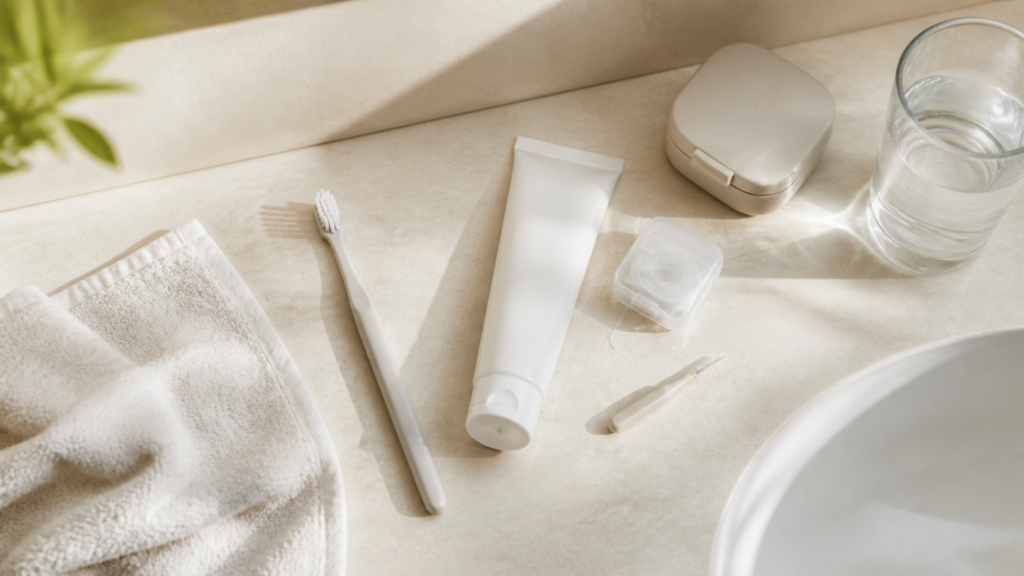
Build daily oral hygiene as a repeatable system combining twice-daily fluoride brushing, daily interdental cleaning, diet and tobacco context, cleaning of appliances, symptom awareness, and professional prevention, with adaptations for age, disability, dry mouth, and risk.
Tip: Fresh breath is a side effect, not the sole target.
These daily oral hygiene concepts separate mechanism, application, limits, and purchasing consequences.
Existing event that cues oral care, such as waking or bedtime.
Fixed order for cleaning tooth surfaces.
Regular appropriate fluoride exposure through toothpaste and water.
Floss or another tool chosen to clean between teeth.
Cleaning of retainers, dentures, aligners, guards, or brush components.
Symptom that prompts professional evaluation.
Tip: Use these terms to test daily oral hygiene instead of relying on a front-label promise.
Brush with fluoride toothpaste for two minutes, covering every surface. Clean removable appliances as directed and address dry-mouth needs without replacing water and hygiene with sugary products.
Fresh breath is a side effect, not the sole target.
Complete brushing and interdental cleaning before sleep, when practical. Minimize added-sugar exposure afterward and store brushes and appliances clean and dry.
The evening routine reduces the time plaque and food residue remain undisturbed.
Powered handles, floss holders, interdental brushes, grip modifications, visual schedules, or caregiver assistance can turn an impossible routine into a repeatable one.
Accessibility is a clinical feature of the routine.
A brush, fluoride toothpaste, and suitable interdental cleaner form the base. Add rinses, sensitivity products, whitening, or dry-mouth aids only for a defined indication.
Complexity can reduce adherence and increase irritation.
Regular examinations and cleanings assess decay, gums, oral tissues, restorations, and appliances. Visit frequency should follow personal risk and findings.
Home and professional care solve different parts of the problem.
A daily routine lowers preventable risk and reveals change early; it cannot guarantee disease-free teeth or replace individualized professional care.
Every major surface and interdental space has a repeatable place in the sequence.
The product set is tolerable, affordable, and simple enough to sustain.
Perfect technique performed rarely is less useful than a workable daily system.
Pain, swelling, lasting sores, or sudden changes exit the routine-care lane.
These claims flatten the variables that determine how daily oral hygiene performs in a real routine.
Rinse cannot replace brushing, fluoride toothpaste, or interdental mechanical cleaning.
Frequency matters because plaque and acid challenges recur; follow twice-daily guidance rather than banking minutes.
Smooth outer surfaces do not reveal interdental plaque. Clean between teeth daily with a suitable tool.
Gentle cleaning should continue, but persistent bleeding needs assessment rather than avoidance or aggressive force.
Professional cleaning removes deposits and assesses disease; plaque begins reforming, so daily maintenance remains necessary.
Tip: Test the exact daily oral hygiene tool, setting, and routine before generalizing from its category.
The remaining decisions about daily oral hygiene concern technique, compatibility, safety, upkeep, and value.
Brush twice daily for two minutes with fluoride toothpaste and clean between teeth daily, plus regular dental care.
Consistency and professional advice matter; consider food and acid timing, then choose a routine that is performed reliably.
Follow material-specific instructions, use dedicated tools, and avoid hot water or abrasive products that can damage them.
A powered brush, enlarged grip, floss holder, water flosser, or caregiver support may help; ask for a demonstration.
Gentle tongue cleaning may improve debris and breath for some people but is optional and should not cause pain or injury.
Spreading swelling, trouble breathing or swallowing, uncontrolled bleeding, major trauma, severe pain, or persistent sores need prompt or urgent care.
Daily oral hygiene matters because plaque and acid challenges recur. A small, consistent system—twice-daily fluoride brushing and daily interdental cleaning—controls what home care can reach and makes changes easier to notice.
Adapt tools to ability and appliances, keep each product’s job distinct, and maintain professional visits. Do not let freshness, whitening, or a crowded routine obscure persistent bleeding, pain, swelling, dryness, or sores.
These Review Streets paths narrow the next daily oral hygiene decision by format, goal, and routine fit.
Browse toothbrushes, interdental cleaners, whitening, and daily oral-care categories.
Compare manual, electric, sonic, and specialty toothbrush formats.
Choose a retailer
Prices checked regularly. We may earn a commission at no cost to you.