Why Electric Pickup Trucks Maintenance Role Matters

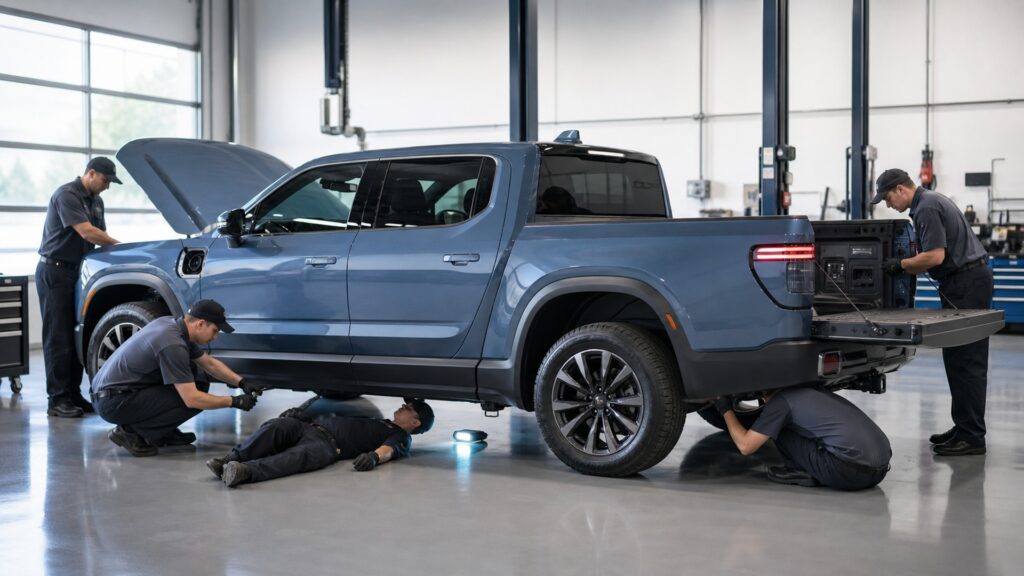
Maintenance keeps an electric pickup ready to carry people, haul equipment, charge reliably, and stop safely. A battery-electric truck has no combustion-engine oil change, but it still has tires, friction brakes, suspension, cooling equipment, and other systems that need attention. Removing some familiar service tasks does not remove the need for a maintenance plan.

Use the schedule for the exact model year and powertrain, including time-based requirements and any instructions for demanding use. A truck used for towing, dusty worksites, or long periods of parking may need different attention from one used mainly for commuting. Here, electric pickup means a battery-electric vehicle; a hybrid or range-extended model also needs care for its combustion components.

By: Review Streets Research Lab
Updated: October 5, 2026
Explainer · 8-12 min read
electric pickup trucks explainer hero image for Review Streets
What You'll Learn

Where Electric Pickup Maintenance Adds Value

Focus on the systems that keep the truck usable between charging sessions and loaded trips.

  • Follow the correct schedule rather than assuming no oil means no service
  • Inspect tires and mechanical brakes even when driving feels normal
  • Keep charging equipment and cooling systems in the maintenance picture
  • Treat warnings and recurring faults as problems to investigate
  • Use qualified service for high-voltage work

Tip: Keep a dated record of inspections, service, tire work, and unresolved symptoms so the next visit starts with useful information.

Definitions

Six Maintenance Concepts for Battery-Electric Trucks

These terms help distinguish routine ownership checks from specialist diagnosis.

Scheduled Service

Checks and replacements required at specified time or distance intervals.

  • Example: A low-mileage truck can still reach a calendar-based service requirement.
  • Check: Use the exact vehicle's schedule and special-use notes.
  • Limit: An interval from another electric model may not apply.

Friction-Brake Condition

The state of the mechanical components that slow and stop the truck.

  • Example: An inspection can find corrosion or uneven wear despite frequent electric deceleration.
  • Check: Include brakes and fluid requirements in scheduled care.
  • Limit: Reduced pad wear does not make inspection unnecessary.

Tire Condition

Pressure, tread, damage, and wear pattern affecting how the tire carries load and grips.

  • Example: Uneven tread wear can reveal a need for further tire or alignment assessment.
  • Check: Use specified cold pressures and suitable replacement ratings.
  • Limit: A dashboard pressure warning is not a complete tire inspection.

Thermal-System Care

Maintenance of the systems that control component temperatures.

  • Example: A prescribed coolant inspection helps support battery and power-electronics cooling.
  • Check: Follow specified fluid and service procedures.
  • Limit: Do not open hot or unfamiliar cooling systems.

Low-Voltage Supply

The electrical supply supporting controls and many vehicle accessories.

  • Example: A low-voltage fault can prevent normal startup even when the traction battery has charge.
  • Check: Have recurring electrical symptoms diagnosed.
  • Limit: The small battery and the traction battery are not interchangeable.

Charging Hardware Condition

The visible and functional condition of supported cables, connectors, and charging equipment.

  • Example: A damaged cable or recurring charging fault needs attention before the next trip depends on it.
  • Check: Follow equipment instructions for inspection and care.
  • Limit: Do not repair damaged high-voltage connections yourself.

Tip: Owner checks can identify a problem; they do not replace the training and equipment needed to diagnose the high-voltage system.

Service Planning

Replace the Oil-Change Habit With the Actual Schedule

Many owners use an oil-change appointment as a reminder to inspect the rest of a truck. That reminder disappears in a battery-electric vehicle. Set service reminders from the maintenance schedule instead, including items governed by age as well as mileage. Review the plan when the truck starts towing regularly, sees different conditions, or spends extended periods unused.

  • Record the correct model year and service information.
  • Track both dates and odometer readings.
  • Tell the service provider how the truck is used.

A truck driven only on weekends can still need attention; low mileage is not evidence that every fluid, tire, or component is healthy.

Rolling and Stopping

Keep Tires and Brakes in the Regular Inspection

Electric deceleration can reduce use of the friction brakes, but the mechanical brakes remain essential. Tires still have to carry the loaded truck and provide steering and stopping grip. Inspecting these systems together is useful because a quiet, smooth drive can hide developing wear. Changes in vibration, pulling, braking feel, or tire wear deserve assessment rather than waiting for a warning light.

  • Check cold tire pressure and visible condition regularly.
  • Follow the permitted rotation pattern and inspection schedule.
  • Report unusual brake feel, noise, or uneven wear.

Use replacements that satisfy the vehicle's requirements; the right diameter alone does not establish a suitable tire.

Charging Readiness

Treat Repeated Charging Trouble as a Service Clue

An interrupted charge may involve the vehicle, charging equipment, supply, or settings. Record the displayed message and circumstances rather than repeatedly changing unrelated settings. Review scheduled charging and charge limits first where appropriate. Visible damage, unusual heat, or repeated equipment faults need the response specified by the manufacturer and, when necessary, professional attention.

  • Protect cables from being driven over or trapped.
  • Inspect accessible equipment only as instructed.
  • Keep error details for the vehicle or equipment service provider.

A dependable charging connection is part of the truck's readiness, especially when the next day's work relies on overnight replenishment.

Mechanical and Thermal Care

Remember the Parts That Still Carry a Truck's Workload

Steering, suspension, wheel bearings, body attachments, and cooling equipment do not disappear with the engine. Towing hardware and bed accessories also need the checks specified for their use. A service visit should reflect the whole vehicle. Do not substitute a generic claim of low maintenance for the manufacturer's list of inspections and fluid requirements.

  • Include installed towing and cargo equipment in inspections.
  • Follow the correct coolant and other fluid requirements.
  • Have leaks, looseness, or impact damage assessed.

A worn suspension joint or loose rack attachment can disrupt a workday regardless of how little attention the drive motor normally needs.

Diagnosis and Records

Use Symptoms to Get the Right Help Early

Note when a problem occurs: while charging, after a long park, during towing, or in particular temperatures. Service personnel can use that context alongside diagnostic information. Keep manufacturer notifications and recall work current, and distinguish a completed update from a fault that still needs repair. High-voltage diagnosis belongs with personnel trained for the vehicle and task.

  • Document warnings without clearing them merely to hide the symptom.
  • Keep service and repair records together.
  • Confirm that reported problems were resolved before relying on the truck.

The best record describes what happened and under what conditions, instead of guessing that every problem is a traction-battery failure.

Quick Reality Check

Less Routine Engine Service, Continued Vehicle Care

The maintenance workload changes rather than disappearing.

A Useful Maintenance Plan

Tracks the vehicle-specific schedule and catches tire, brake, mechanical, and charging issues.

Uses owner checks appropriately and sends specialist faults to qualified service.

A Gap That Can Cause Downtime

Waiting for an oil-change reminder that a battery-electric truck will never provide.

Ignoring time-based service or recurring faults because the truck still drives.

Common Myths

Misconceptions About Electric Pickup Maintenance

Low service demand in one system does not describe the whole truck.

Electric pickups need no maintenance.

They retain vehicle systems with inspections, wear items, and model-specific service requirements.

Electric braking means the friction brakes can be ignored.

Mechanical brakes remain necessary and need inspection even if pads wear slowly.

A charged traction battery guarantees the truck will start normally.

Low-voltage or other faults can still prevent normal operation.

Every electric truck uses the same fluid schedule.

Requirements vary by model, year, equipment, and use.

Tip: Use manufacturer instructions to turn a general maintenance idea into the correct task and interval.

FAQ

Questions About Caring for an Electric Pickup

Practical answers for planning service and avoiding missed checks.

Does a battery-electric pickup need engine oil changes?

It has no combustion engine, so it has no engine-oil service. Other fluids and inspections follow its own schedule.

Should a lightly used truck still be serviced?

Yes. Calendar requirements and storage instructions can apply even with few miles.

What should I record after a charging fault?

The message, equipment used, conditions, and whether the problem repeats. Avoid using visibly damaged equipment.

Can I service the traction battery myself?

High-voltage work requires appropriate training and specialized equipment; use qualified service.

What changes when I begin towing often?

Review the manufacturer's guidance for that use and include tires, brakes, hitch equipment, and other specified checks.

Bottom Line

Electric pickup maintenance protects readiness by keeping the entire vehicle healthy, not just its battery and motors.

Follow the exact schedule, inspect the remaining wear systems, and resolve charging or electrical symptoms before they interrupt a planned trip.

Next Steps

Go Deeper or Compare Your Options

Use these Review Streets paths to compare related categories and practical next decisions.

Manufacturer references: DOE electric-vehicle maintenance guidance; Chevrolet Silverado EV owner resources and manuals; NHTSA tire-care guidance; NHTSA electric-vehicle operation and safety. Use the manual and ratings for your own model year and configuration.