Why Electric SUVs Maintenance Role Matters

Maintenance matters on an electric SUV because removing the combustion engine removes some service tasks, not the need to care for the vehicle. Tires, friction brakes, suspension, cabin systems, cooling equipment, and the auxiliary electrical system still support safe, dependable use. Charging hardware and warning messages also deserve attention.

The useful maintenance plan is the one specified for the exact model and its conditions of use. Follow its time and distance requirements, retain records, and distinguish routine inspection from diagnosis of a fault. Fewer scheduled powertrain tasks should make the plan simpler, not make emerging problems easier to overlook.

By: Review Streets Research Lab
Updated: September 30, 2026
Explainer · 8-12 min read
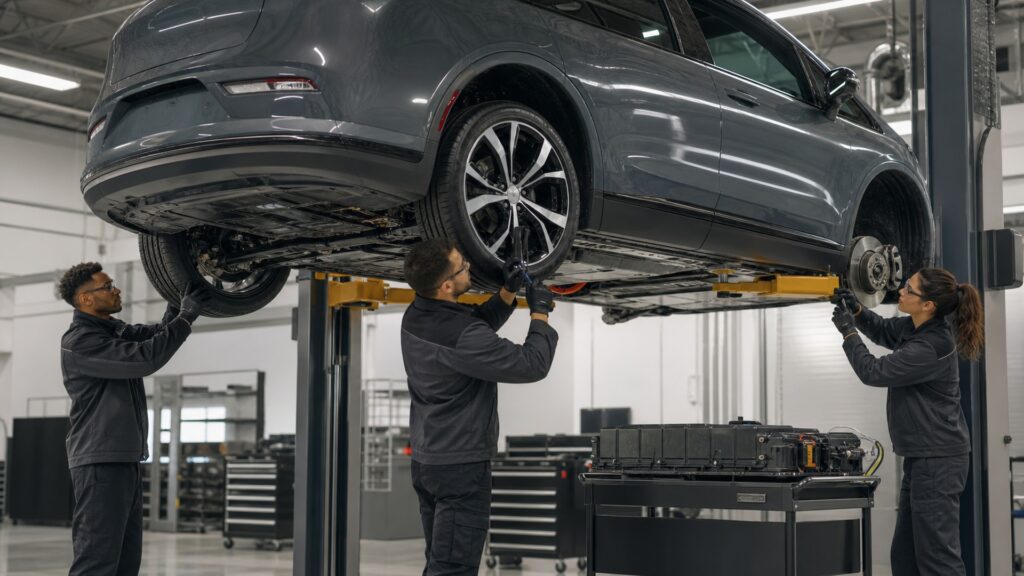
electric suvs explainer hero image for Review Streets
What You'll Learn

Build an EV Service Plan Around What Remains

Focus on the parts that carry, stop, cool, and support the vehicle.

  • Use the model-specific schedule rather than an oil-change habit.
  • Inspect tires for pressure, wear, and damage.
  • Keep friction brakes within their prescribed service plan.
  • Follow cooling and auxiliary-system requirements.
  • Use qualified diagnosis for electrical or charging faults.

Tip: Low mileage can reduce wear without canceling calendar-based maintenance requirements.

Definitions

Service Concepts for Battery-Electric SUVs

These distinctions help separate less maintenance from no maintenance.

Scheduled service

Inspections or replacements specified by the manufacturer at stated conditions or intervals.

  • Example: A cabin filter is replaced according to the applicable schedule.
  • Check: Record both dates and mileage.
  • Limit: Another EV’s schedule may not apply.

Condition-based inspection

Assessment of a part’s present wear, damage, or function.

  • Example: Tire wear is measured rather than inferred from age alone.
  • Check: Ask what was checked and what the findings mean.
  • Limit: Mileage alone cannot establish current condition.

Friction-brake upkeep

Care of the conventional brakes that remain alongside electrical energy recovery.

  • Example: A service visit checks pads, rotors, and required brake-system items.
  • Check: Follow the exact brake inspection and service guidance.
  • Limit: Reduced use does not make the hardware maintenance-free.

Thermal-system service

Checks or work required for systems that control component temperatures.

  • Example: The specified cooling circuit receives an inspection when due.
  • Check: Identify the correct procedure and fluid specification.
  • Limit: Cooling arrangements and intervals differ across vehicles.

Auxiliary electrical system

The lower-voltage supply and equipment supporting controls and accessories.

  • Example: A weak auxiliary battery can affect normal vehicle operation.
  • Check: Have relevant symptoms assessed using the approved procedure.
  • Limit: A charged traction battery does not prove the auxiliary system is healthy.

Fault diagnosis

Investigation that identifies the cause of abnormal behavior or a warning.

  • Example: Repeated charging interruptions are examined rather than repeatedly dismissed.
  • Check: Record the conditions and exact displayed message.
  • Limit: A routine service item may not fix an unrelated fault.

Tip: A complete record includes inspected condition and diagnostic findings, not just replacement parts.

Start with the correct schedule

Replace the Oil-Change Habit with a Vehicle-Specific Plan

A battery-electric SUV has no combustion-engine oil-change requirement, but it has its own inspection and service instructions. Find the schedule for the model year and configuration, including time-based work and any provisions for demanding use. Keep reminders for tasks that an app or dashboard may not cover.

  • List calendar and distance-based requirements separately.
  • Record completed work with date and odometer reading.
  • Check whether operating conditions alter the prescribed plan.

An SUV driven only occasionally can still reach a time-based deadline. Looking only at the odometer misses the reason that calendar requirement exists.

The road contact points

Use Tire Condition to Guide Attention

Tire pressure, tread condition, damage, and alignment-related wear affect how the SUV meets the road. Use the vehicle’s specified cold pressures, not a generic value or the tire sidewall’s maximum. Follow permitted rotation practices and have unusual wear or vibration investigated.

  • Inspect for cuts, bulges, and irregular tread wear.
  • Confirm replacement size and required ratings.
  • Check pressures when tires are cold as instructed.

Do not assume every electric SUV wears tires at the same rate. Vehicle setup, tire choice, loading, road conditions, and driving all contribute; direct inspection is more useful than a universal mileage prediction.

Brakes still need care

Electrical Deceleration Does Not Eliminate Friction Hardware

Energy recovery can reduce friction-brake use, but the vehicle still relies on conventional braking equipment. Its condition and any required fluid or lubrication service remain part of the maintenance plan. Follow the manufacturer’s instructions rather than inventing aggressive braking exercises to compensate for light use.

  • Keep prescribed brake checks on the service calendar.
  • Report changed pedal feel, noise, pulling, or warnings.
  • Ask whether the manual specifies climate-related brake care.

A driver who often uses strong accelerator-release deceleration may rarely notice the friction brakes during ordinary travel. That experience is not evidence that the brake system can be omitted from inspection.

Support systems

Remember Cooling, Cabin Care, and the Auxiliary Supply

Battery and drive components may use thermal-management equipment with model-specific care needs. Cabin filters, wipers, washer fluid, and the auxiliary electrical system also remain relevant. Use the specified fluids and service methods; unfamiliar high-voltage equipment is not an appropriate place for improvised owner repairs.

  • Check the manual for cooling inspections and service requirements.
  • Keep visibility and cabin service items in the plan.
  • Seek diagnosis for recurring auxiliary-power symptoms.

If a vehicle has plenty of traction-battery charge but fails to operate normally, the cause is not automatically a worn traction battery. Proper diagnosis can distinguish auxiliary supply issues from other faults.

Charging and warning signs

Record the Problem Before Guessing at the Repair

Charging failures can involve the vehicle, equipment, settings, or the electrical supply. Note the displayed message, location, conditions, and whether the issue repeats. Stop using visibly damaged equipment, and use the appropriate qualified service provider for the suspected vehicle or installation problem.

  • Keep cables and connectors in the condition required by their instructions.
  • Record recurring faults and relevant service history.
  • Use technicians qualified for work involving high-voltage systems.

A repeated interruption at one charging location is useful diagnostic information, but it does not prove which component is at fault. Reporting the pattern helps the technician investigate without turning an assumption into an unnecessary replacement.

Quick Reality Check

Which Service Tasks Change with Electric Propulsion?

The engine-related list shrinks while other care continues.

Tasks removed or reduced can include…

Combustion-engine oil and related engine service in a battery-electric vehicle.

Some friction-brake wear through electrical energy recovery, depending on use.

Tasks that still require attention include…

Tires, conventional brakes, suspension, visibility, and scheduled cabin items.

Applicable thermal-system care, auxiliary power, charging equipment, and fault diagnosis.

Common Myths

Maintenance Myths About Electric SUVs

A simpler powertrain does not justify ignoring the rest of the vehicle.

Does an EV need no maintenance?

No. It has fewer engine-related tasks, but the vehicle-specific inspection and service plan still applies.

Will brake pads last for the life of every EV?

No universal lifespan can be assumed. Use inspection findings and the manufacturer’s guidance.

Can a battery-health estimate replace service records?

No. Battery condition is one part of vehicle condition; tires, brakes, repairs, and scheduled work still matter.

Does a software update repair every warning?

No. Follow the stated remedy and obtain diagnosis when required rather than assuming software explains every fault.

Tip: Treat symptoms as evidence to investigate, not proof of a particular failed part.

FAQ

Practical EV Maintenance Questions

Use the exact model’s requirements to decide what is due.

Do electric SUVs need fluid service?

Some fluids and cooling systems may require checks or replacement. Follow the applicable schedule and specifications; absence of engine oil does not mean absence of fluids.

Who should perform high-voltage work?

Use qualified technicians with the training and equipment required for the vehicle. Do not open or service traction-battery components yourself.

What records should I request for a used EV?

Ask for scheduled service, repairs, recall completion, tire and brake history, and available battery-related findings.

How should I budget for upkeep?

Price the actual scheduled work, tires, insurance-related requirements, and likely inspections. Keep unexpected repair risk separate from routine service estimates.

Bottom Line

Electric SUV maintenance shifts the workload rather than removing it.

Follow the exact schedule, inspect the running gear, care for support systems, and diagnose warnings before assigning a cause.

Next Steps

Go Deeper or Compare Your Options

Use these Review Streets paths to compare related categories and practical next decisions.

Vehicles

Compare related vehicle choices against the same carrying needs and driving routine.

SUVs

Compare related vehicle choices against the same carrying needs and driving routine.

Electric SUVs

Explore Electric SUVs with your passenger, cargo, and ownership requirements in mind.

Further reading: DOE EV maintenance overview; Tire inspection and care; EV service and charging safety; Example of model-specific EV service requirements. Use the owner’s manual for the exact vehicle’s instructions and limits.