
Powered Motion
Motor-driven movement of the brush head or bristles.
- Use: reduce manual stroke demand
- Variable: drive system and head
- Tradeoff: Still requires guidance
Electric toothbrushes matter because a motor supplies repeatable bristle motion while the user guides the head across every surface. Timers, quadrant pacing, pressure alerts, and easier grip can address common behavior problems such as brushing too briefly, scrubbing too hard, or struggling with manual dexterity.
Systematic-review evidence suggests powered toothbrushes can produce modest average improvements in plaque and gingival outcomes compared with manual brushing, but averages do not guarantee a better result for every person. Coverage, gumline placement, two-minute use, soft compatible heads, and regular replacement remain essential. A well-used manual brush can still be effective.
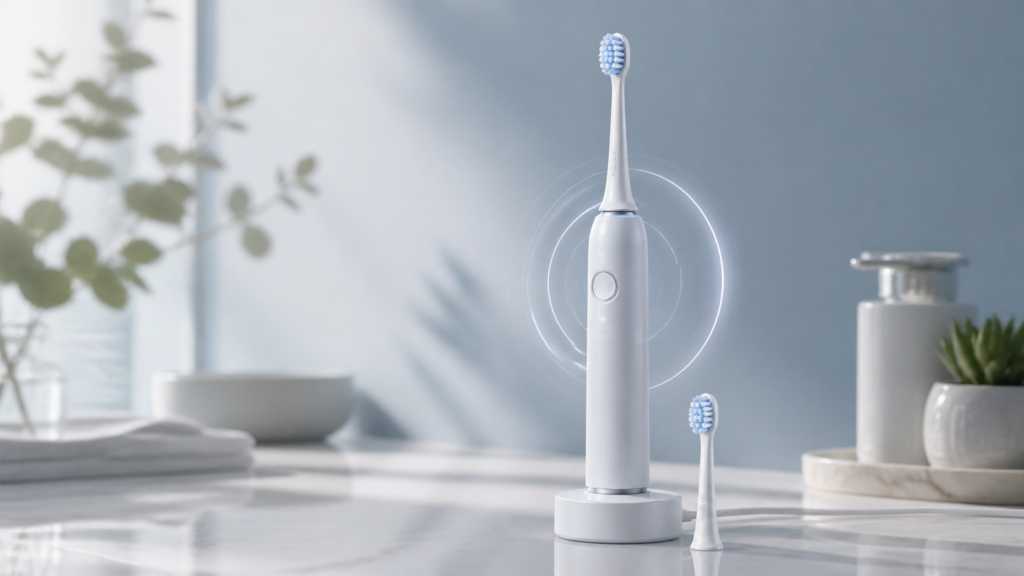
Explain electric toothbrushes as powered motion plus behavioral support, comparing oscillating-rotating and side-to-side designs, timers, pressure feedback, head geometry, accessibility, maintenance, evidence, cost, and technique without portraying power as automatic superiority.
Tip: The best reason to buy power is a solvable brushing problem.
These electric toothbrushes concepts separate mechanism, application, limits, and purchasing consequences.
Motor-driven movement of the brush head or bristles.
Small round head moving back and forth, often with pulsation.
Powered lateral bristle movement often marketed as sonic.
Signal or power change when force exceeds a device threshold.
Timed prompts that divide a full brushing session.
Availability, price, and compatibility of refill heads, chargers, and batteries.
Tip: Use these terms to test electric toothbrushes instead of relying on a front-label promise.
Select power for a concrete reason: poor duration, excessive pressure, limited dexterity, orthodontic access, caregiver assistance, or preference that improves consistency.
The best reason to buy power is a solvable brushing problem.
Follow the model instructions. Many powered brushes need gentle placement and slow guidance rather than rapid manual scrubbing; include outer, inner, chewing, and gumline areas.
A moving head cannot clean a surface it never contacts.
A reliable two-minute timer and useful pressure alert often matter more than many modes, screens, or app scores. Accessibility and clear controls deserve priority.
Feature value is behavioral, not numerical.
Include refill heads, replacement frequency, battery or charger, travel case, warranty, and local availability. Confirm that compatible heads remain easy to buy.
A cheap handle can become an expensive refill commitment.
Reduce pressure and verify technique, but do not rely on a gentler mode to explain away persistent bleeding, pain, recession, sensitivity, or loose teeth.
Comfort settings do not diagnose the mouth.
Power can make motion and pacing easier; it cannot compensate for skipped surfaces, worn bristles, unsuitable pressure, or untreated dental disease.
The head reaches the gumline and back teeth without forcing the grip.
Feedback improves time or pressure habits rather than becoming a distraction.
Replacement heads, charging, noise, and travel add ongoing friction and cost.
Bleeding, pain, recession, or mobility is not solved by a stronger motor.
These claims flatten the variables that determine how electric toothbrushes performs in a real routine.
The user must still position the head and cover every surface for the full session. Automation supplies motion, not navigation.
Sonic describes a motion or marketing category, not a universal outcome. Compare evidence for the specific product and fit.
Excessive force can increase discomfort and wear. Gentle contact plus coverage is the goal; pressure feedback helps only when heeded.
Many users need one effective daily mode, a timer, and perhaps pressure feedback. Unused modes add complexity and cost.
No toothbrush reliably cleans every interdental surface. A suitable daily interdental method remains a separate job.
Tip: Test the exact electric toothbrushes tool, setting, and routine before generalizing from its category.
The remaining decisions about electric toothbrushes concern technique, compatibility, safety, upkeep, and value.
On average, research finds modest improvements for powered brushes, but an effective manual routine remains valid. Personal technique, access, preference, and adherence determine practical value.
Both oscillating-rotating and side-to-side systems can work. Prioritize comfortable head size, gentle use, usable feedback, refill access, and evidence for the model.
Follow manufacturer and dental guidance, commonly around every three to four months or sooner when bristles fray, spread, or become contaminated.
Use an age-appropriate product with supervision, the correct toothpaste amount, and guidance from a dental professional. Noise and vibration tolerance matter.
No. They may improve coaching or coverage awareness, but evaluate setup burden, phone dependence, data practices, and whether the feedback changes behavior.
Confirm comfortable grip and head access, soft compatible refills, a useful timer, manageable pressure, and affordable replacement heads available where you live.
Electric toothbrushes matter because powered motion, pacing, and pressure feedback can make a consistent technique easier. Evidence supports modest average advantages, not automatic superiority for every user.
Choose the handle and head around access, dexterity, pressure habits, refill cost, and long-term use. Guide it across every surface for two minutes and keep interdental cleaning as a separate daily task.
These Review Streets paths narrow the next electric toothbrushes decision by format, goal, and routine fit.
Browse toothbrushes, interdental cleaners, rinses, and other oral-care categories.
Compare manual, electric, sonic, and specialty toothbrush formats.
Choose a retailer
Prices checked regularly. We may earn a commission at no cost to you.