
Guided stride
The machine-controlled path followed by the feet.
- It reduces free movement.
- It makes fit important.
- It differs from outdoor gait.
Elliptical movement pattern matters because the machine defines the foot path. Unlike walking or running, the user's feet stay on pedals and follow a built-in loop. That can make the workout feel smoother, but it also makes fit and stride shape more important.
The movement pattern affects cadence, posture, hip and knee path, handle timing, and whether the stride feels natural or cramped. A machine can have strong features and still feel wrong if the path does not fit.
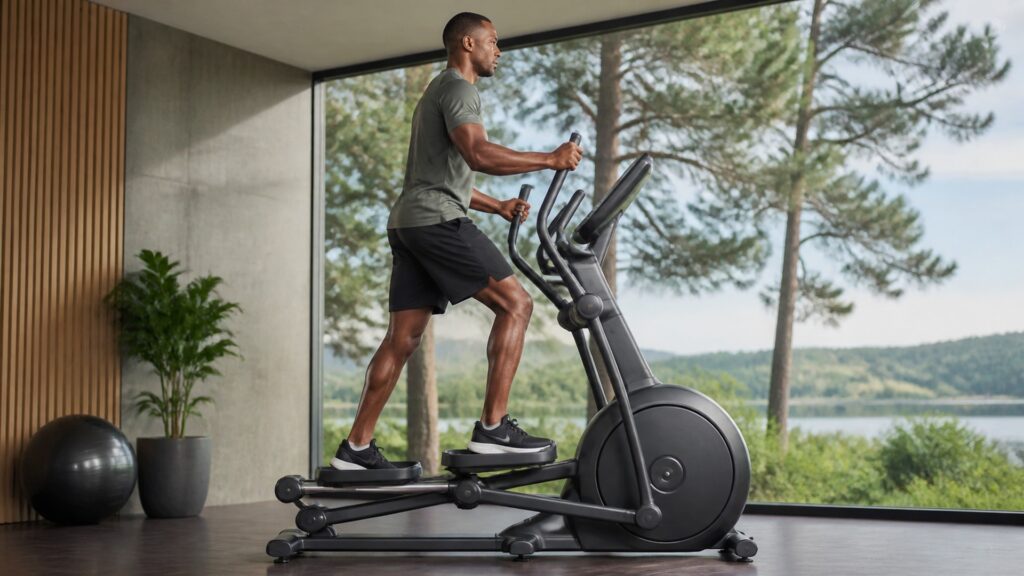
This explainer compares the machine by movement pattern, posture, resistance feel, fit, and workout role.
Tip: Compare the machine's movement first, then compare features.
These definitions connect the main idea to the variables, limits, and practical signals readers need to compare options.
The machine-controlled path followed by the feet.
The shape and length of each pedal loop.
The selected difficulty against the drive system.
The rate of repeated strides or strokes.
How the machine positions the body during work.
The job the machine has in the session.
Tip: A cardio machine's label matters less than the path it asks the body to repeat.
Elliptical movement pattern matters because the foot does not choose its own path the way it does while walking or running. The pedal linkage draws the loop, and the user adapts to that shape on every stride.
The built-in foot loop is the heart of the category.
A stride path that is too short may feel choppy, while one that is too long may feel overextended. Pedal spacing also matters because it changes stance width and hip tracking during repeated movement.
Movement pattern is personal because bodies meet the same linkage differently.
Moving handlebars are tied to the stride pattern, so arm timing is not independent. When the handle path feels mismatched, the user may lean, grip too hard, or stop using the arms altogether.
The upper-body feel depends on how well the handle rhythm matches the stride.
Resistance makes the stride harder to drive, while incline can change the angle or emphasis of the path on machines that offer it. Neither setting changes the fact that the feet remain on a guided loop.
Settings modify the movement pattern; they do not erase it.
A guided elliptical path can feel fluid, but smoothness alone does not prove good fit. If the stride causes awkward posture, unstable balance, or poor timing, specs and console features cannot fully compensate.
The right movement pattern is the one the user can repeat with control.
The comparison explains movement differences without turning them into universal rankings.
It explains why similar cardio goals can feel different on machines with different posture and movement paths.
It helps readers compare fit and session role before chasing feature lists.
It does not prove one machine is safer, better, or more effective for every user.
Comfort, medical history, training goals, space, and model design can change the answer.
Common shortcuts and misunderstandings can make the topic seem simpler than it is.
Stride length, pedal spacing, linkage design, ramp angle, and handle timing vary by model.
Longer can feel smoother for some users, but it can also feel overextended for others.
A machine can feel mechanically smooth while still placing the user in an awkward posture.
Handle timing can help rhythm, but it can also feel mismatched if reach or cadence is off.
Incline changes angle and emphasis, but the elliptical still uses a guided oval-style pedal path.
Tip: Treat strong claims as starting points for comparison, not final answers.
Concise answers to common questions readers may have after the main explanation.
It is the guided loop the pedals follow while the user repeats a standing stride.
Stride length affects whether the motion feels clipped, natural, or overextended.
Pedal spacing changes stance width and can affect hip, knee, and comfort feel.
They add arm timing tied to the stride, but the foot path is still set by the pedal linkage.
No. Resistance changes effort, but it cannot make a mismatched stride path fit correctly.
Elliptical Movement Pattern matters because machine categories create different movement constraints.
The practical takeaway is to compare posture, path, resistance feel, fit, and session role before deciding which cardio machine belongs in the workout.
Use these Review Streets paths to connect the explainer to related categories, comparisons, and next decisions.
Use this hub to compare elliptical types, stride designs, resistance systems, and console features in one place.
Use this path when the comparison turns on seated cycling, flywheel resistance, bike fit, and lower-body cardio.
Use this path when the next decision involves drive sequence, handle pull, damper feel, and full-body rhythm.
Choose a retailer
Prices checked regularly. We may earn a commission at no cost to you.