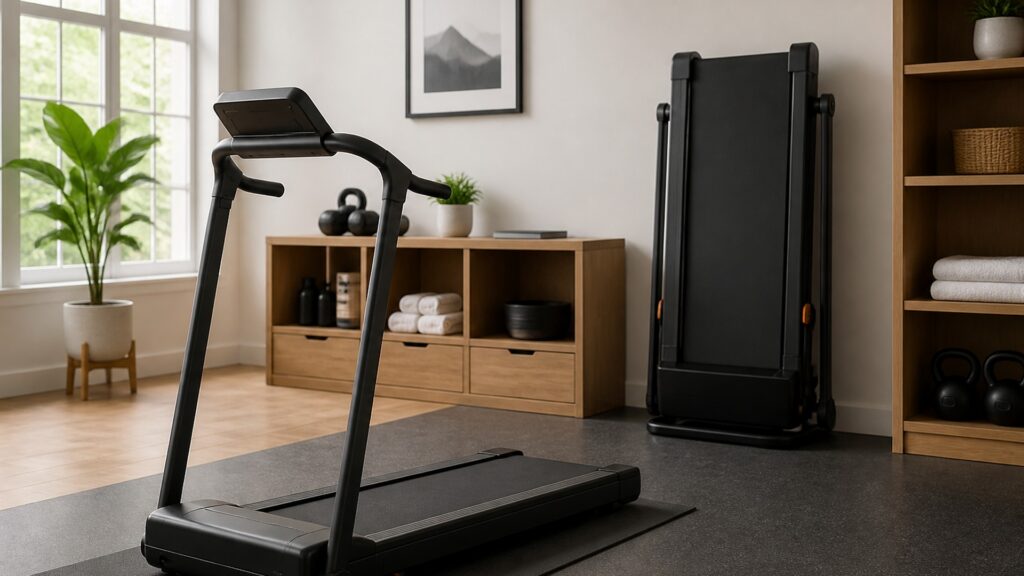
Running belt and deck
For Folding Treadmills, the movement pattern influence of running belt and deck comes from its ability to hold the working parts in alignment and manage load against the floor at the input or starting-condition stage.
- Why it matters: It links running belt and deck to the path, range, body position, and timing encouraged by folding treadmills.
- Check: For folding treadmills, evaluate running belt and deck: look for movement, flex, and clearance during the full task, then judge whether the movement remains repeatable without forced compensation.
- Do not assume: In folding treadmills, running belt and deck resolves the whole issue; assuming that a guided or familiar path fits every body and task remains a risk.
Motor and rollers
For Folding Treadmills, the movement pattern influence of motor and rollers comes from its ability to create, transfer, or regulate the working resistance at the transfer and stabilization stage.
- Why it matters: It links motor and rollers to the path, range, body position, and timing encouraged by folding treadmills.
- Check: For folding treadmills, evaluate motor and rollers: test whether changes feel smooth and predictable at realistic effort, then judge whether the movement remains repeatable without forced compensation.
- Do not assume: In folding treadmills, motor and rollers resolves the whole issue; assuming that a guided or familiar path fits every body and task remains a risk.
Folding hinge and latch
The movement pattern influence of folding hinge and latch comes from its ability to coordinate the component's contribution at stage 3 of the folding treadmills system.
- Why it matters: It links folding hinge and latch to the path, range, body position, and timing encouraged by folding treadmills.
- Check: For folding treadmills, evaluate folding hinge and latch: observe how folding hinge and latch changes setup, control, or feedback during realistic use, then judge whether the movement remains repeatable without forced compensation.
- Do not assume: Folding hinge and latch resolves the whole issue; assuming that a guided or familiar path fits every body and task remains a risk.
Handrails and uprights
For Folding Treadmills, the movement pattern influence of handrails and uprights comes from its ability to hold the working parts in alignment and manage load against the floor at the contact or feedback stage.
- Why it matters: It links handrails and uprights to the path, range, body position, and timing encouraged by folding treadmills.
- Check: For folding treadmills, evaluate handrails and uprights: look for movement, flex, and clearance during the full task, then judge whether the movement remains repeatable without forced compensation.
- Do not assume: In folding treadmills, handrails and uprights resolves the whole issue; assuming that a guided or familiar path fits every body and task remains a risk.
Console and controls
For Folding Treadmills, the movement pattern influence of console and controls comes from its ability to turn operating data into controls, prompts, or feedback at the repeatability and durability stage.
- Why it matters: It links console and controls to the path, range, body position, and timing encouraged by folding treadmills.
- Check: For folding treadmills, evaluate console and controls: check whether the displayed metric changes a real decision, then judge whether the movement remains repeatable without forced compensation.
- Do not assume: In folding treadmills, console and controls resolves the whole issue; assuming that a guided or familiar path fits every body and task remains a risk.
Frame, wheels, and stabilizers
The movement pattern influence of frame, wheels, and stabilizers comes from its ability to hold the working parts in alignment and manage load against the floor at the maintenance, storage, or release stage.
- Why it matters: It links frame, wheels, and stabilizers to the path, range, body position, and timing encouraged by folding treadmills.
- Check: For folding treadmills, evaluate frame, wheels, and stabilizers: look for movement, flex, and clearance during the full task, then judge whether the movement remains repeatable without forced compensation.
- Do not assume: Frame, wheels, and stabilizers resolves the whole issue; assuming that a guided or familiar path fits every body and task remains a risk.