
Total Fragrance Load
The combined amount of scented material from every product applied.
- Use: control overall presence
- Variable: product strength and amount
- Tradeoff: Several light layers can become strong
Fragrance layering matters because combining scented lotion, oil, mist, or perfume creates a new total application rather than placing independent smells side by side. The order, amount, surface, drying time, and relative strength of each layer determine which materials dominate and how far the blend travels.
Layering can personalize a familiar scent or support a quieter base, but it also increases exposure, makes reactions harder to trace, and can turn two balanced formulas into a muddy or overpowering result. Start with two products, test on a small appropriate area, record amounts, and evaluate the drydown before adding complexity. Compatibility is discovered through controlled wear—not inferred from matching note names.
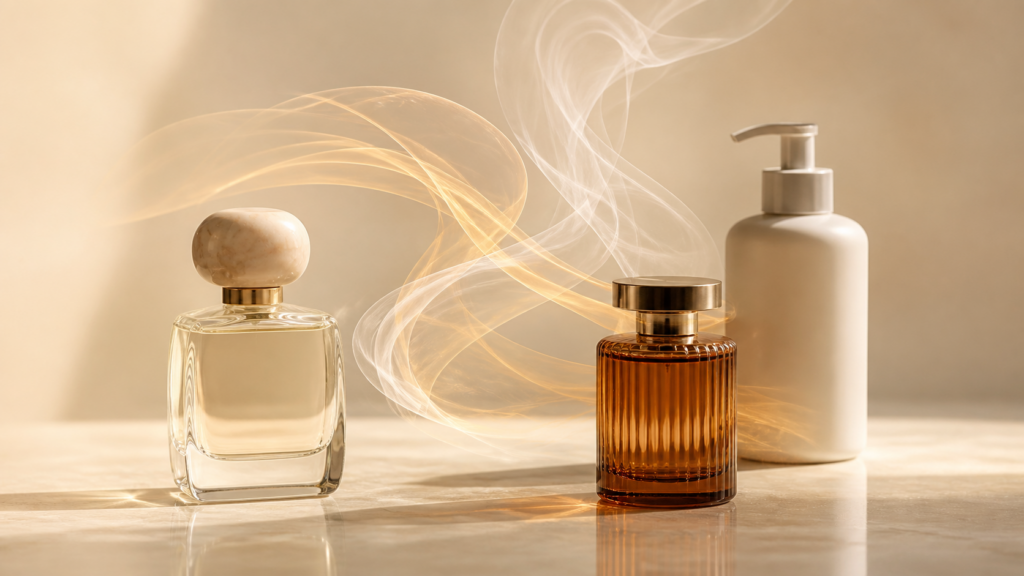
Treat layering as controlled mixture and timing: each added scented product changes dose, balance, diffusion, skin exposure, troubleshooting, and purchase value.
Tip: Layering does not create an exemption from total dose.
These fragrance layering concepts separate formula behavior, application choices, limits, and purchasing consequences before the mechanisms are compared.
The combined amount of scented material from every product applied.
The first scented or unscented product that changes the application surface.
Competition between prominent scent structures that obscures clarity.
The interval allowed for one layer to settle before another is judged.
Placing products on separate areas instead of directly stacking them.
A record that identifies which product or combination caused an unwanted result.
Tip: Use the terms to test fragrance layering rather than relying on a front-label promise.
Body wash residue, lotion, hair product, oil, and perfume all contribute to the scent environment. Begin below each product's usual solo amount and increase only after the combined opening and later radius remain comfortable.
Layering does not create an exemption from total dose.
A lotion or oil changes the surface beneath a spray, while spraying two perfumes together changes their opening ratio immediately. Allow base products to settle and compare one sequence at a time rather than assuming oil-first always improves longevity.
Layer on the body, never by altering the original packaging.
Two products listing vanilla, rose, or citrus may use different materials and proportions. A clearer strategy gives one fragrance the lead and the other a narrow role such as brightness, dryness, warmth, or close texture.
A shared note is a clue, not a compatibility guarantee.
New combinations increase the number of potential irritants and make an adverse response harder to attribute. Avoid irritated skin, eyes, and unlabeled decants; stop after burning, swelling, rash, breathing difficulty, or other concerning symptoms and seek appropriate help.
A creative experiment should remain traceable.
A layering idea may require two expensive bottles while producing only one narrow result. Test samples separately and together, calculate total cost per combined wear, and confirm that each product still earns use on its own.
The strongest pairing is flexible enough that neither bottle becomes a prop.
Layering can adjust character and texture, while increasing total dose, variability, exposure, and diagnostic difficulty.
A restrained supporting scent changes one dimension while the lead remains recognizable.
The recorded combination is comfortable, repeatable, and useful beyond a single novelty wear.
The blend becomes muddy, louder than intended, or unpleasant late in wear.
Sensitivity, workplace rules, cost, or troubleshooting makes a simpler routine more responsible.
These fragrance layering claims collapse several variables into one rule and can lead to poor application or unnecessary purchases.
A note is an impression, not a standardized ingredient or dose. Two vanilla or rose descriptions can develop differently and compete; only wearing the finished products together reveals their balance.
An oil may alter the application surface, but results depend on both formulas and the wearer. It can change diffusion, stain fabric, or add scent of its own rather than reliably extending useful wear.
Complexity and price perception are subjective. Combining products can add contrast, but it can also expose imbalance or muddiness; craftsmanship and personal enjoyment cannot be manufactured by simply increasing the number of formulas.
Additional layers often reduce definition because dominant materials overlap. A distinctive result usually comes from controlled contrast and a clear lead, not from stacking every compatible-sounding product in the routine.
Separate tolerance does not guarantee comfort at a higher combined load or on the same area. Follow each label, avoid damaged skin, and stop if the combination causes irritation or respiratory symptoms.
Tip: Test the exact fragrance layering product, dose, and routine before generalizing from a category label.
The remaining fragrance layering decisions concern application, compatibility, frequency, safety, and value in an ordinary routine.
Start with two familiar products, give one the lead, use less than the normal solo dose, and record order and placement. Evaluate several hours before changing the ratio or adding anything else.
Unscented lotion reduces one variable; a scented lotion can contribute deliberately. Check ingredients, allow it to settle, and compare both approaches on separate days rather than assuming either is universally better.
Yes. Zoning reduces direct mixing on the surface and can make adjustments easier, though the scents still combine in surrounding air. Keep total dose restrained and avoid sensitive or irritated areas.
Use only products intended for hair or follow the fragrance label carefully. Alcohol, oils, and repeated spraying may affect feel or buildup; avoid the scalp if irritated and protect eyes and inhalation comfort.
Follow it through the longest period you expect to wear it. Judge opening balance, middle clarity, late character, radius, comfort, and residue rather than deciding during the first few minutes.
Stop when it repeatedly becomes harsh, muddy, too persistent, uncomfortable, difficult to dose, or impossible to wear considerately. Using each product alone is a valid outcome, not a failed experiment.
Fragrance layering matters because every product changes the total dose, surface, balance, and wear curve. Order and matching note names matter less than a controlled ratio and the behavior of the finished combination.
Keep experiments small, reversible, and traceable. Two sampled products with a clear lead-and-support relationship are usually more useful than a complicated stack that cannot be diagnosed or worn comfortably.
These Review Streets paths narrow the next fragrance layering choice by format, goal, and routine fit.
Compare notes, concentration, wear, layering, and seasonal context.
Explore close-wearing oil formats, bottle designs, and practical sampling paths.
Choose a retailer
Prices checked regularly. We may earn a commission at no cost to you.